When you’re responsible for bringing a precision part from design to production, machining capability isn’t just a technical detail; it’s a business variable. The choice between 3-axis and 5-axis machining determines how efficiently your team hits tolerance goals, manages lead times, and maintains compliance across every order.
You already know both methods can produce accurate parts. The question is: which process gives you the control, flexibility, and reliability your production environment demands?
In this guide, you’ll find a clear comparison of how each approach performs in real manufacturing settings, helping you decide which best supports your quality standards, budget goals, and customer expectations.
Key Takeaway: 3-Axis vs 5-Axis Machining
Criteria | 3-Axis Machining | 5-Axis Machining |
Tool Motion | Moves in X, Y, Z directions only | Adds two rotary axes for tilt and rotation |
Setup Requirement | Multiple setups for complex parts | Usually single-setup machining |
Part Geometry | Best for flat, simple, or prismatic shapes | Handles contoured and multi-angle surfaces |
Accuracy Control | Depends on re-fixturing precision | Higher consistency across all faces |
Surface Finish | May need secondary finishing | Produces smoother surfaces directly |
Programming Complexity | Easier to program, faster setup | Requires advanced CAM and simulation |
Cycle Time | Longer on complex parts | Reduced due to fewer setups |
Operator Skill Level | Standard machining expertise | Skilled multi-axis programmers preferred |
Material Capability | Ideal for standard metals and plastics | Suitable for hard alloys and high-value materials |
Cost Efficiency | Lower machine cost; higher manual time | Higher investment; lower rework and inspection time |
Best Fit For | Standard components, large volumes | Complex, high-precision, regulated parts |
What Is 3-Axis Machining?
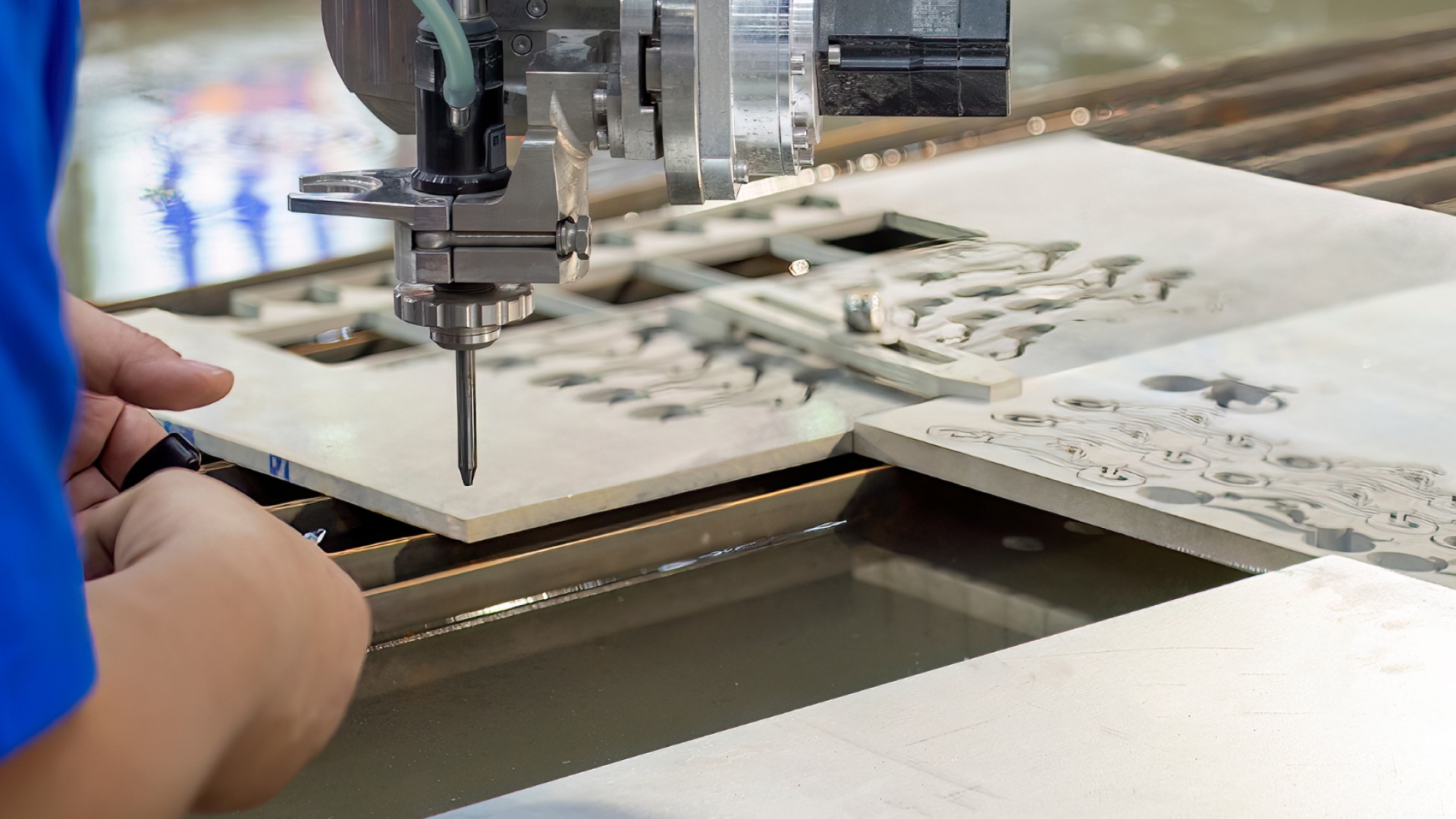
3-axis machining is the most established CNC approach, reliable, efficient, and widely used for parts with simple geometries. It works by moving the cutting tool in three linear directions:
X-axis: left to right
Y-axis: front to back
Z-axis: up and down
This setup is ideal when your parts:
Have flat or prismatic surfaces
Require pockets, slots, or drilled holes
Don’t need complex undercuts or curved surfaces
Key advantages:
Faster setup and programming time
Consistent repeatability for standard geometries
Lower equipment and operation costs
Limitations to consider:
Each repositioning adds risk of alignment errors
Limited access to multiple sides of the part
More fixturing steps for multi-surface or high-tolerance components
If your production relies on stable geometry and predictable cycles, 3-axis machining provides excellent value without unnecessary complexity.
What Is 5-Axis Machining?
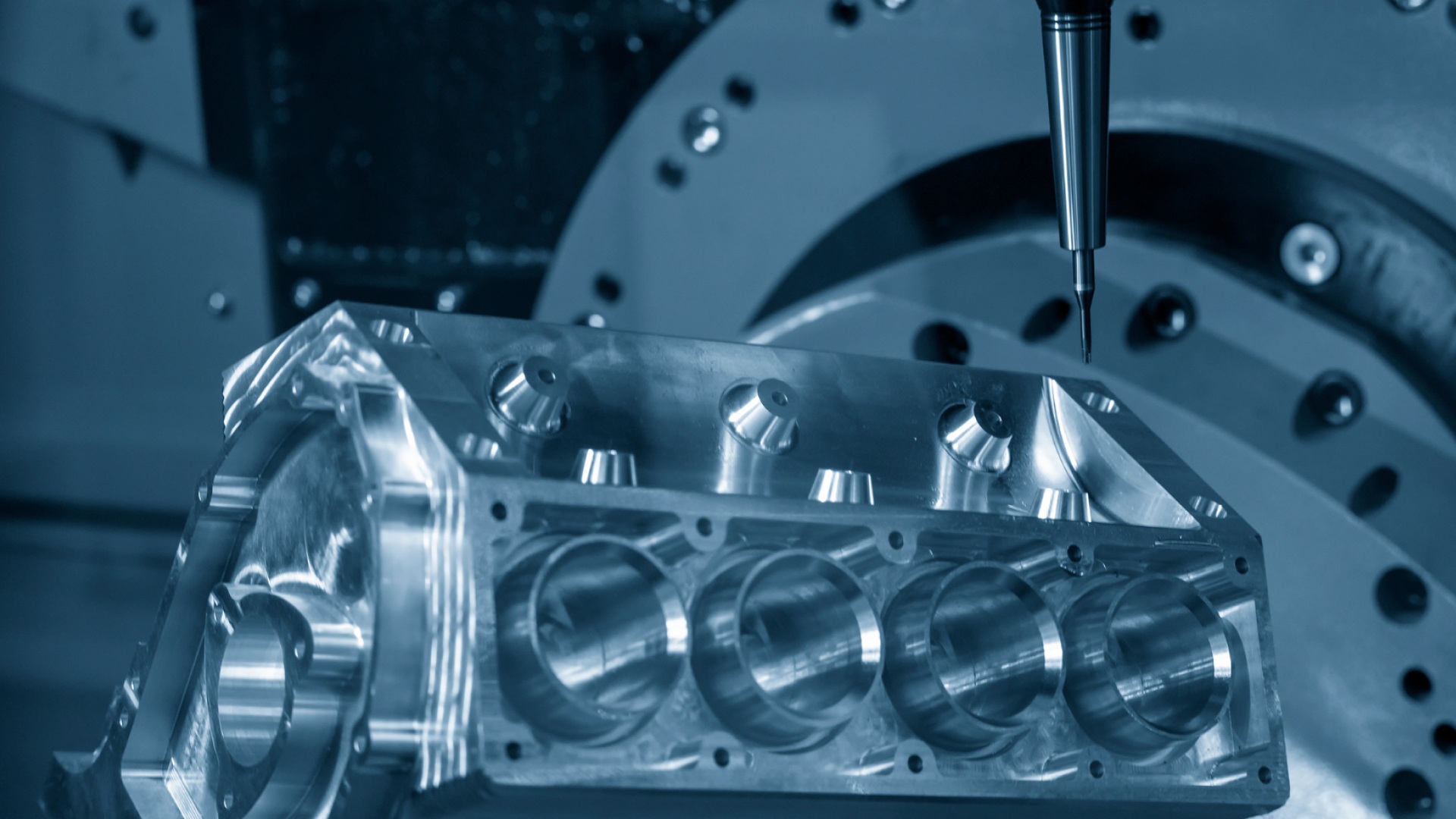
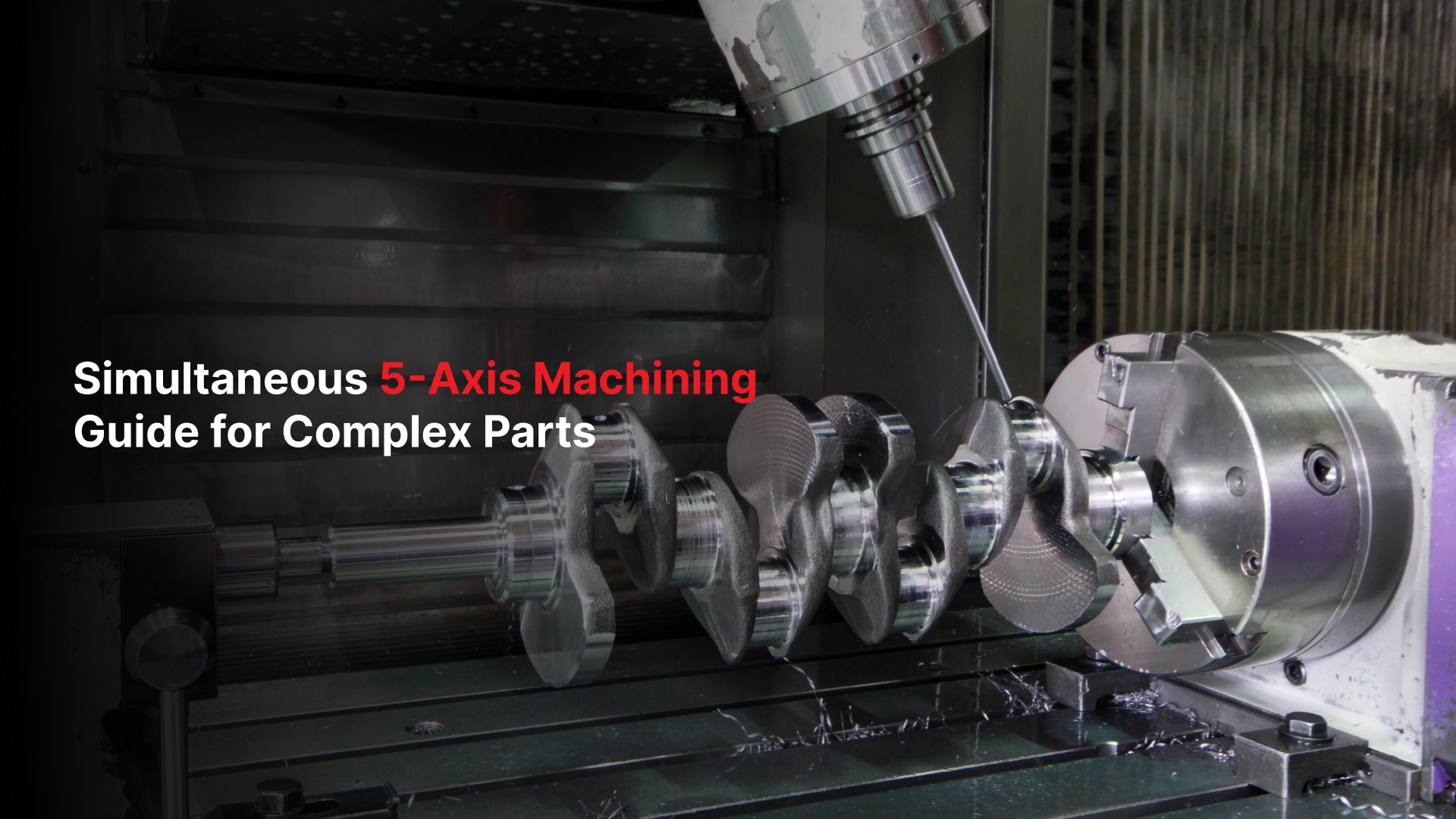
5-axis machining builds on the same CNC principles but adds two rotary axes, allowing the cutting tool to approach the part from almost any direction. This gives you greater flexibility and accuracy, especially for intricate or multi-surface designs.
How it works:
The part or the tool tilts and rotates on additional axes
Cutting can happen on five sides in a single setup
Tool orientation adjusts dynamically for complex contours
Practical advantages for your operations:
Fewer fixtures and setups → less cumulative error
Shorter cycle times and improved throughput
Smoother surface finishes with reduced secondary work
Reliable dimensional control across tight-tolerance components
When to use it:
Complex geometries or contoured surfaces
Aerospace, medical, or optical components where every angle matters
Programs where rework or manual polishing adds hidden cost
While investment and programming time are higher, 5-axis machining helps you protect accuracy, compress lead times, and strengthen process stability across production runs.
Motion and Tool Access Comparison
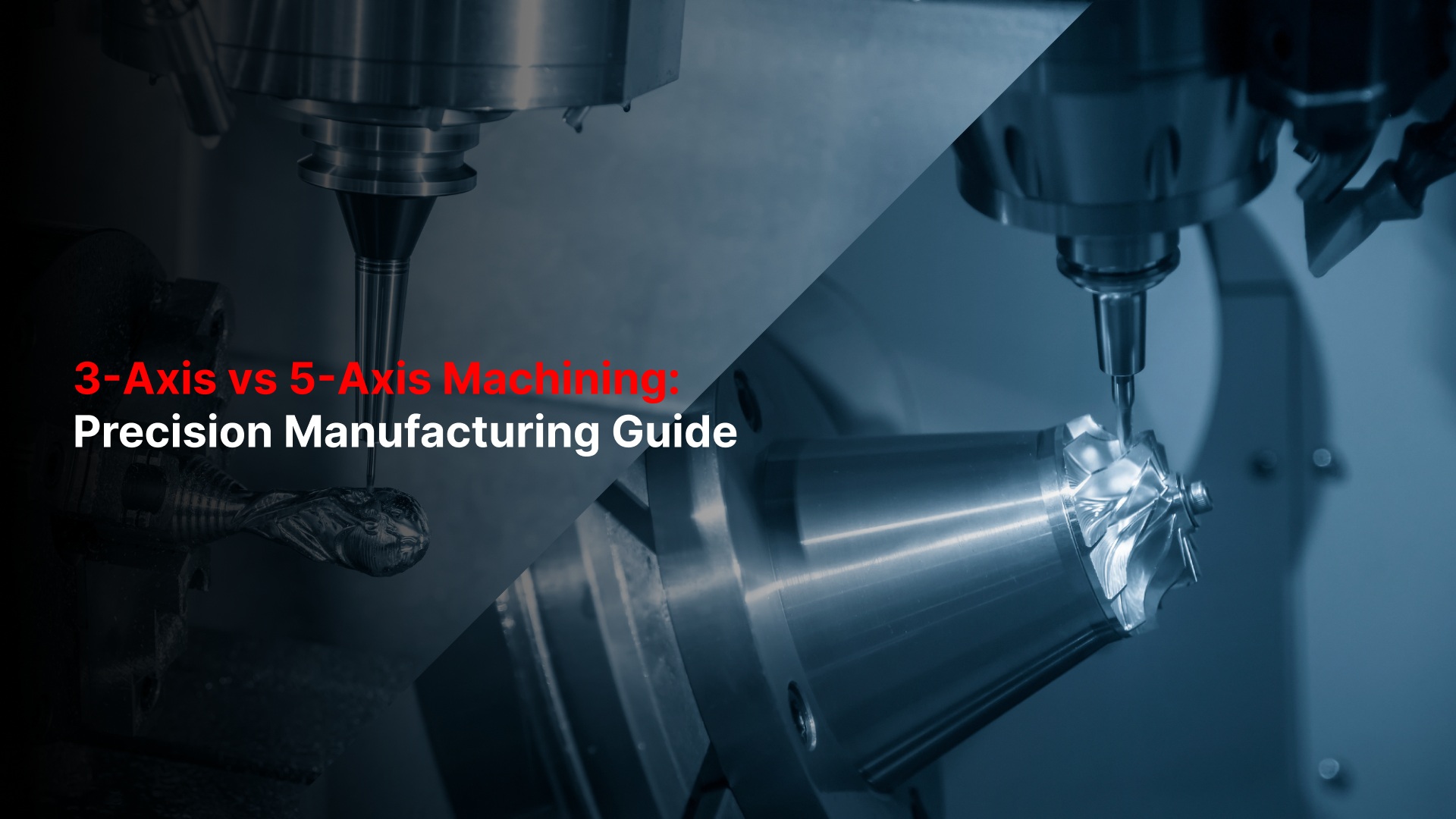
The most visible difference between 3-axis and 5-axis machining is how the tool approaches the part. This directly affects feature accessibility, precision, and time on the machine.
3-Axis Motion
In 3-axis setups, the tool moves linearly, up/down, side-to-side, and front-to-back. Your tool always cuts from one direction, which works well for:
Flat surfaces and shallow cavities
Simple pockets or drilled holes
Parts where top-down cutting is enough
However, every time you rotate or refixture the part, you risk:
Slight misalignment between operations
Tool deflection due to awkward reach angles
Increased inspection time to confirm accuracy
5-Axis Motion
5-axis machining adds rotary movement, giving the tool freedom to:
Approach at optimal cutting angles
Reach undercuts or complex side features
Complete multiple faces in a single setup
This motion reduces handling, shortens setups, and helps your team maintain precision, even across curved or contoured surfaces.
Accuracy, Surface Finish, and Tolerance Capabilities
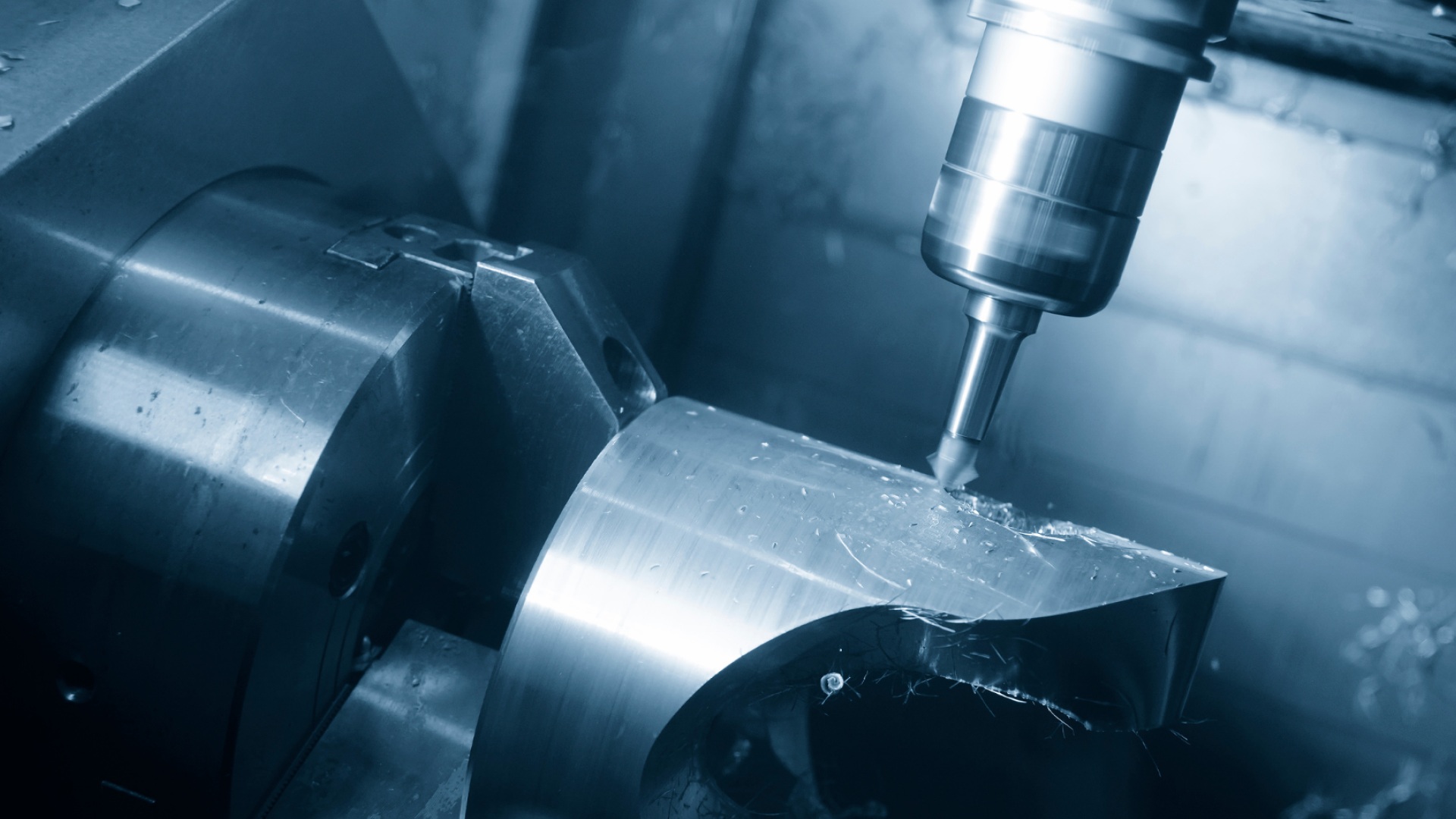
When precision parts move through several setups, even small alignment shifts can add up. That’s where 5-axis machining shows a measurable advantage; fewer setups mean fewer chances for dimensional variation.
3-Axis Accuracy
You can achieve strong precision on 3-axis machines when:
Fixtures are consistent and well-maintained
Alignment procedures are strictly followed
Part geometry allows stable positioning
But each setup adds potential for:
Cumulative tolerance drift
Minor surface mismatch between faces
Rework from small but repeatable deviations
5-Axis Accuracy
In 5-axis machining, you typically:
Complete the part in a single setup
Maintain uniform reference points throughout cutting
Reduce re-clamping errors and tool deflection
As a result, you get:
Higher geometric consistency
Improved surface finish with fewer tool marks
Less time spent on post-processing or inspection
For industries where dimensional reliability is critical, such as aerospace or medical, this process control can help your team protect both yield and audit performance.
Productivity, Cycle Time & Throughput
Your machining choice directly impacts how fast you can deliver parts and how stable your production flow remains. Every setup, fixture, and operator handoff introduces time and risk.
3-Axis Machining
You can expect:
Shorter programming time for simple geometries
Stable throughput when producing similar parts in batches
Quick turnaround on standard components
However, each manual repositioning increases:
Setup and handling time
Tool access limitations
Lead time variation between batches
5-Axis Machining
You gain:
Single-setup machining → reduced changeovers and idle time
Higher spindle utilization → more cutting, less handling
Streamlined workflow → easier scheduling and fewer interruptions
For teams running mixed production or tight delivery programs, 5-axis machining supports faster transitions between prototype and production.
You spend less time on fixtures and inspection, and more time machining parts that meet specification the first time.
Programming & CAM Considerations
Programming defines how your machining process performs, and how efficiently your operators can maintain consistency across runs.
3-Axis Programming
For straightforward parts, 3-axis toolpaths are:
Easier to create and verify
Faster to modify when design revisions occur
Compatible with most CAM platforms and operator skill levels
This makes the 3-axis ideal when:
You need predictable toolpaths
Your components have accessible surfaces
Your team prioritizes throughput over complex contouring
5-Axis Programming
Advanced CAM software enables:
Dynamic tool orientation to maintain optimal cutting angles
Collision avoidance and simulation for complex setups
Automation of multi-surface strategies
With 5-axis machining, you’ll need:
Skilled programmers familiar with Mastercam or equivalent
Strong process control for repeat jobs
Simulation tools to ensure collision-free paths
Although programming takes longer upfront, the result is fewer manual interventions and smoother, more reliable production cycles, critical for high-value precision work.
Cost & ROI: Equipment, Operation & Lifecycle
When you evaluate machining options, the goal isn’t just to compare hourly rates; it’s to understand total lifecycle value. The right setup should balance machine investment, part quality, and production stability over time.
Cost Overview
Factor | 3-Axis Machining | 5-Axis Machining |
Machine Cost | Lower upfront investment | Higher equipment cost |
Programming Time | Shorter | Longer, requires advanced CAM |
Setup Frequency | Multiple setups | Usually, a single setup |
Operator Skill Level | Standard | Specialized |
Cycle Time | Longer on complex parts | Significantly shorter |
Scrap / Rework | Higher risk from re-fixturing | Lower due to single-setup accuracy |
ROI Considerations
You gain ROI from 5-axis machining when:
Your part requires multiple orientations or precise alignment.
You repeat programs where reduced rework compounds savings.
Lead time reduction directly impacts delivery commitments.
Quality control and compliance cost more than machining time.
If you primarily produce low-complexity parts, 3-axis remains the cost-effective choice. For everything else, 5-axis helps you control the total cost of ownership, not just cost per hour.
Surface & Material Considerations
Material choice influences tool wear, chip control, and overall machining strategy. The more complex or heat-resistant your material, the more value you gain from precise tool orientation and stable engagement.
3-Axis Machining
Best suited for:
Aluminum and softer alloys
Standard steels and engineering plastics
Applications where multiple setups are manageable
Limitations:
Restricted access for deep pockets or angled features
Higher tool wear when cutting hard alloys from a fixed direction
5-Axis Machining
Ideal when you’re working with:
Titanium, stainless steel, and specialty alloys
Optical-grade plastics and composites
Parts requiring a consistent surface finish on all sides
Dynamic tool angles improve chip evacuation, reduce chatter, and help extend tool life, especially on high-value materials. This precision contributes to better yield, shorter polishing cycles, and consistent surface quality across production runs.
Regulated Industry Use Cases & Examples
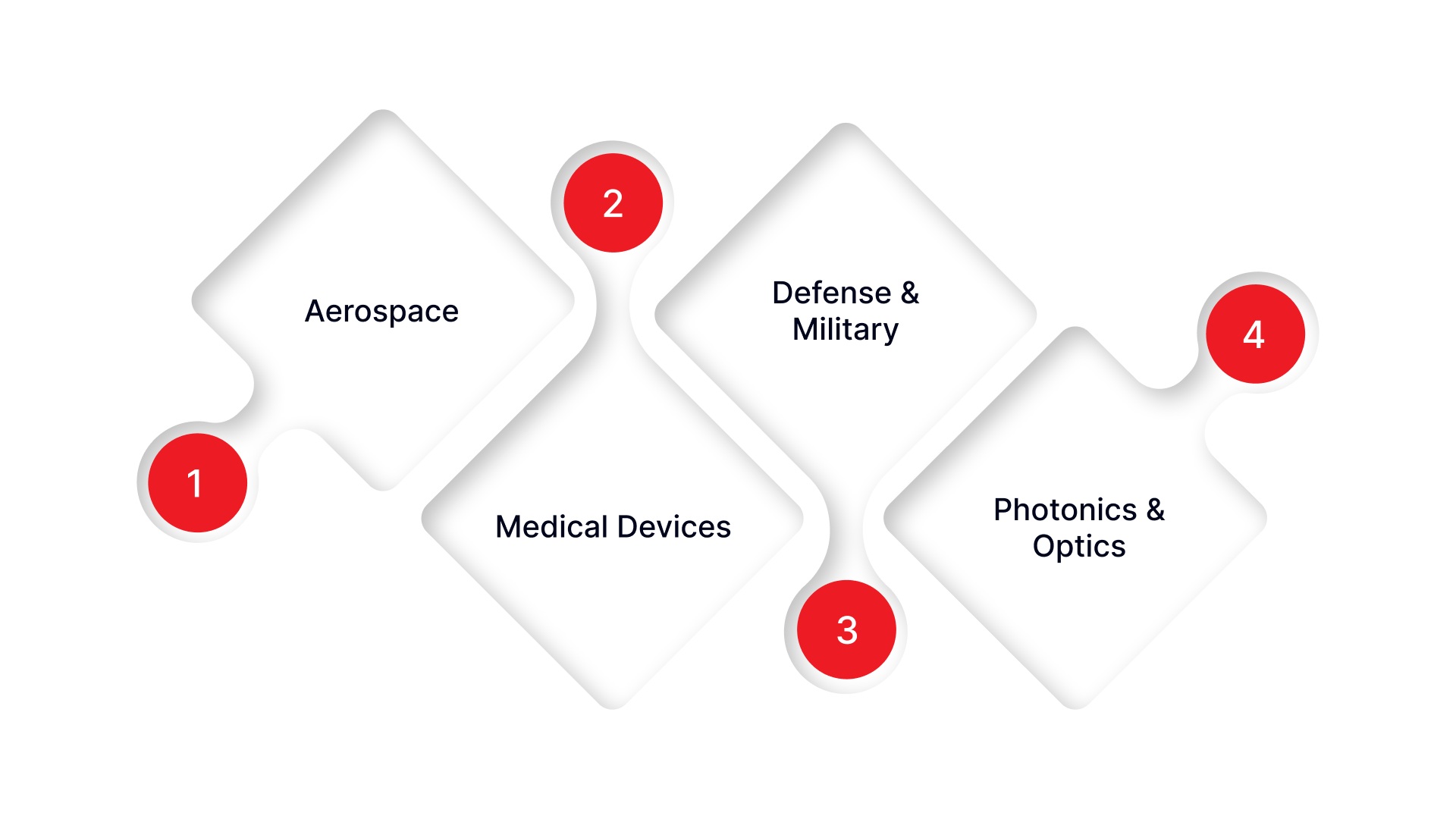
Your machining strategy plays a direct role in compliance, documentation, and risk control. In regulated industries, every setup, inspection, and deviation can influence audit outcomes.
Here’s how 3-axis and 5-axis machining apply across the key sectors Criterion serves.
Aerospace
Precision, weight, and geometry alignment are critical.
5-axis machining enables multi-face features and complex contours in a single setup.
Ideal for brackets, housings, and structural mounts where tolerance stack-up affects performance.
Helps maintain traceability from CAD to inspection report — essential for AS9100 and ITAR programs.
Medical Devices
5-axis supports smooth, polished surfaces for surgical tools and implants.
Fewer re-clamps reduce contamination risk and variation.
Supports ISO 13485 traceability with detailed process documentation.
Defense & Military
Single-setup machining helps you maintain dimensional integrity across serialized components.
Meets ITAR and DFARS requirements with controlled workflows.
3-axis is still viable for larger, simpler housings and fixtures.
Photonics & Optics
5-axis machining provides optical alignment precision for lens mounts and laser housings.
Reduces manual finishing, protecting delicate material surfaces.
Across all these sectors, 5-axis machining enhances your control over geometry, lead time, and compliance, without compromising repeatability or documentation accuracy.
Practical Decision Framework
Selecting between 3-axis and 5-axis machining depends on your design complexity, production goals, and compliance priorities. Use the checklist below to guide your evaluation.
Decision Criteria
Category | Choose 3-Axis If | Choose 5-Axis If |
Geometry Complexity | Parts are flat or prismatic | Parts have contours, undercuts, or angles |
Tolerance Requirements | Moderate, achievable with multiple setups | Tight tolerances needed across faces |
Production Volume | High volume of standard parts | Mix of prototypes and variable batches |
Setup Resources | Frequent re-fixturing is acceptable | You prefer single-setup control |
Surface Finish | Post-processing is acceptable | Finish quality must meet the final spec |
Lead Time Sensitivity | Schedules allow setup time | You must reduce the total cycle time |
Regulatory Demands | Standard QA process | Audit-ready traceability required |
Guided Takeaway
If your production runs depend on consistency, traceability, and shorter delivery cycles, 5-axis machining provides better control across every stage.
However, if your components are straightforward and repeatable, 3-axis machining offers cost-efficient reliability.
Your decision should align with your design intent, inspection process, and business KPIs, not just machine capability.
CAM Best Practices & Future Trends
Your machining results are only as strong as your CAM strategy. Effective programming connects design intent to real-world machining outcomes, accuracy, efficiency, and repeatability.
Best Practices
Simulate before cutting: Use software like Mastercam or ProShop to verify tool paths and prevent collisions.
Standardize tool libraries: Ensures consistency across programs and operators.
Integrate CAM and ERP data: Keeps tool usage, setup sheets, and inspection data traceable for audits.
Use consistent post-processors: Reduces translation errors between CAD and machine code.
Emerging Trends
AI-assisted toolpath optimization improves speed and tool life.
Hybrid manufacturing combining additive and multi-axis machining.
Automated in-process inspection feeds live data back to CAM for closed-loop control.
Adopting these practices helps you maintain precision, reduce setup variation, and future-proof your machining process.
Conclusion
The decision between 3-axis and 5-axis machining is not about choosing the newest machine; it’s about choosing the process that gives you control, repeatability, and confidence in every production run.
If your parts are straightforward and your volumes steady, 3-axis machining offers efficiency and cost stability. But if your components involve tight geometries, strict tolerances, or regulated documentation, 5-axis machining helps you meet those demands with fewer steps and less variation.
Your machining partner should understand both. At Criterion Precision, your team gains access to certified processes, advanced multi-axis capability, and quality systems built for audit-ready performance.
You can focus on product success, while every component meets its standard.
FAQs
1. Is 5-axis machining always better than 3-axis?
Not necessarily. For simple or high-volume parts, 3-axis is more cost-effective. 5-axis adds value when accuracy, complex geometry, or fewer setups matter most.
2. Can 3-axis machines achieve tight tolerances?
Yes, with the right fixturing and process control. But multiple setups increase alignment risk, especially across multi-surface features.
3. When does 5-axis machining deliver the best ROI?
When your production involves complex components, frequent changeovers, or high compliance costs from rework and inspections.
4. Does 5-axis machining replace inspection?
No, it supports inspection by reducing variation, simplifying traceability, and providing consistent reference points across setups.