Precision manufacturing is the cornerstone of industries that rely on zero-failure tolerance such as medical devices, aerospace, defense, and photonics. In these industries, the stakes are incredibly high, and even the slightest error can have catastrophic consequences. This is where Simultaneous 5-Axis Machining plays a crucial role.
Simultaneous 5-axis machining is a cutting-edge manufacturing process that enables the production of complex, high-precision parts. This technology is essential for industries where intricate geometries and tight tolerances are non-negotiable. Whether you're in the medical field producing surgical instruments, in aerospace creating structural parts, or in photonics making precision optical components, 5-axis machining can help meet the demanding requirements of these industries.
In this guide, we’ll explore how Simultaneous 5-Axis Machining works, its key advantages, and its application across industries that require precision, compliance, and high reliability.
Key Takeaways
Precision: 5-axis machining ensures high accuracy for complex parts, crucial for industries like aerospace, medical, and defense.
Flexibility: It allows for multi-dimensional machining in a single setup, reducing errors and setup time.
Efficiency: Cuts production costs and time by minimizing re-fixturing and optimizing workflows.
Critical Industries: Ideal for sectors that require tight tolerances and regulatory compliance, like medical devices and aerospace.
Partner Selection: Choose CNC partners with experience, certifications, and robust quality control to ensure reliable, high-precision outcomes.
What is Simultaneous 5-Axis Machining?
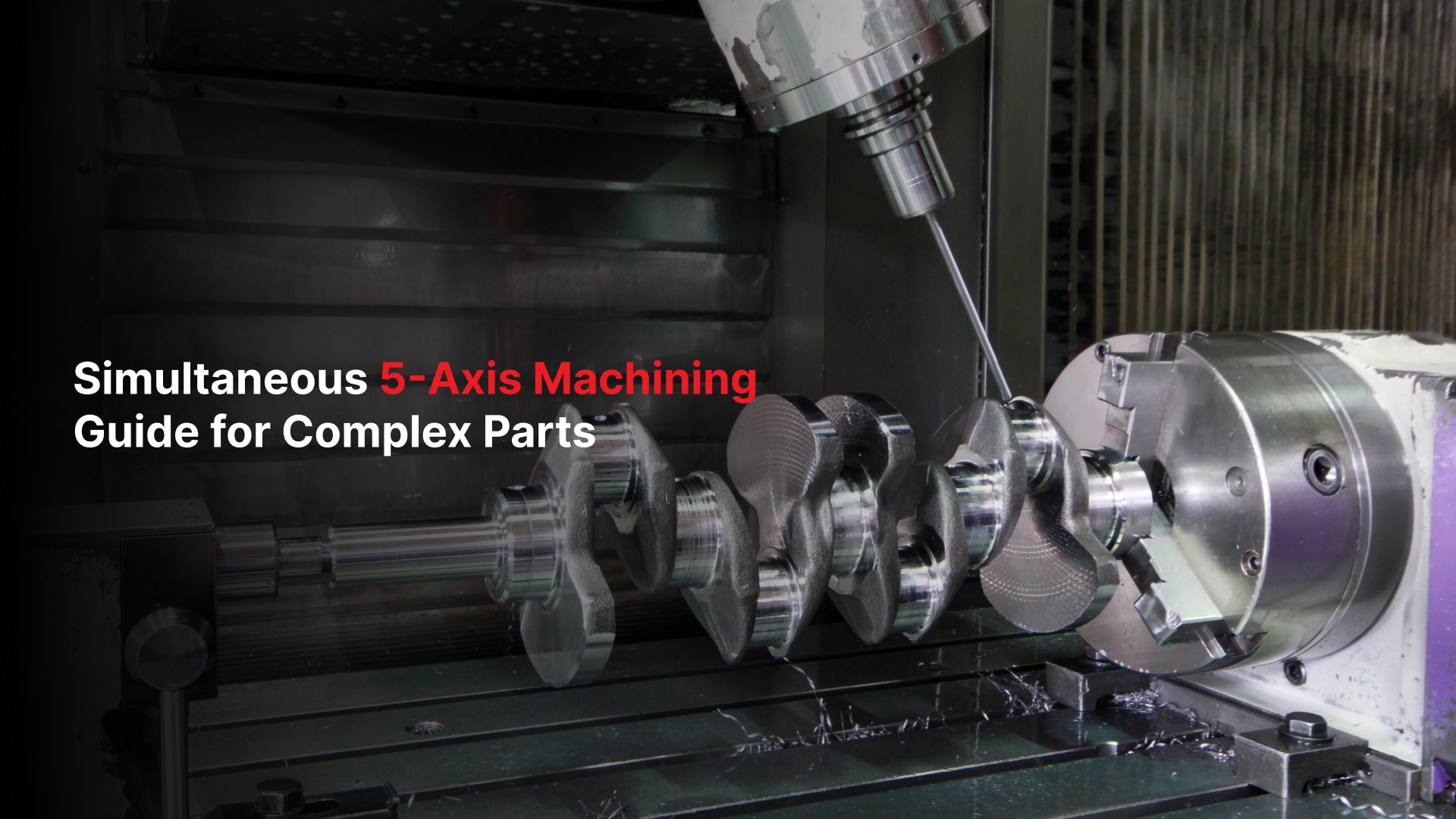
Simultaneous 5-axis machining is a process that uses a machine tool with five controlled axes of movement. Unlike traditional 3-axis machines that only move in linear directions (X, Y, Z), 5-axis machines combine these movements with rotary motion around two additional axes, typically labeled A and B. This advanced machining process allows for greater flexibility and precision when producing complex parts with intricate geometries.
The key difference between 5-axis machining and traditional CNC methods is the ability to manipulate the workpiece and cutting tool along multiple planes simultaneously. This reduces the need for multiple setups and minimizes errors caused by re-fixturing parts between operations.
How Simultaneous 5-Axis Works:
Linear Axes (X, Y, Z): These axes move the cutting tool in the X, Y, and Z directions, determining the basic position.
Rotary Axes (A, B): The A and B axes allow the workpiece to rotate around the X and Y axes, respectively. This enables machining on multiple sides of the part without requiring additional setups.
In essence, Simultaneous 5-Axis Machining allows the cutting tool to approach the part from virtually any direction, making it ideal for parts with complex angles and tight tolerances.
Also Read: 5 Reasons to Partner with a Precision Machining Expert Like Criterion
Why Simultaneous 5-Axis Machining is Crucial for Complex Parts?
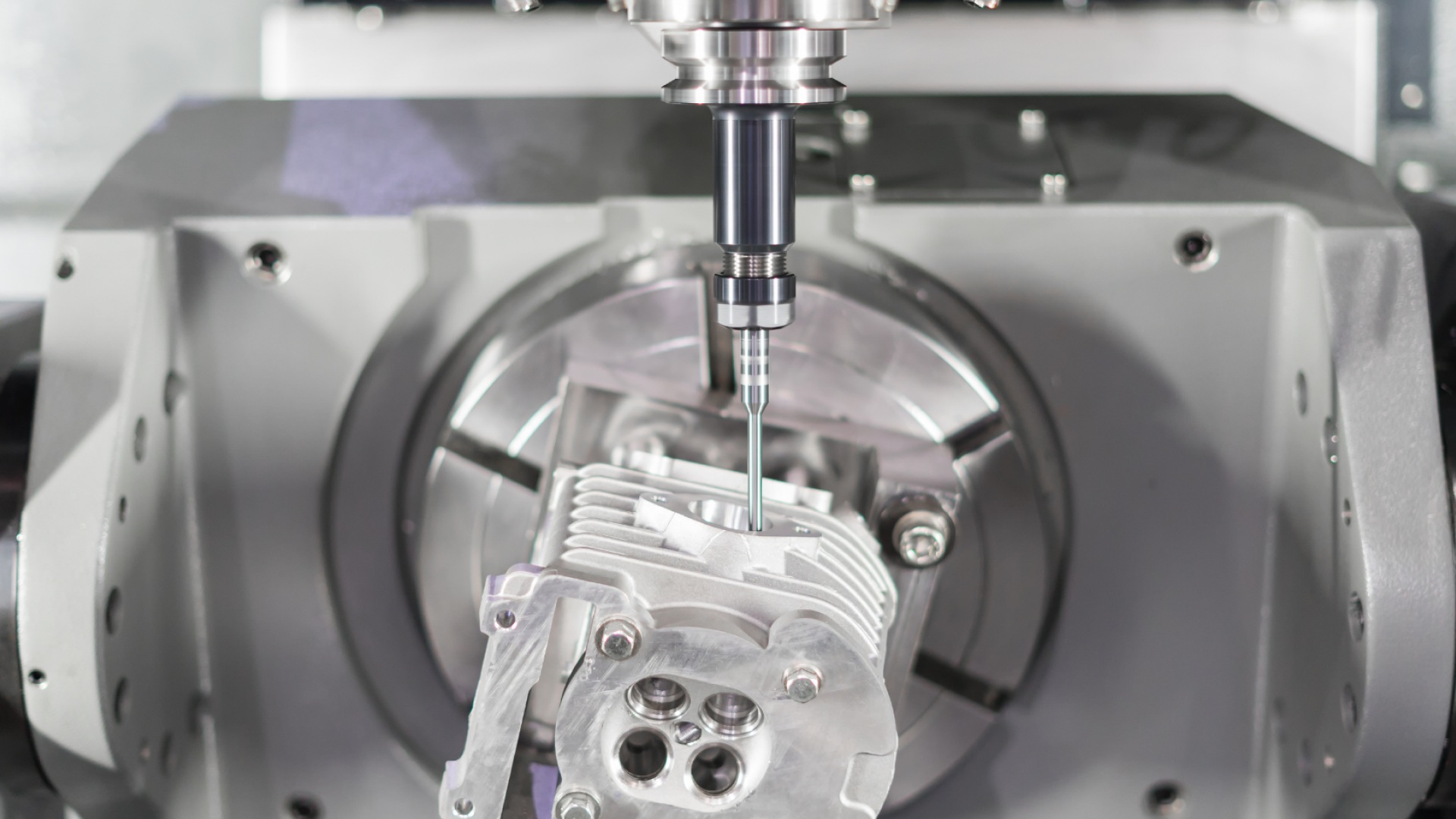
The true value of Simultaneous 5-Axis Machining lies in its ability to handle complex parts with multi-dimensional features that are difficult or impossible to achieve with traditional 3-axis machines.
Enhanced Capabilities for Complex Geometries: 5-axis machining excels in producing parts that require angles, curves, and intricate features. Complex geometries such as undercuts, curved surfaces, and intricate patterns are achievable in a single setup, reducing the need for time-consuming and error-prone multi-step processes.
Increased Accuracy for Tight Tolerances: Industries like aerospace, medical, and defense demand extremely tight tolerances, often in the micrometer range. Simultaneous 5-axis machining allows for higher accuracy and precision, ensuring that parts meet the stringent standards required for these high-risk applications.
Reduced Setup Time: Traditional machining methods often require the part to be removed from the machine and repositioned multiple times. Each new setup introduces the possibility of misalignment and errors. With 5-axis machining, multiple sides of the part can be machined in a single setup, significantly reducing the total cycle time and improving part consistency.
Industries That Benefit from 5-Axis Machining
Simultaneous 5-Axis Machining is a critical process for industries that require precision, reliability, and compliance, especially in sectors like aerospace, medical devices, defense, and photonics, where the margin for error is minimal, and performance is non-negotiable.
Here’s how different sectors benefit from this advanced technology:
Surgical Instruments & Implants: In the medical industry, parts like surgical tools and implants need to be manufactured to the highest standards of precision. Even the smallest deviation from the required dimensions can affect functionality and patient safety.
5-axis machining allows for the creation of intricate designs such as bone screws, dental implants, and orthopedic devices, ensuring that they meet tight tolerances and stringent regulatory requirements.
Diagnostic Components: Medical diagnostic devices, such as sensors and testing equipment, also benefit from the precision and reliability of 5-axis machining, ensuring accurate measurements and consistent performance.
2. Aerospace
Structural Parts: Aerospace parts must withstand extreme environmental conditions such as high pressures, temperatures, and vibrations. Structural components like brackets, housings, and engine components are often complex and must be both lightweight and strong.
5-axis machining provides the capability to create high-precision parts with minimal material wastage, optimizing weight and ensuring structural integrity.
Sensor Housings: Sensors used in aerospace systems require tight tolerances to function properly. 5-axis machining allows for the precise creation of sensor housings, ensuring that they fit accurately and protect the sensitive electronics inside.
3. Defense & Military
ITAR-Compliant Components: The defense industry requires components that meet strict regulatory standards, including ITAR (International Traffic in Arms Regulations) compliance. 5-axis machining is essential for creating parts like missile guidance components, landing gear, and military-grade hardware, all of which must be manufactured to the highest standards of precision and durability.
Assemblies: Complex defense assemblies that require multiple interconnected parts benefit from the efficiency of 5-axis machining, which enables the production of intricate, precisely fit features.
4. Photonics & Optics
Laser Housings & Optical Fixtures: The photonics and optics industries rely on 5-axis machining to create components such as laser housings, optical mounts, and lens fixtures. These parts require extreme precision and fine surface finishes to ensure optimal performance. 5-axis machining enables the production of these components with the necessary geometry, surface finish, and accuracy.
Also Read: Aerospace and Defense Industries: How Precision Machining Plays a Crucial Role
Key Advantages of Simultaneous 5-Axis Machining
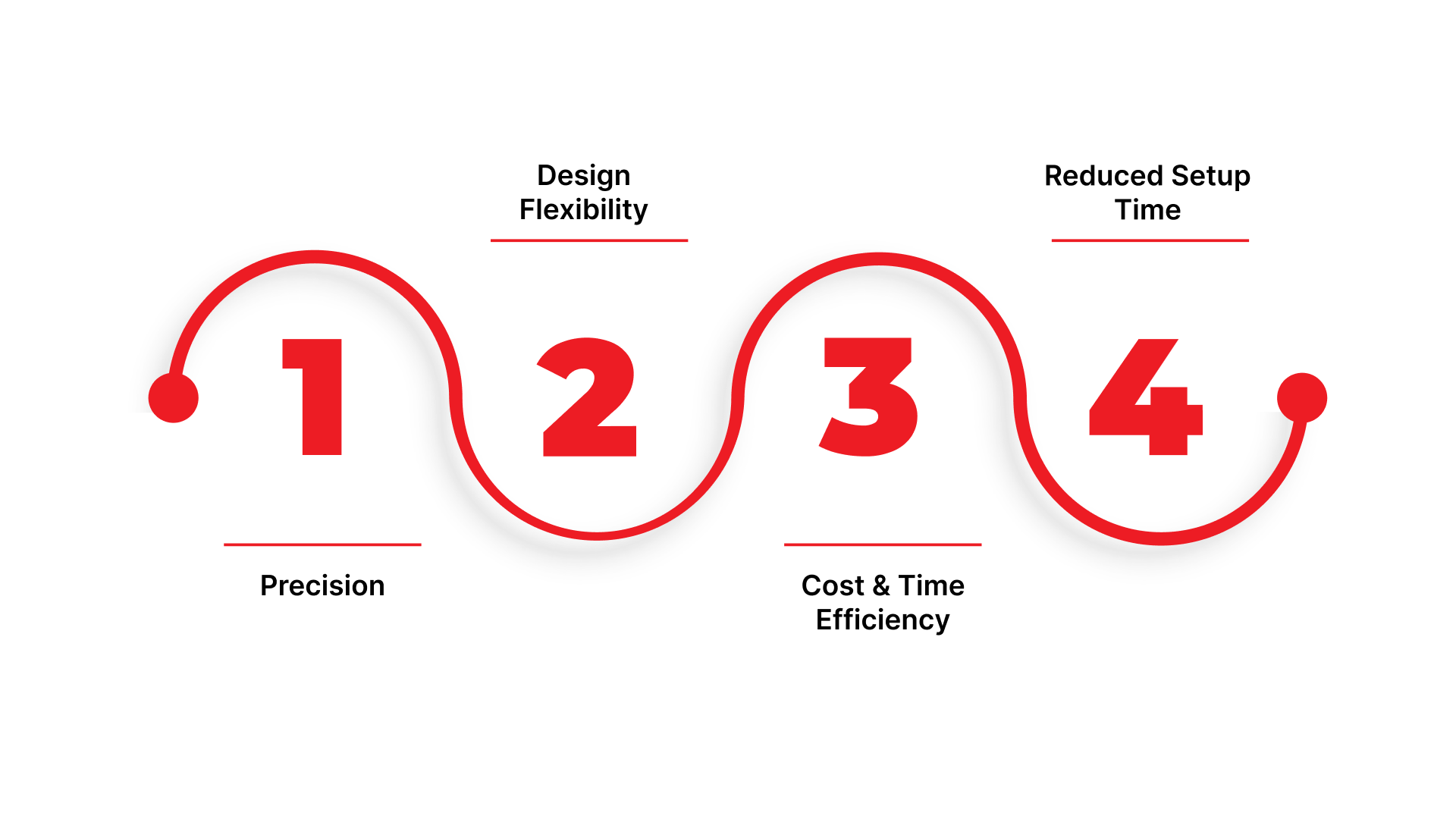
The advantages of Simultaneous 5-Axis Machining extend far beyond just creating complex parts. It significantly enhances part accuracy, reduces setup times, improves surface finishes, minimizes tool wear, and allows for efficient multi-dimensional machining, making it ideal for industries with demanding precision standards.
Here are the key benefits of this advanced machining process:
Precision: 5-axis machining allows for micro-level precision, ensuring that parts meet tight tolerances that are essential in regulated industries such as medical, aerospace, and defense.
Design Flexibility: The ability to machine parts from multiple angles in a single setup increases the design flexibility and reduces the complexity of the manufacturing process. Parts with complex geometries, including undercuts and curved surfaces, can be produced with ease.
Cost and Time Efficiency: By reducing the need for multiple setups and minimizing rework, 5-axis machining improves overall manufacturing efficiency. Parts can be produced faster with higher accuracy, leading to lower production costs and shorter lead times.
Reduced Setup Time: With traditional machining methods, the need for multiple setups increases the likelihood of misalignment and errors. 5-axis machining allows the workpiece to remain in the same position throughout the process, reducing setup time and eliminating the need for repositioning.
How to Choose a CNC Partner for 5-Axis Machining?
Choosing the right CNC machining partner is critical to the success of your project, especially when working with high-precision components.
Here's what to consider:
Experience in Critical Industries: Partner with a CNC shop that has extensive experience in regulated industries such as medical, aerospace, and defense. These industries require precise control over machining processes and compliance with stringent standards.
Certifications & Compliance: Look for CNC partners with certifications such as ISO 9001, ISO 13485, ITAR, and DFARS compliance. These certifications ensure that the machining partner follows best practices and operates within regulated supply chains.
Engineering Support: A reliable CNC partner should offer engineering support to help optimize designs for manufacturability. They should provide valuable input on toolpaths, fixture design, and tolerances to ensure that the final product is produced efficiently and to the required standards.
Proof of Quality Control: Ensure that the CNC partner has a robust quality control system in place. This includes real-time SPC data, in-process metrology, and traceable FAI packages. Quality control is essential for ensuring consistent part quality, especially when working with high-precision parts.
Simultaneous 5-Axis Machining Challenges and Solutions
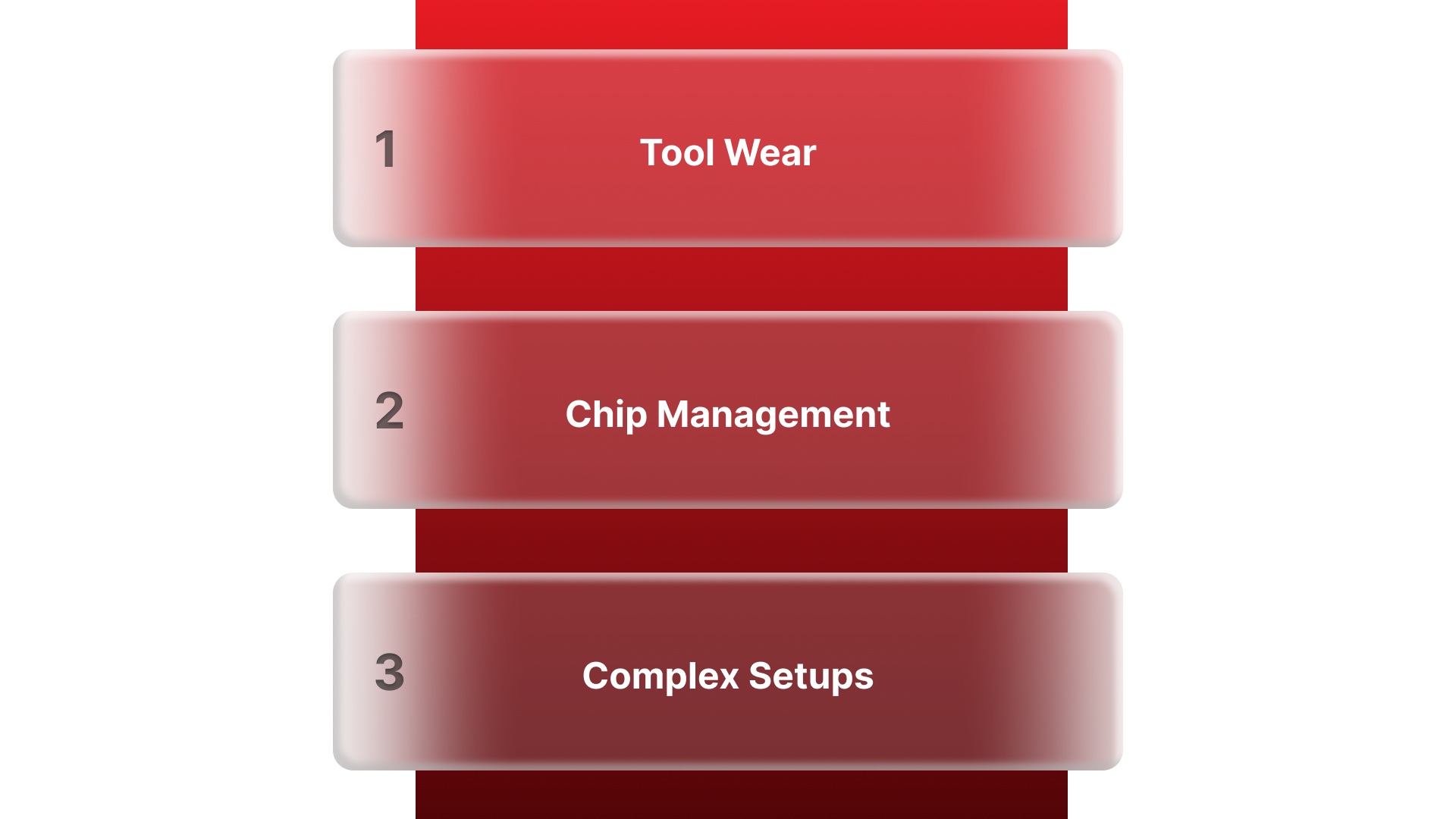
While 5-axis machining offers numerous benefits, it also presents challenges, such as complex fixturing, high tooling costs, managing chip flow, and ensuring consistent part accuracy across extended production runs. These challenges require careful planning and expertise to address effectively.
Here's how to address them:
Tool Wear: Due to the complexity and intensity of 5-axis machining, tools can wear quickly. Use advanced tooling strategies, such as variable helix end mills, to reduce tool wear and extend tool life.
Chip Management: 5-axis machining produces long, stringy chips that can block coolant flow and scratch surfaces. Implement chip-breaking geometries and high-pressure coolant systems to manage chip flow and prevent damage to the part.
Complex Setups: While 5-axis machining reduces the need for multiple setups, some parts may still require intricate fixturing. Ensure that the CNC partner has expertise in fixture design to keep the part stable and prevent errors.
Applications of 5-Axis Machining in Precision Prototyping
5-axis machining is invaluable in prototyping, particularly for industries that require precise, functional prototypes before moving to full production.
Here's how 5-axis machining plays a key role in prototyping:
Prototype to Production: 5-axis machining allows for rapid prototyping, ensuring that prototypes closely replicate the final production parts. This makes it easier to test designs before moving into full production.
Examples in Key Industries: Showcase prototypes for industries such as medical devices and aerospace. For example, prototypes for surgical instruments or aerospace brackets can be produced with high precision and quickly tested before full production runs.
Criterion Precision: Your Ideal CNC Partner for 5-Axis Machining
At Criterion Precision, we specialize in high-tolerance CNC machining services across critical industries like medical devices, aerospace, defense, and photonics. Our experience and commitment to precision make us the ideal partner for your 5-axis machining needs.
What We Offer:
Swiss Turning & CNC Milling/Turning: Our state-of-the-art Swiss turning and multi-axis milling technologies allow us to produce intricate parts with tolerances as tight as ±0.0002".
Prototyping to Production: We provide rapid prototyping that seamlessly transitions to low- or high-volume production, ensuring consistency and quality at every stage.
Material Expertise: We handle a wide range of materials, including aluminum, titanium, stainless steel, and specialty alloys.
Compliance & Certifications: We are ISO 13485, ISO 9001:2015, and FDA-registered, ensuring that our machining processes meet the highest industry standards.
Mission-Critical Industries: We support industries that demand zero-failure tolerance, including medical devices, aerospace, and defense.
Conclusion
Simultaneous 5-axis machining is an essential technology for industries that require precision, reliability, and compliance. Whether you're in the medical, aerospace, defense, or photonics sector, 5-axis machining can help you achieve the complex geometries, tight tolerances, and surface finishes that are crucial for your parts to perform flawlessly.
When choosing a machining partner, it’s essential to prioritize experience, engineering insight, and proof of quality control. Criterion Precision stands out as a trusted partner with the expertise, capabilities, and certifications needed to handle your most demanding machining projects.
Ready to take your precision machining to the next level? Contact Criterion Precision today to discuss how our 5-axis machining services can meet your needs.
FAQs
How does 5-axis machining improve part accuracy compared to traditional CNC machining?
5-axis machining improves accuracy by allowing the cutting tool to approach the part from multiple angles simultaneously. This reduces setup time, minimizes errors, and maintains tight tolerances, ensuring precision across all surfaces.
What are the benefits of using 5-axis machining in prototyping?
5-axis machining provides rapid prototyping with high precision, allowing for complex geometries to be created quickly and accurately. This ensures prototypes closely resemble final production parts, enabling effective testing and design validation.
How do industries like aerospace and medical devices rely on 5-axis machining?
Industries like aerospace and medical devices rely on 5-axis machining for creating complex, high-precision components. It enables the production of intricate parts with tight tolerances and superior surface finishes essential for performance and safety.
What are the key certifications a CNC machining partner should have for 5-axis projects?
For 5-axis machining, key certifications include ISO 9001, ISO 13485 (for medical), ITAR, and DFARS (for defense). These ensure compliance with industry standards, quality control, and regulatory requirements, essential for critical applications.
How does Criterion Precision ensure precision and compliance in 5-axis machining?
Criterion Precision ensures precision through state-of-the-art 5-axis technology, skilled engineering support, and stringent quality controls. We maintain industry certifications, provide real-time inspection data, and guarantee full traceability for all projects.