For engineering, supply chain, and quality leaders in medical devices, aerospace, defense, and high-precision industries, even a small deviation in a part can halt production, trigger costly rework, or create compliance risks. Missed tolerances or inconsistent components can delay product launches, increase scrap, and create audit headaches. Finding a manufacturing partner who can consistently meet stringent specifications while providing clear documentation is a constant challenge.
Precision manufacturing addresses these challenges by providing consistent, highly accurate components that align with exact specifications. It reduces risk in critical systems, ensures parts perform as intended, and helps engineering teams move from prototype to production with confidence.
In fact, the global precision turned product manufacturing market size is projected to reach USD 163.91 billion by 2030. For organizations operating under tight regulatory and operational pressures, precision manufacturing is not just a technical requirement but a strategic approach to maintaining quality, efficiency, and reliability.
This blog explores the core concepts of precision manufacturing, the industries it impacts, the processes and technologies involved, and common challenges.
Key Takeaways:
Precision manufacturing ensures components meet exact specifications with tight tolerances, high repeatability, and reliable documentation, reducing risks in regulated and high-stakes industries.
It improves product quality, enhances safety and compliance, reduces long-term production costs, and ensures better part compatibility across complex assemblies.
Advanced processes such as CNC machining, EDM, grinding, laser micro-machining, additive manufacturing, and metrology systems enable consistent accuracy across prototypes and full-scale production.
Technologies such as CAD/CAM, digital twins, automation, IIoT sensors, and AI optimize workflows and help manage tolerances, materials, and regulatory requirements.
What is Precision Manufacturing?
Precision manufacturing is the practice of producing components with extremely tight tolerances, high consistency, and traceable quality. Unlike conventional machining, precision manufacturing is focused not just on form and function, but also on compliance, repeatability, and reliability.
Components are designed and produced to meet exact engineering specifications, often in regulated industries where errors can result in critical failures or costly recalls.
Core Characteristics of Precision Manufacturing
Precision manufacturing is defined by several core characteristics that distinguish it from standard production:
Tight Tolerances: Components are produced within very narrow dimensional limits. For example, aerospace brackets or medical implants often require tolerances as tight as ±0.0002”. Maintaining these tolerances reduces rework and scrap while ensuring reliable product function.
High Repeatability: Processes are optimized to produce identical parts consistently, minimizing variations between units. This is critical in regulated industries where part interchangeability matters.
Surface Finish and Quality: Achieving consistent surface finishes and minimizing imperfections improves assembly, reduces wear, and enhances product longevity.
Compliance and Documentation: Comprehensive inspection reports, traceability, and certificates of conformity ensure components can pass audits and meet regulatory requirements in medical, aerospace, and defense applications.
Advanced Materials: Manufacturers often work with materials like titanium, specialty alloys, or engineered plastics, handling each carefully to maintain precise specifications.
By integrating these characteristics, manufacturers can create components that are not only technically precise but also reliable in crucial applications. Next, let's explore how precision manufacturing impacts product quality, safety, and operational efficiency.
Also Read: The Role of Precision Machining in Medical Device Manufacturing
Why Precision Manufacturing Matters?
The significance of precision manufacturing goes beyond dimensional accuracy. In industries where failure is not an option, precision directly affects safety, reliability, and operational efficiency. Key impacts include:
Below are the key benefits of precision manufacturing:
Higher Product Quality and Consistency
Precision manufacturing builds every component to exact specifications, reducing variation and guaranteeing consistent results. This is essential for industries where even small deviations can compromise performance or safety.
Minimized defects: Precise machining reduces dimensional errors and surface irregularities, ensuring every part meets strict quality and functional standards.
Repeatable performance: Controlled processes replicate the same high-quality output across large batches, improving reliability in mass production.
Better fit and assembly: Accurate dimensions reduce alignment issues, rework, and assembly time, especially in multi-component systems.
With greater consistency and reliability, precision manufacturing helps businesses deliver products that perform better in real-world conditions.
Enhances Safety and Compliance
Industries that rely on crucial components cannot tolerate failure. Precision manufacturing supports strict regulatory and performance requirements, helping companies maintain compliance and meet global quality standards.
Reliable operation in critical use cases: Aerospace, medical, and automotive parts manufactured with precise tolerances reduce the risk of operational failure.
Supports stringent certification: Processes are aligned with standards like AS9100, ISO 13485, and IATF 16949, helping companies avoid compliance risks and penalties.
Reduces liability risks: Consistent quality reduces failures and warranty issues, strengthening product credibility.
By aligning with compliance expectations, precision becomes a key contributor to safe and robust product design.
Improves Efficiency and Reduces Costs
Although precision manufacturing requires advanced systems, it significantly lowers long-term production costs by reducing waste, rework, and downtime.
Lower scrap and material waste: Accurate processes minimize rejected parts, saving material and improving resource efficiency.
Less rework and manual correction: High precision reduces secondary operations, shortening the production cycle and lowering labor hours.
Longer equipment and tooling life: Controlled machining parameters reduce tool wear and downtime, helping facilities operate more efficiently.
Over time, these efficiencies translate into higher output, smoother workflows, and reduced production expenses.
Better Compatibility and Interchangeability
Modern products often rely on assemblies built from multiple components sourced from different suppliers. Precision manufacturing ensures these parts work together seamlessly.
Reliable fit across assemblies: Components designed to strict tolerances assemble smoothly without forcing, misalignment, or additional adjustments on the production line.
Standardisation across suppliers: Precision allows different manufacturers to produce interchangeable parts that maintain consistent dimensions and performance.
Support for modular product design: When parts fit reliably, businesses can design modular systems that scale easily, reduce downtime, and support faster maintenance.
Enhanced compatibility strengthens supply chains and improves product reliability across industries.
Enables Innovation and Advanced Product Design
Modern products demand complex geometries, lightweight structures, and multi-material configurations. Precision manufacturing enables engineers to turn innovative concepts into reality.
Supports complex geometries: Multi-axis machining and advanced technologies allow for tight curves, deep pockets, and intricate shapes.
Improves functional performance: Customized tolerances help products operate more smoothly, quietly, and efficiently across demanding applications.
Accelerates product development cycles: Reliable precision enables faster prototyping and seamless transition into full-scale production.
With precision capabilities, manufacturers can push design boundaries without compromising functionality or reliability.
Ultimately, precision manufacturing helps businesses reduce operational risk, protect brand reputation, and maintain competitiveness in markets where quality cannot be compromised.
Also Read: How Precision Machining Drives Innovation in Manufacturing
In the next section, let’s now examine how these capabilities translate into real-world applications across diverse industries.
Applications of Precision Manufacturing Across Industries
Precision manufacturing plays a pivotal role across multiple sectors, particularly where failure can have significant consequences. Some key applications include:
Medical Devices: Surgical instruments, implantable devices, diagnostic equipment, and surgical guides require components with exact tolerances, biocompatible materials, and thorough inspection.
Aerospace: Structural components, sensor housings, brackets, and engine parts must meet exacting dimensional and material specifications to maintain flight safety and performance.
Defense & Military: Weapon systems, targeting equipment, and ITAR-compliant assemblies demand strict traceability, high reliability, and adherence to DFARS regulations.
Photonics & Optics: Laser housings, optical mounts, and imaging equipment require precision alignment and dimensional control to function accurately.
Industrial & Instrumentation Equipment: Components for high-precision measurement instruments, semiconductor equipment, and automation systems rely on exacting standards to maintain performance.
Across these industries, precision manufacturing directly affects operational KPIs such as failure rates, regulatory audit success, and product lifecycle costs. Next, let's look at advanced processes that control dimensions, materials, and surface quality.
Processes Involved in Precision Manufacturing
Precision manufacturing relies on advanced processes that control dimensions, surface finish, and material integrity. Key processes include:
CNC Machining
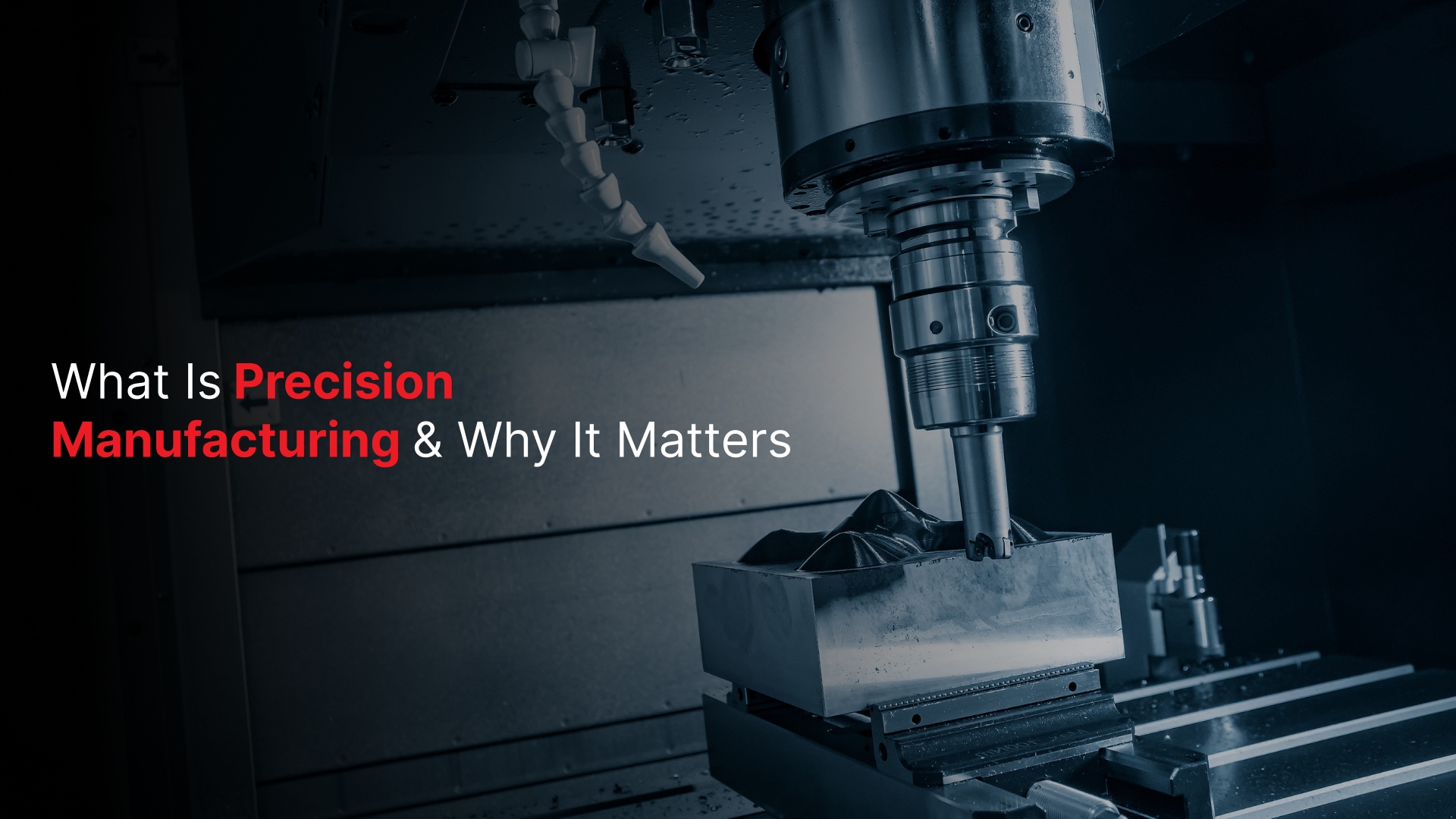
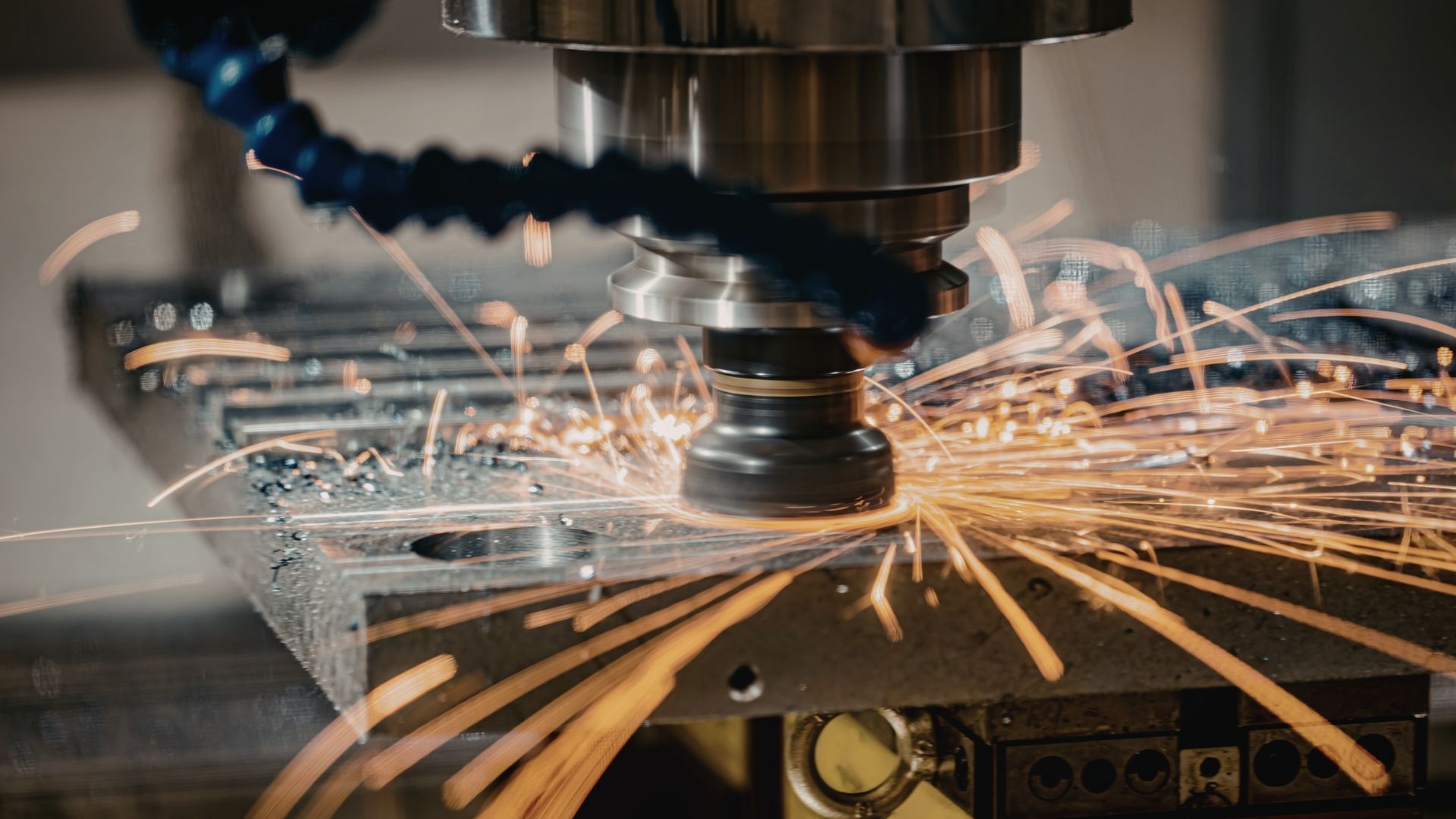
CNC machining is the backbone of precision manufacturing, using computer-controlled equipment to produce complex geometries with exceptional accuracy. Multi-axis CNC milling and lathes remove material with controlled toolpaths, ensuring consistent tolerances, clean surface finishes, and repeatable results.
It’s ideal for components in aerospace, medical devices, robotics, and defence, where even minor deviations can compromise safety or performance.
CNC Turning
CNC turning produces precise cylindrical parts by rotating the material against a cutting tool. This process is crucial for shafts, bushings, pins, and threaded components that must meet strict dimensional requirements.
With modern tooling and automated measurement, CNC turning maintains roundness, concentricity, and surface quality across large batches.
Electrical Discharge Machining (EDM)
EDM is used for parts that are too hard, complex, or delicate for traditional cutting tools. By using electrical sparks to erode material, EDM can create thin walls, sharp internal corners, deep cavities, and intricate shapes without inducing mechanical stress. It’s especially valuable for aerospace, medical implants, and mould-making.
Grinding
Grinding delivers extremely fine tolerances and exceptional surface finishes. High-precision grinders remove small amounts of material to perfect flatness, roundness, or surface texture.
This step is often used as a finishing process for parts that must meet micrometre-level accuracy or have friction-critical surfaces, such as bearings or surgical instruments.
Laser Cutting and Micro-Machining
Laser-based processes use focused beams to cut or shape materials with minimal heat distortion and high repeatability.
These techniques are ideal for micro-features, thin metals, delicate components, and high-volume electronic parts. Laser processes also support rapid prototyping and scaling to production.
Additive Manufacturing (3D Printing)
Additive manufacturing builds parts layer by layer, enabling complex geometries and lightweight designs not possible with subtractive methods. When combined with post-machining, it creates hybrid precision systems used in aerospace, medical implants, tooling, and custom fixtures.
The process reduces waste, supports fast iteration, and accelerates product development timelines.
Quality Inspection and Metrology
Every precision process depends on accurate measurement. Tools like CMMs, optical scanners, and digital metrology systems verify dimensions, tolerances, and surface qualities at each stage of production.
Reliable inspection ensures consistency across batches, compliance with industry standards, and full traceability for mission-critical applications.
Combining these processes with CAD/CAM design and ERP integration ensures production is controlled, predictable, and efficient. Next, let's discuss modern technologies that further enhance precision, consistency, and operational control.
Key Technologies Driving Precision Manufacturing
Technological advancements have expanded the capabilities of precision manufacturing, enabling more complex, accurate, and efficient production. Key technologies include:
CAD & CAE Tools: These platforms allow engineers to design complex parts, run simulations, and validate performance before production begins. They support complex geometries and reduce development time for high-precision applications.
CAM Software: Converts 3D models into optimized toolpaths that improve machining accuracy and efficiency. It ensures consistent results with minimal manual intervention by controlling machine movements intelligently.
Advanced CNC Controllers: Use high-speed processors, adaptive algorithms, and real-time error correction to maintain tight tolerances. These controllers stabilize machining performance even under varying operating conditions.
Digital Twin Technology: Digital twins create a virtual model of machines or processes to test performance before a part is produced. This reduces scrap, improves first-part yield, and helps teams make data-driven decisions.
IIoT & Smart Sensor Networks: Sensors capture real-time data on temperature, vibration, and tool wear, factors that directly impact precision. IIoT platforms use this data to automate corrections and prevent tolerance drift.
Automation & Robotics: Robots and cobots improve repeatability by executing tasks with consistent speed and force. They reduce human error and support high-volume, precision-focused workflows.
AI & Predictive Analytics: Robots and cobots improve repeatability by executing repetitive tasks with consistent force and position control. They help achieve reliable precision at scale while reducing human-driven variation.
ERP & MES Systems: These systems coordinate planning, scheduling, quality, and traceability across the factory. They ensure every part follows controlled workflows and meets industry-specific compliance requirements.
These technologies allow manufacturers to maintain consistency while scaling production, ensuring compliance and reducing operational risk. In the next section, let's discuss the challenges that manufacturers must navigate carefully.
Challenges in Precision Manufacturing
Despite technological advancements, precision manufacturing presents several challenges. Awareness of these helps make smarter supplier and process decisions.
Common challenges include:
Maintaining Tight Tolerances: Even minor variations in material, temperature, or tooling can impact component accuracy.
Material Behavior: Metals and plastics can react differently under cutting forces or thermal expansion, requiring careful process planning.
Process Variation: Differences in machines, operators, or environmental conditions can affect repeatability.
Regulatory Compliance: Meeting ISO, FDA, ITAR, and DFARS requirements demands rigorous documentation and audit-ready processes.
Cost and Lead Time: Tight tolerances and complex geometries increase production time and cost, requiring careful planning to meet budgets and schedules.
Addressing these challenges requires a combination of skilled personnel, advanced technology, and robust quality systems.
How Criterion Precision Supports High-Precision Manufacturing?
Criterion Precision Machining specializes in producing highly precise, compliant components for regulated and mission-critical industries. Their approach integrates technology, experience, and compliance to reduce risk and accelerate production:
Here’s how we can assist you:
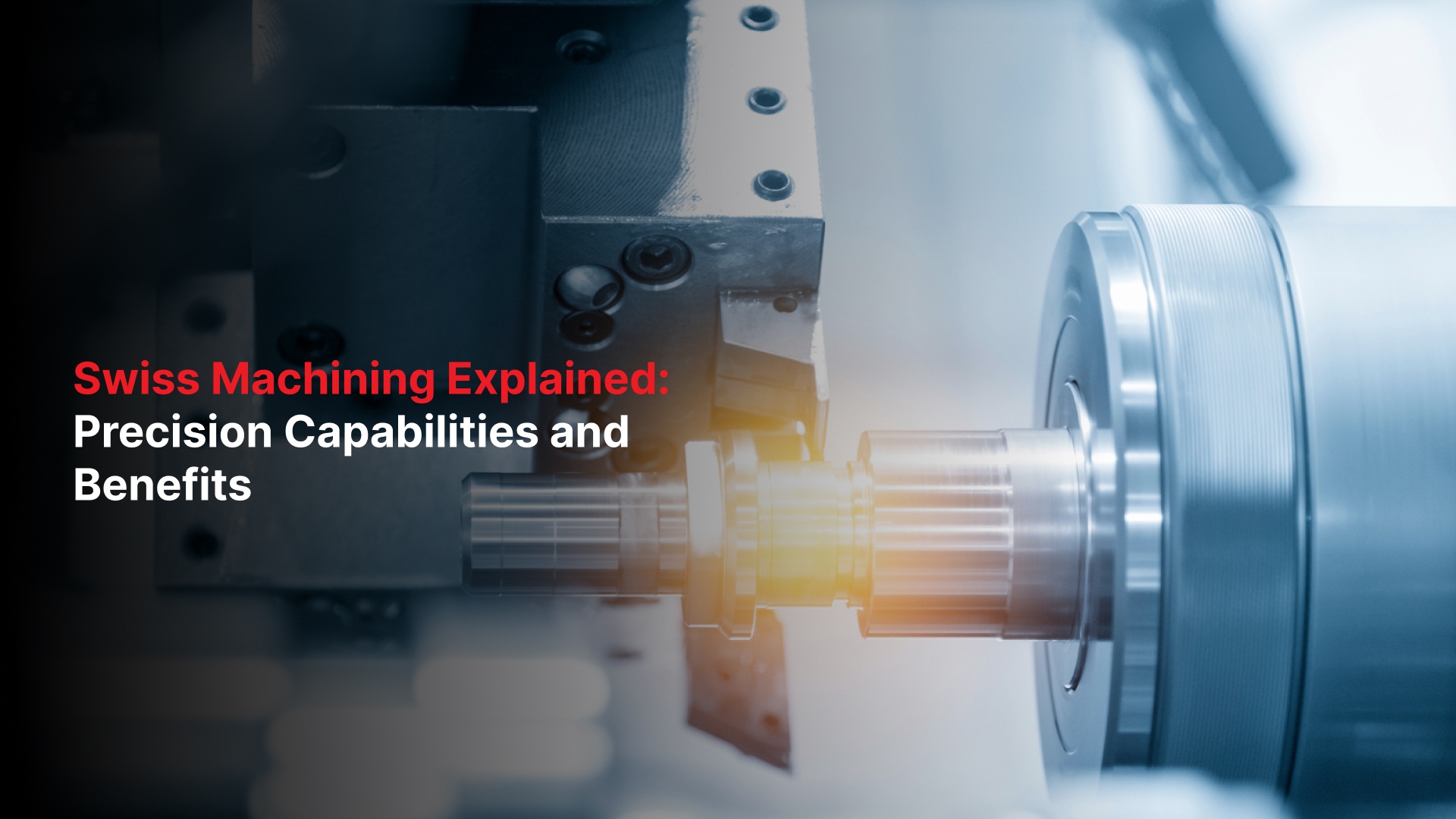
Expertise Across Processes: CNC turning, Swiss turning, and multi-axis milling capabilities support both prototypes and high-volume production.
Tight Tolerances: Ability to maintain tolerances down to ±0.0002”, ensuring reliable, repeatable parts.
Material Versatility: Works with metals and engineered plastics for demanding applications across aerospace, medical, defense, and optics.
Regulatory Compliance: ISO 13485, ISO 9001:2015, FDA, ITAR, and DFARS compliance support audit-ready supply chains.
Integrated Workflow: CAD/CAM, ERP, and quality systems provide traceability, inspection reports, and certificates of conformity.
Industry Experience: Decades of work with medical devices, aerospace, defense, and photonics ensure a deep understanding of critical manufacturing requirements.
Prototype-to-Production Support: Teams can transition designs seamlessly from early prototypes to full-scale production, reducing supply chain risk.
Comprehensive Documentation: Certificates of conformity, inspection reports, and traceability are included with every part, helping quality and regulatory teams maintain KPIs.
Partnering with Criterion Precision Machining helps companies to focus on design and end-product performance while minimizing supply chain risk.
Conclusion
Precision manufacturing is essential for companies operating in industries where performance, reliability, and compliance are non-negotiable. It enables consistent production of high-quality components, supports regulatory requirements, reduces operational risk, and allows manufacturers to maintain a competitive edge.
Partnering with experienced providers like Criterion Precision Machining allows businesses to leverage advanced processes, tight tolerances, and audit-ready workflows, ensuring products meet exacting standards from prototype to production.
Reach out to us today to explore how precision manufacturing can enhance your production processes and elevate your product quality.
FAQs
How does precision manufacturing support innovation in high-tech sectors?
By enabling the production of complex, miniaturized, and highly accurate components, precision manufacturing allows high-tech sectors, like aerospace, medical devices, and electronics, to design innovative products that require exact specifications and intricate geometries impossible with conventional methods.
What is the role of quality control in precision manufacturing?
Quality control ensures every component meets strict tolerances, functional specifications, and industry standards. It identifies defects early, reduces waste, guarantees consistency, and maintains the high reliability required for critical applications in aerospace, medical, and electronics industries.
How has automation advanced precision manufacturing techniques?
Automation has enhanced precision manufacturing by enabling consistent, high-speed production with minimal human error. Robotic machining, CNC systems, and AI-driven inspection allow complex parts to be produced repeatedly, improving efficiency, accuracy, and throughput while reducing operational costs and manual intervention.
How does precision manufacturing impact cost savings long-term?
Though initial investment is higher, precision manufacturing reduces material waste, rework, and product failures. Enhanced efficiency, lower defect rates, and longer-lasting high-quality components lead to substantial long-term cost savings and improved ROI for businesses in high-tech and critical industries.