What is CNC machining in the medical industry?
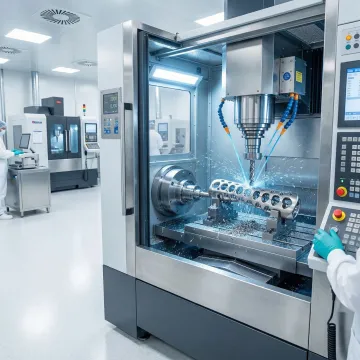
CNC machining in the medical industry involves using computer-controlled precision equipment — such as CNC mills, lathes, and Swiss turning centers — to manufacture mission-critical components for medical devices, surgical instruments, and implantable parts. Medical CNC machining requires extreme accuracy, biocompatible materials, regulatory compliance, and thorough quality documentation to ensure patient safety. Specialized medical machine shops like Criterion achieve tolerances as tight as ±.0002" to meet the stringent demands of medical device OEMs.
What certifications does Criterion have for medical device manufacturing?
Criterion is ISO 13485 certified, ISO 9001 certified, and FDA registered. These certifications ensure compliance with all regulatory requirements for medical device component manufacturing, including quality management systems, complete traceability, and the documentation standards required by the medical device industry.
What medical machine shop services does Criterion offer?
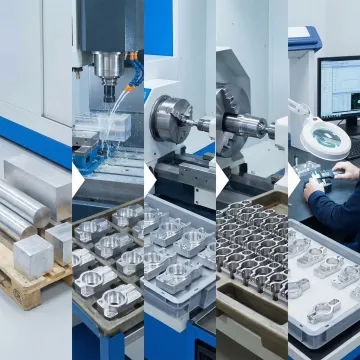
Criterion offers a comprehensive range of precision machining services for medical device manufacturers, including Swiss turning for high-volume small-diameter components, multi-axis CNC milling (3-, 4-, and 5-axis), CNC turning, production-intent prototyping, certified quality inspection, and micro-machining for components with features as small as .010" in diameter. All services are performed under ISO 13485 and ISO 9001 certified quality management systems.
What tolerances can Criterion achieve on medical components?
Criterion routinely achieves tolerances as tight as ±.0002" on medical device components, with diameter capabilities down to .010". This level of precision is made possible by advanced Swiss turning centers, multi-axis CNC equipment, and precision inspection systems including a Global Advantage CMM with PC-DMIS software, an OASIS optical inspection system, and Keyence measurement equipment.
What materials does Criterion machine for medical applications?
Criterion specializes in a wide range of medical-grade materials, including titanium alloys, 300-series stainless steels, 17-4 stainless steel, PEEK, and other specialty plastics and alloys. All materials come with complete traceability and biocompatibility documentation required for medical device applications.
Does Criterion offer prototyping services before full production runs?
Yes. Criterion specializes in production-intent prototyping using the same precision equipment and quality inspection protocols as full production. This approach validates fit, function, and manufacturability while providing real-world performance data. Once prototypes are approved, Criterion transitions seamlessly to volume production without reprogramming or re-qualification, saving time and ensuring consistency.
What inspection and documentation does Criterion provide with medical components?
Every component undergoes multi-point inspection using Criterion's Global Advantage CMM with PC-DMIS software, OASIS optical inspection system, and Keyence measurement equipment. Customers receive Certificates of Conformance, detailed inspection reports, material certifications, and complete traceability documentation at no additional charge — all essential for medical device quality systems and regulatory audits.
How long has Criterion been manufacturing precision medical components?
Criterion Precision Machining was founded in 1953, giving the company over seven decades of precision machining expertise. Under the leadership of third-generation owner and President Tanya DiSalvo, the company has evolved from a general machine shop into a specialized medical component manufacturer, combining a generational legacy of craftsmanship with cutting-edge Swiss turning and multi-axis CNC technology to serve medical device OEMs.