Producing high-precision components while meeting strict regulatory standards can be a major challenge for medical, aerospace, and defense manufacturers. Missed specifications, inconsistent surface finishes, and slow prototype cycles can disrupt production schedules, increase scrap rates, and create costly delays in the supply chain. Engineering and operations teams often struggle to find suppliers who can consistently deliver complex parts while meeting strict regulatory and quality requirements.
CNC milling offers a solution to these challenges by providing precision, repeatability, and control across low-volume prototypes and high-volume production runs. When executed correctly, it helps reduce scrap, improves yield, and keeps production on schedule.
With the global CNC milling machines market size expected to increase to USD 116.88 billion by 2034, manufacturers are increasingly turning to this technology to stay competitive. By integrating CNC milling into their operations, companies can maintain production stability and scale output without compromising on precision or compliance.
This guide covers everything you need to know about CNC milling: how it works, types of machines, key processes, design considerations and applications.
At a Glance:
Tight tolerance machining ensures components meet exact dimensions, improving fit, function, and long-term reliability.
Factors like machine stability, tooling, material behaviour, thermal control, and operator skill directly affect precision and consistency.
Manufacturers achieve ultra-tight specifications by using advanced processes such as multi-axis milling, temperature-controlled machining, and in-process inspection.
Designing realistic tolerances, selecting suitable materials, managing costs, and addressing challenges like tool wear and thermal effects help teams maintain quality and reduce scrap.
What is CNC Milling and Why Does it Matter?
CNC milling is a computer-controlled machining process that removes material from a workpiece to create precise shapes and features. It transforms a digital CAD model into physical components with minimal manual intervention.
Here’s why it matters:
Consistent Accuracy: CNC milling delivers repeatable precision across batches, reducing tolerance issues, inspection load, and rework.
Protects Uptime: Parts that meet specifications consistently minimize line stoppages and help operations maintain smooth production.
Design Flexibility: Multi-axis milling allows complex geometries and tighter tolerances without compromising manufacturability or iteration speed.
Compliance & Traceability: CNC milling supports strict documentation and material compliance, lowering supplier-related risks in regulated industries.
Improves Operational KPIs: Reduces scrap, boosts throughput, and stabilizes yield and cost per unit for more predictable manufacturing outcomes.
Also Read: The Role of Precision Machining in Medical Device Manufacturing
Key Components of a CNC Milling Machine
Every CNC milling machine includes mechanical, electrical, and software-driven systems that work together to machine parts accurately and consistently. Understanding these components helps engineering and operations teams evaluate capabilities and match them to highly regulated, precision-critical components.
Key components include:
Spindle System: The spindle drives the cutting tool at controlled speeds. Its rigidity and thermal stability directly influence surface finish, dimensional accuracy, and the ability to hold tolerance across long production runs.
Cutting Tools: End mills, face mills, drills, and specialty cutters shape the material. Tool geometry and tool life affect cycle time, scrap rate, and consistency across batches.
Machine Axes (X, Y, Z + rotary axes): Multi-axis capability increases part complexity. More axes reduce setups, improve repeatability, and allow tighter geometric tolerances.
Workholding and Fixturing: Stable workholding minimizes vibration. Good fixturing reduces tool chatter, improves surface finish, and supports faster feeds without losing accuracy.
CNC Controller: The controller interprets G-code, manages motion control, and maintains precision. High-performance controllers support advanced toolpaths and better tolerance control.
Coolant and Chip Management: Coolant removes heat and chips, which protects the tool and stabilizes dimensional accuracy. Chip buildup can cause thermal distortion, scrapped parts, and unplanned downtime.
Together, these components create a controlled environment that helps manufacturers meet tolerance, quality, and regulatory requirements across all production stages.
In the next section, let’s walk through how CNC milling actually operates from design to final inspection.
How CNC Milling Works?
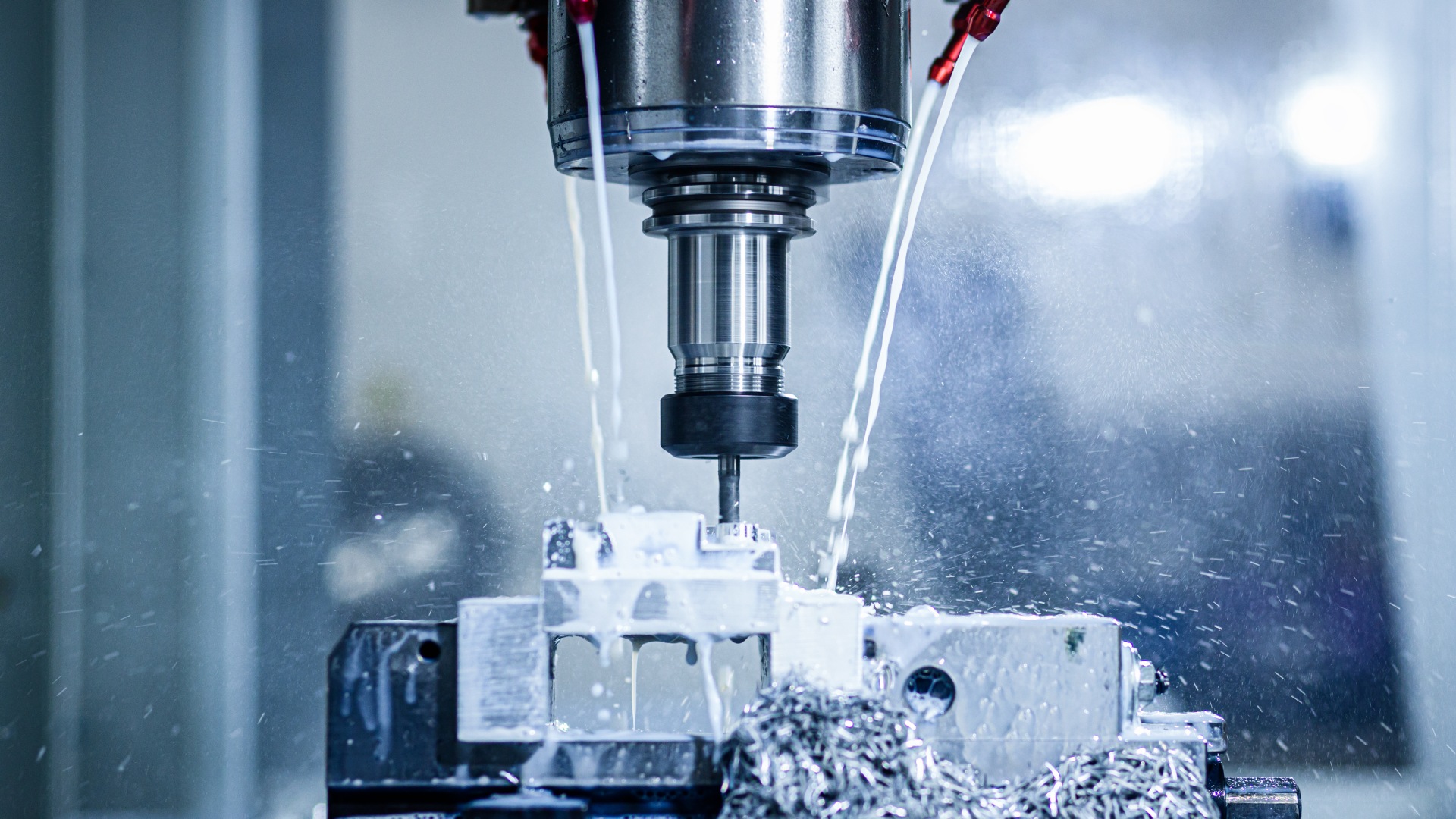
CNC milling transforms raw material into precise components through a structured, automated process. Here’s how it works step by step:
CAD Model Creation
The process begins with a detailed 3D CAD model of the part. Engineers define the geometry, tolerances, and materials to meet functional and regulatory needs. Accurate CAD models keep dimensions consistent and minimize design iterations.
CAM (Computer-Aided Manufacturing) Programming
Next, the CAD model is imported into CAM software, where toolpaths, cutting strategies, and feeds/speeds are defined. This step converts the design into instructions that the CNC machine can execute. Proper CAM programming maintains accuracy, reduces rework, and ensures predictable production cycles.
Machine Setup and Workholding
Before machining, the material is secured using fixtures, vises, or clamps tailored to the part’s geometry. A correct setup prevents vibration, part movement, or misalignment during machining. For small-diameter or intricate parts, precise workholding ensures concentricity and repeatable results.
CNC Machining Operation
Once the setup is ready, the CNC machine executes the operations, removing material to form the desired shape. Multi-axis milling reduces the need for multiple setups and keeps dimensions accurate. Each cut is controlled to meet surface finish and tolerance standards.
Inspection and Quality Verification
After machining, the component undergoes inspection using CMMs, micrometers, or optical systems. Inspection verifies critical dimensions, tolerances, and surface finishes. Comprehensive documentation, including certificates of conformity and traceability records, ensures the part is audit-ready and compliant with ISO 13485, FDA, or ITAR requirements.
By following these steps, CNC milling reduces human error, improves lead time stability, and supports consistent throughput across batches. Next, let's explore the different machine types that shape capability and complexity.
Also Read: Material Selection for Medical Device Components: Insights from Criterion Tool
Types of CNC Milling Machines
CNC milling machines vary in structure, axis count, and capability, which determines the complexity and precision of parts they can produce.
Common machine types include:
3-Axis Milling Machines
3-axis machines are the most common CNC mills, moving along the X, Y, and Z axes. They are ideal for producing flat surfaces, simple contours, and basic pockets, delivering predictable accuracy and repeatable results for parts that need standard precision
Versatile machining: Handles a wide range of components, from small brackets to medium-sized enclosures.
Consistent tolerances: Maintains repeatable dimensional control suitable for regulated industries like medical and aerospace.
Efficient setup: Fewer moving parts and simpler programming reduce cycle time for high-quality prototype and production runs.
For companies seeking reliable machining for standard components, 3-axis machines provide cost-effective precision while supporting stable manufacturing processes.
4-Axis Milling Machines
4-axis machines add rotational capability to the three linear axes, enabling machining around the circumference of a part. This feature reduces manual repositioning and keeps alignment tight for cylindrical or partially complex components.
Rotary axis precision: Enables machining of features around a part’s perimeter with high accuracy.
Reduced setups: Fewer repositionings decrease the risk of misalignment and maintain tight tolerances.
Ideal for production: Supports mid-volume production of intricate parts while keeping inspection and documentation streamlined.
4-axis machines bridge the gap between simple 3-axis milling and complex multi-axis operations, offering flexibility without compromising repeatability.
5-Axis Milling Machines
5-axis machines move the tool along X, Y, Z axes plus two rotational axes, providing multi-directional access to the workpiece. These machines are crucial for components with highly complex geometries and tight tolerances.
Complex geometry handling: Machines angled surfaces, deep pockets, and undercuts in one setup to meet exacting specifications.
High precision: Maintains dimensional accuracy across difficult angles and tight tolerances.
Efficiency for regulated parts: Reduces handling and setup steps, supporting consistent documentation and inspection compliance.
5-axis milling helps manufacturers achieve high-precision parts while keeping documentation and compliance straightforward.
Vertical Milling Machines (VMCs)
VMCs feature a vertically oriented spindle and are highly versatile for a variety of part types. They are widely used in the production of precision housings, surgical instruments, and other mission-critical components.
Vertical spindle advantages: Supports accurate pocketing, surface finishing, and feature alignment.
Reliable for small-to-medium parts: Handles components with tight tolerances consistently.
Simplified workflow: Ideal for both prototyping and production runs, maintaining documentation standards.
VMCs are often the go-to solution for manufacturers seeking dependable machining with predictable quality across varied applications.
Horizontal Milling Machines (HMCs)
HMCs feature a horizontal spindle, allowing multiple cutting tools to operate simultaneously. This setup is particularly useful for high-volume production of heavy or complex components with tight compliance requirements.
Enhanced chip evacuation: Keeps cutting surfaces clear, reducing heat buildup and maintaining tool life.
High-volume efficiency: Multiple pallets and automatic tool changers allow uninterrupted production.
Precision for critical components: Supports aerospace and defense parts where repeatability and dimensional fidelity are essential.
Horizontal machines are suited for manufacturers seeking scalable production with consistent quality across large batches.
Gantry and Bridge Mills
Gantry-style mills are designed for large, flat, or oversized components. They provide stability and rigidity for machining materials that require both dimensional accuracy and structural integrity.
Large-part capability: Handles components too big for standard mills, such as aerospace panels or industrial frames.
Rigidity and precision: Maintains tight tolerances over long spans and complex surfaces.
Adaptable for production: Supports prototyping and low-to-mid-volume production runs without compromising compliance documentation.
Gantry and bridge mills ensure that even the largest or most geometrically complex parts meet high standards for precision, repeatability, and regulatory compliance.
Each machine type supports unique geometries and production volumes while maintaining repeatability for regulated applications. In the next section, let’s move into the specific machining operations used to create precise features.
Key CNC Milling Processes
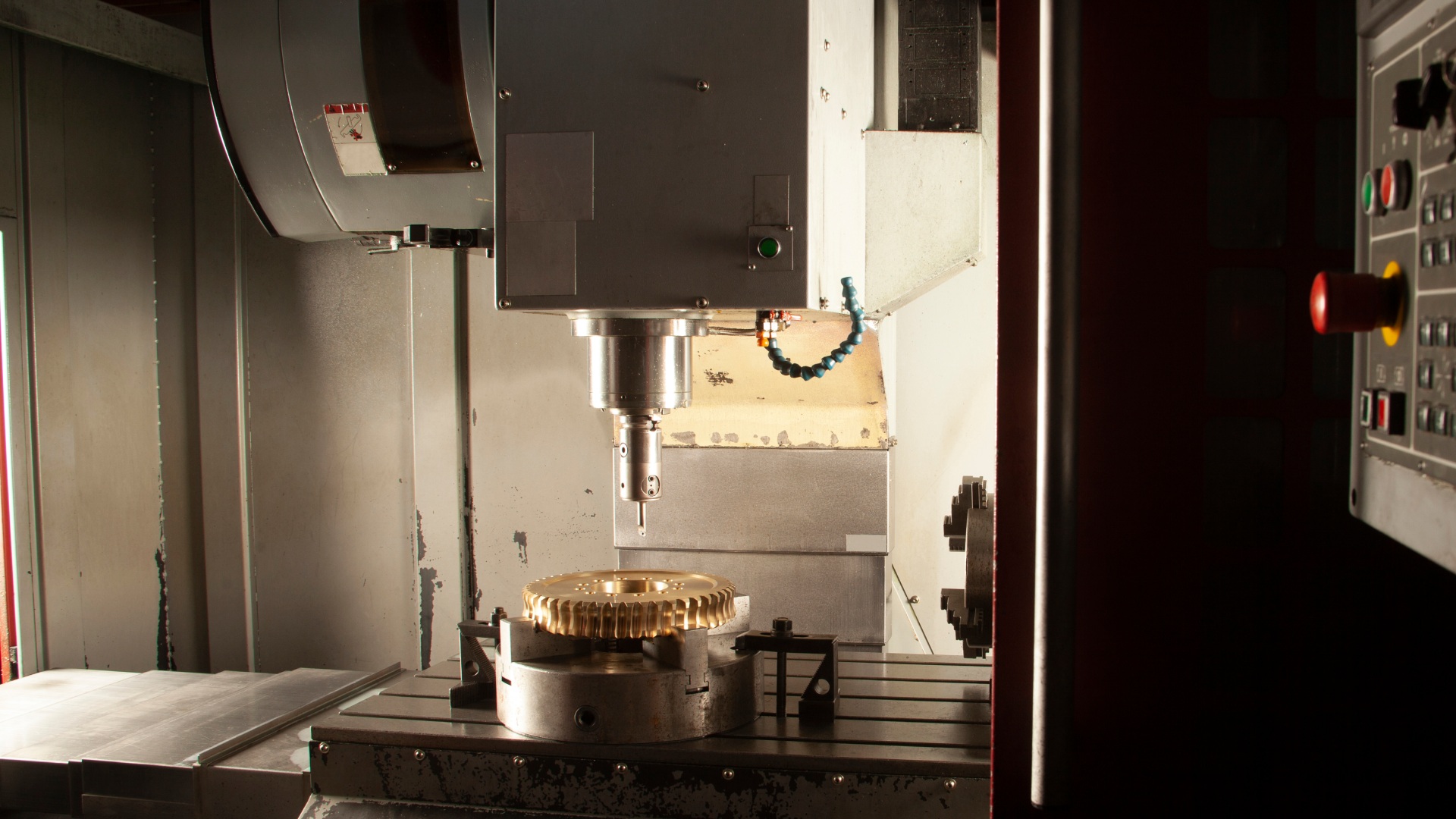
CNC milling supports a wide range of operations that shape, refine, and finish components. Manufacturers rely on these processes to meet dimensional, functional, and assembly requirements.
Core milling processes include:
Face Milling
Face milling is used to create flat surfaces on the workpiece. In high-precision components, it sets reference planes for assembly or further machining. Controlling surface finish and accuracy is crucial for medical instruments, aerospace brackets, and optical mounts.
End Milling
End milling uses rotating cutters to remove material from edges, slots, or pockets. It is ideal for producing detailed features, complex contours, and precise cutouts. For applications like implant housings or sensor enclosures, end milling ensures features meet tight tolerances consistently.
Contour Milling
Contour milling creates complex, curved surfaces that follow the part geometry. This process is commonly applied to aerospace structural parts, optical fixtures, and defense components where precise 3D profiles are required. Contour milling reduces multiple setups and ensures concentricity and alignment.
Drilling and Boring
Drilling creates holes, while boring enlarges or fine-tunes them. Accurate hole placement and diameter are essential for assembly fit, alignment pins, or fasteners in mission-critical devices. Tight tolerances are necessary for medical devices and ITAR-controlled defense parts.
Thread Milling and Tapping
Thread milling cuts internal or external threads with precision. It’s used for fasteners, instrument assemblies, and aerospace components. This process controls thread geometry closely and reduces misalignment risks.
Pocketing
Pocketing removes material from the internal cavities of the part. This process is essential for enclosures, housings, or brackets where internal clearance and structural integrity must be maintained. Proper pocketing ensures dimensional accuracy and consistent fit with mating components.
Slotting
Slotting produces linear or rectangular channels used for assembly, alignment, or part movement. Aerospace and photonics components often rely on slot features to guide sensors or secure structural elements. Accurate slotting improves assembly reliability and repeatable performance.
Surface Finishing
Surface finishing improves flatness, smoothness, and aesthetics while meeting functional requirements like sealing, wear resistance, or optical performance. In medical or optical applications, a controlled surface finish can impact instrument sterilization, optical alignment, and mechanical fit.
Each process choice affects scrap rates, tool wear, cycle time, and overall throughput. Manufacturers can optimize production efficiency by selecting processes aligned with design requirements and material characteristics.
Next, let’s address the design choices that determine manufacturability, cost, and accuracy.
Design Considerations for CNC Milling
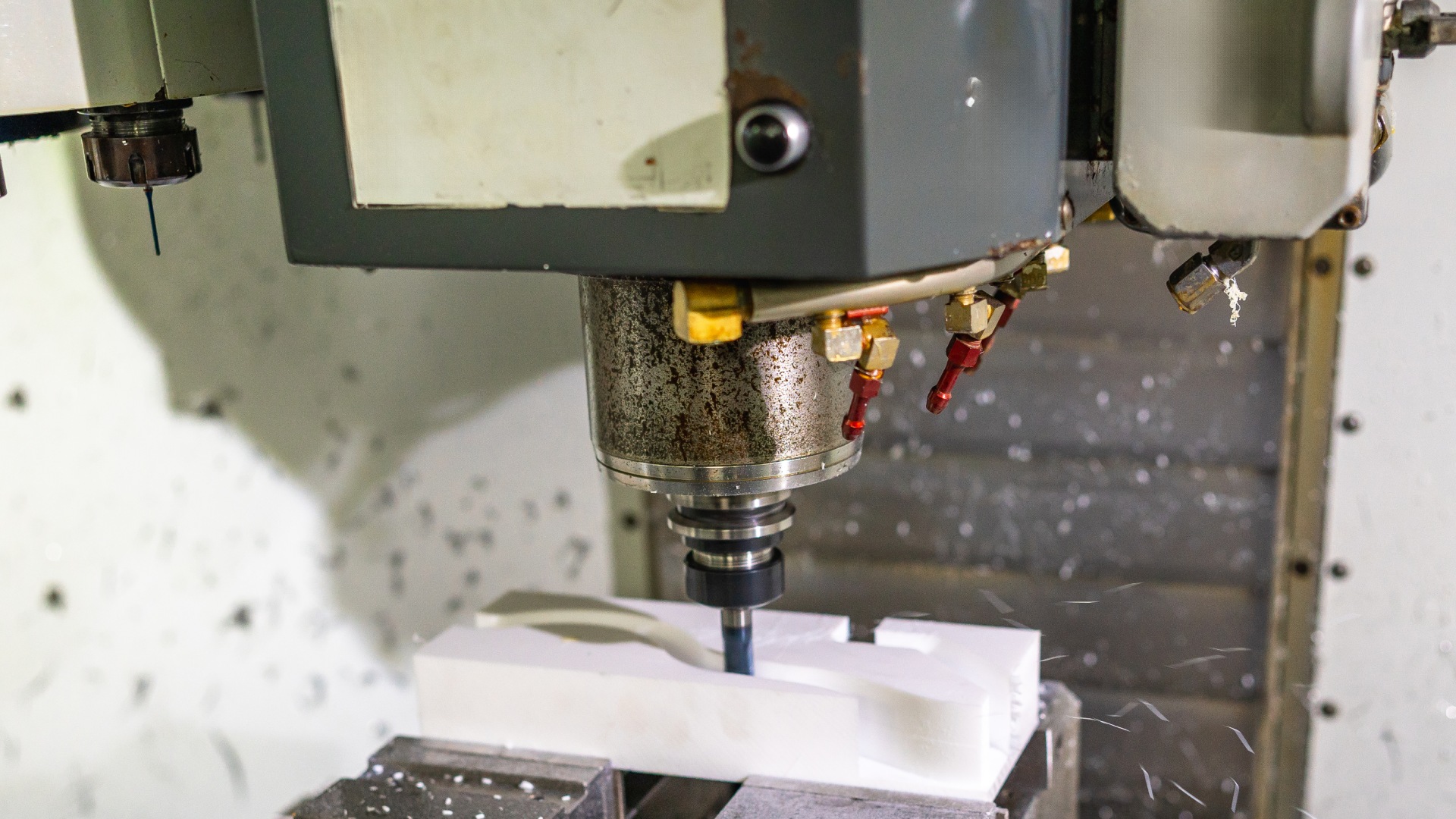
Design decisions directly influence machining time, scrap risk, and part cost. Early collaboration between engineering and machining teams helps avoid unexpected delays, rework, or tolerance issues during production.
Key design considerations:
Material Selection: Choose materials compatible with milling (metals like aluminum, stainless steel, titanium, or engineering plastics). Ensure material properties support the required tolerances, surface finish, and part life.
Tolerance requirements: Tight tolerance expectations must match the capability of the milling machine and machining process. Design with realistic tolerances that CNC milling can reliably achieve.
Geometry complexity & tool access: Design for features that permit cutter access; avoid deep, narrow cavities where tool reach, or chip removal may be problematic.
Wall thickness, fillets, corner radii: Avoid sharp internal corners that are hard or impossible to mill; use fillets/radii compatible with cutter size.
Fixture and workholding strategy: Ensure design supports stable clamping; avoid asymmetric geometries that complicate fixturing or cause deflection.
Production volume versus setup cost: For high-volume runs, design for efficient machining (fewer setups, minimal handling). For prototypes, balance flexibility and detail.
Attention to these factors reduces iterations between engineering and manufacturing, helping maintain throughput, uptime, and cost per unit.
In the following section, let's look at where CNC milling delivers the greatest impact across industries.
Common Applications of CNC Milling
CNC milling enables manufacturing across industries that require high accuracy and strict regulatory compliance. Typical applications include:
Medical Devices: Surgical instruments, implant components, surgical robotics parts, diagnostic housings, and precision fixtures. These parts rely on tight tolerances and controlled surface finishes to meet regulatory requirements.
Aerospace Components: Structural brackets, sensor housings, mounts, avionics components, and assemblies require lightweight materials and high structural integrity.
Defense and Military Systems: ITAR-controlled parts for targeting systems, enclosures, mounts, and weapon-support components. Traceability and documentation are critical.
Photonics and Optics: Laser housings, optical mounts, lens holders, and high-precision alignment fixtures. These parts require consistent geometry and stable tolerances.
Industrial and Instrumentation Equipment: Positioning systems, automated machinery parts, sensor housings, and control system components.
These applications demand machining partners who can reliably produce parts to specification while maintaining documentation and compliance.
How Criterion Precision Can Support Your CNC Milling Needs?
Criterion Precision Machining offers CNC milling capabilities tailored for mission-critical and regulated components. Their expertise reduces risk, ensures consistent output, and supports prototype-to-production workflows.
Here's how we can assist you:
Advanced Multi-Axis and 5-Axis CNC Milling: Ideal for complex parts used in medical, aerospace, defense, and photonics systems. Multi-axis machining helps reduce setups and supports stable dimensional control.
Tight-Tolerance Machining Capabilities: Criterion routinely machines components with demanding tolerances, helping reduce scrap, maintain consistent performance, and support assembly-critical parts.
Prototype-to-Production Continuity: Teams can validate early designs quickly using prototypes that match production quality. This helps engineering reduce iteration cycles and supports faster transitions into production.
Regulatory and Quality Compliance: ISO 13485, ISO 9001:2015, FDA registration, ITAR compliance, and DFARS adherence help quality teams maintain audit readiness and reduce supplier risk.
Material Expertise: Experience with aluminum, stainless steel, titanium, specialty alloys, and plastics helps engineering teams work with the right materials for performance and manufacturability.
Full Documentation and Inspection Support: Complete inspection reports, certificates of conformity, and traceability records help manufacturers maintain regulatory and supplier-quality standards across production runs.
Partnering with a supplier like Criterion reduces the risk of rework, improves yield, and ensures predictable lead times, supporting better operational and supply-chain decisions.
Conclusion
CNC milling plays a key role in modern precision manufacturing, delivering measurable impacts on scrap reduction, throughput, lead time stability, and part accuracy. By understanding machine types, processes, design considerations, and applications, manufacturers can make informed decisions that improve operational efficiency and product quality.
The right CNC milling approach improves day-to-day decisions across engineering, sourcing, quality, and operations by providing consistent part performance and predictable throughput. By partnering with Criterion Precision Machining, manufacturers gain access to advanced CNC capabilities, robust regulatory compliance, and end-to-end support from prototyping to production.
If you want to discuss your part requirements or see if CNC milling fits your next project, reach out to us today for more information.
FAQs
1. How does CNC milling differ from manual milling?
CNC milling uses computer-controlled instructions to cut materials with high precision and repeatability, whereas manual milling relies on an operator’s skill and hand adjustments. CNC machines deliver faster production, tighter tolerances, and consistent results, making them ideal for complex, high-volume, or high-accuracy manufacturing.
2. What software is used to design parts for CNC milling?
Designers typically use CAD software like SolidWorks, Fusion 360, AutoCAD, or CATIA to create 3D models. These files are then converted into machine-ready toolpaths using CAM software such as Mastercam, Fusion 360 CAM, or Siemens NX, ensuring accurate instructions for CNC milling operations.
3. What are the typical tolerances achievable with CNC milling?
Most CNC milling machines can achieve tolerances down to ±0.0002, depending on the material, machine capability, and part complexity. High-precision machines, especially in aerospace and medical applications, can achieve even tighter tolerances when supported by proper tooling, fixturing, and process controls.
4. What post-processing might be needed after CNC milling?
Post-processing may include deburring, polishing, heat treatment, coating, anodizing, or surface finishing to improve strength, durability, or appearance. Additional steps like threading, inspection, or assembly may also be performed depending on the part’s final application and required performance specifications.
5. How does CNC milling handle complex shapes and features?
CNC milling uses multi-axis capabilities, advanced toolpaths, and precision tooling to cut intricate geometries, undercuts, contours, and deep pockets. With 4-axis or 5-axis machines, manufacturers can access multiple sides of a part in one setup, enabling high accuracy even for highly complex shapes.