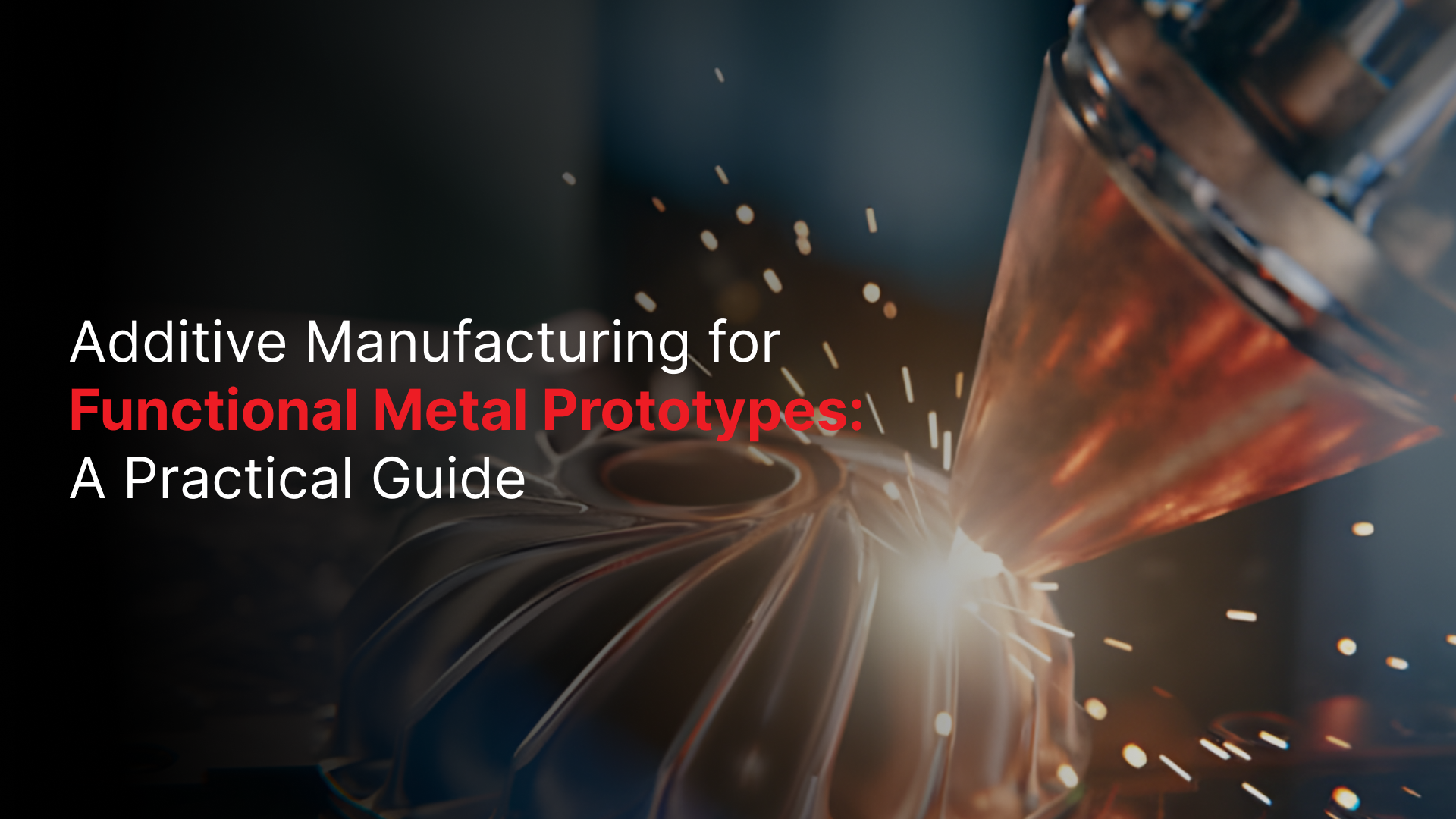
You print a metal prototype, assemble it, and it fits. The part survives basic testing, and the design moves forward. Then the next question comes up: does this prototype behave closely enough to guide production decisions, or does it only work inside a narrow testing window?
That uncertainty is common when teams use additive manufacturing for functional metal prototypes. Additive can produce complex metal parts quickly, but speed and geometry alone do not define suitability.
What matters is how well the prototype reflects real-world performance, inspection results, and downstream manufacturing constraints.
This guide examines where metal additive manufacturing supports functional prototyping and where its limits appear.
It focuses on practical decision-making, helping you determine when an additive is the right tool, when machining is the better option, and how to avoid false confidence before scaling.
Key Takeaways
Additive shows possibility, not stability. It helps you learn fast, but it does not confirm how a part behaves under repeatable production conditions.
Functional testing must answer the right question. If results influence tolerances, tooling, or suppliers, the additive alone is rarely enough.
Interfaces decide readiness. Critical surfaces and datums define whether a prototype reflects production reality.
Hybrid paths reduce false confidence. Combining additive with machining keeps speed while introducing control where it matters.
What “Functional” Means in Metal Prototyping
In metal prototyping, functional means more than looking like the final part. A functional prototype provides reliable feedback that informs engineering, sourcing, and production decisions.
What Functional Prototypes Are Expected to Validate
Fit and assembly within the intended system
Mechanical behavior under expected loads or stresses
Interaction with mating components
Access for inspection and measurement
At this stage, the prototype should behave consistently enough to expose design risks early.
What Functional Does Not Automatically Mean
Production-level tolerances
Long-term repeatability across batches
Final surface finish requirements
Full regulatory or audit readiness
A metal prototype can perform well in testing and still fail to represent production reality.
Why This Distinction Matters
Additive manufacturing often delivers parts that are strong enough for testing but variable in finish, geometry, or internal structure. If a prototype is used to justify tooling, supplier selection, or production timelines, those gaps can lead to incorrect assumptions.
Functional prototyping works best when you are clear about what questions the prototype is meant to answer. Confusing functional validation with production readiness introduces risk that only becomes visible later, when changes are more expensive.
Where Additive Manufacturing Fits Well for Metal Prototypes
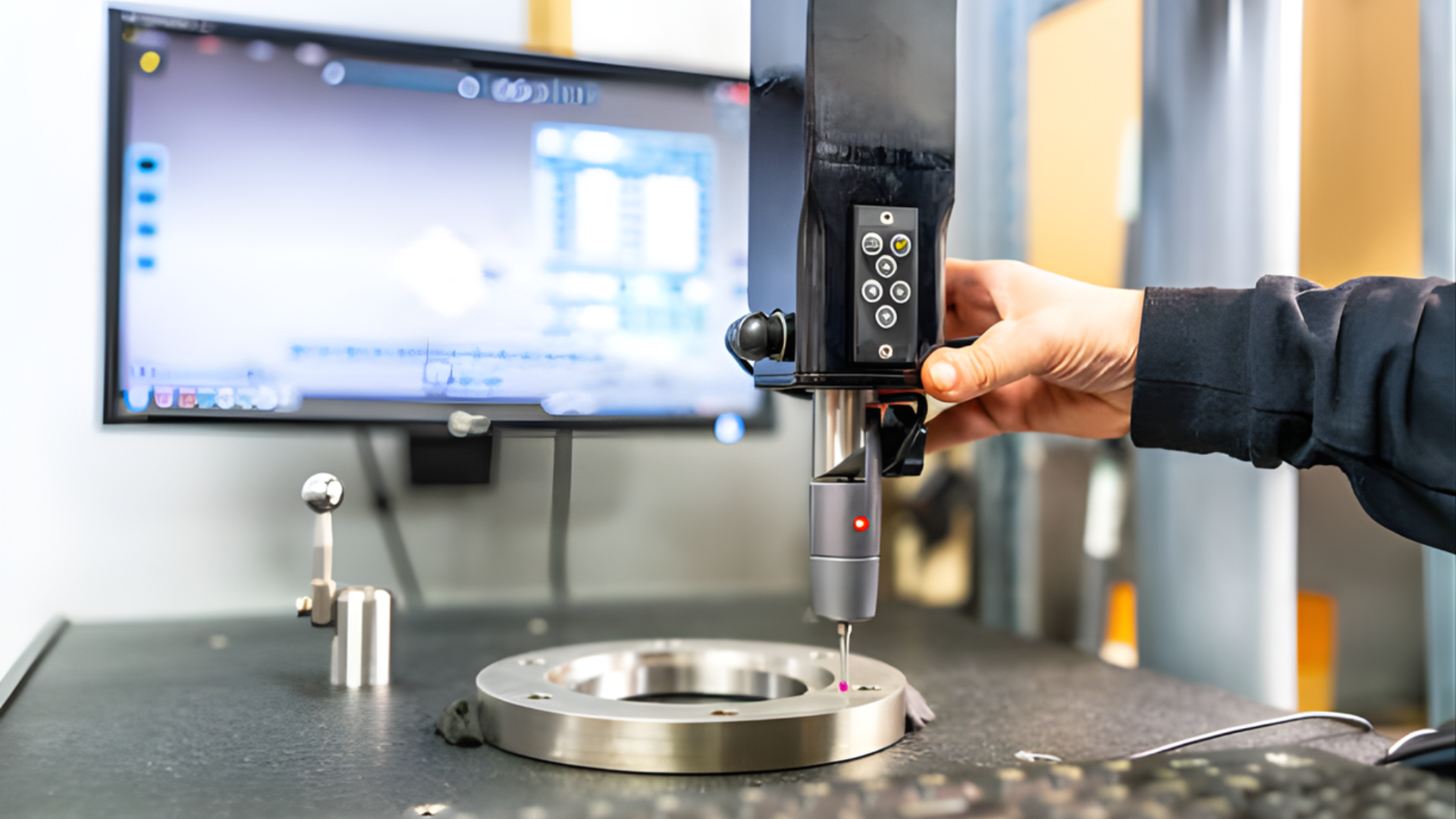
Additive manufacturing offers clear advantages when the goal is early-stage validation and design learning. It is most effective when complexity or iteration speed matters more than tight control.
Strong Use Cases for Metal Additive Prototypes
Complex internal geometries that are difficult to machine
Low-quantity prototypes where tooling investment is not justified
Rapid design iteration during early development
Form, fit, and basic function validation
These strengths make the additive valuable during concept refinement and early testing cycles.
Why Teams Choose Additive at This Stage
Shorter lead times compared to traditional tooling
Freedom to modify geometry between iterations
Ability to test designs before committing to machining strategies
Where Expectations Should Stay Realistic
Dimensional variation may exist between builds
Surface finish often requires post-processing
Critical interfaces may not reflect final manufacturing conditions
Additive manufacturing works best when used deliberately, with clear expectations around what it can and cannot validate. For functional metal prototypes, it supports learning and exploration, not final decision-making on production performance.
Limitations of Additive Manufacturing for Functional Metal Parts
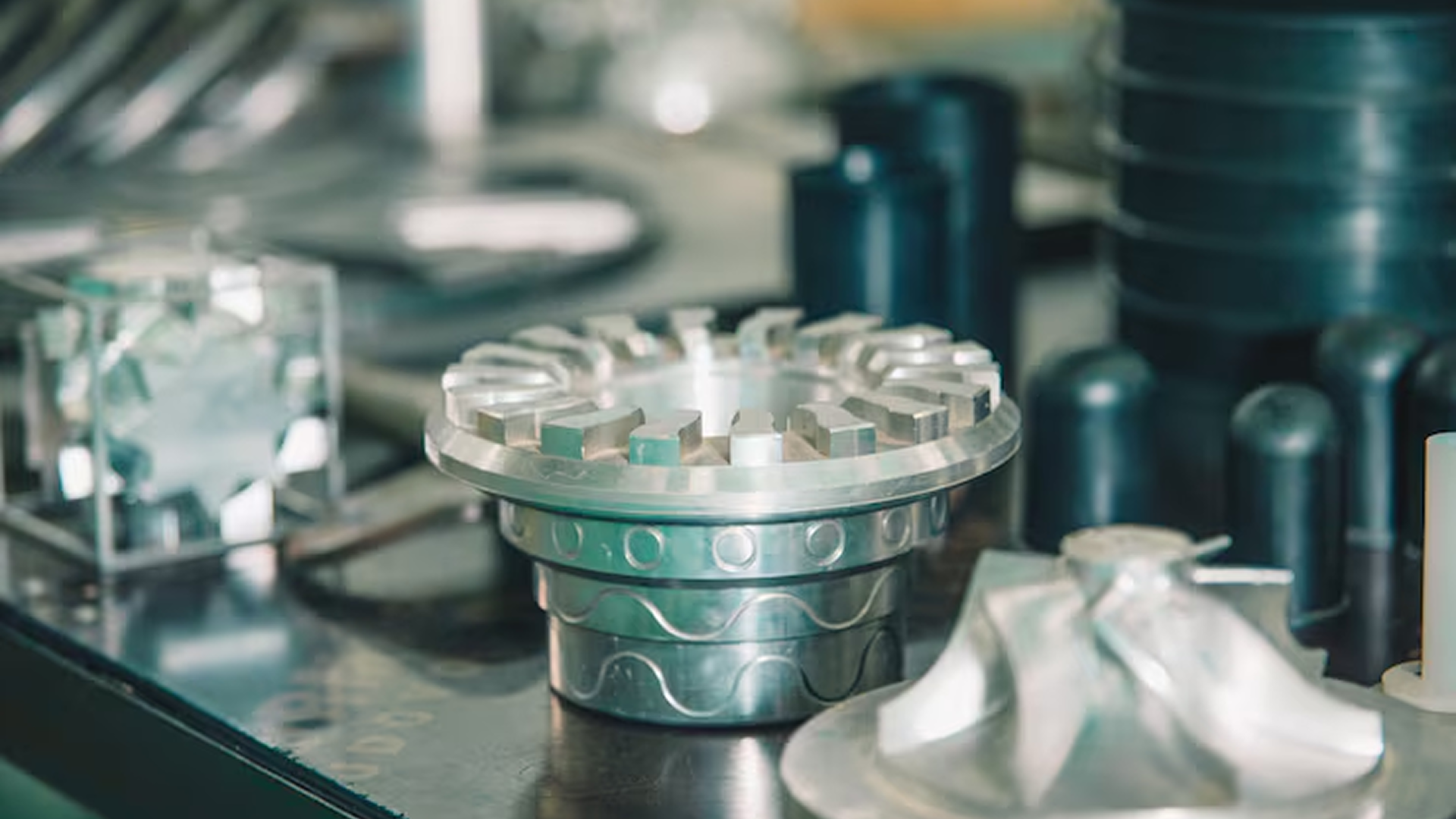
Additive manufacturing can produce usable metal prototypes, but it introduces limitations that matter once functional testing begins to influence production decisions.
Dimensional and Geometric Constraints
Dimensional consistency can vary between builds
Fine features may require secondary finishing
Critical interfaces often need machining to meet fit requirements
These variations are manageable during early testing, but they limit how confidently results translate to production.
Surface Condition and Post-Processing
As-printed surfaces are rarely suitable for assemblies
Functional testing may depend on post-machining or finishing
Additional steps introduce variability and extra handling
If post-processing is not planned early, test results may not reflect final conditions.
Material Behavior Considerations
Internal structure and density can vary within a printed part
Mechanical response may differ from wrought or machined material
Results may change across orientations or build batches
This does not make the additive unreliable, but it does require careful interpretation of test outcomes.
Inspection and Validation Challenges
Complex internal features are difficult to inspect
Measurement strategies may differ from production methods
Documentation can be limited without defined inspection plans
For functional metal prototypes, these factors define the boundary between useful validation and misleading confidence.
Functional Testing vs Production Reality
Functional testing answers specific questions. Production requires predictable answers every time.
What Additive Prototypes Validate Well
Form and spatial fit within assemblies
Access, clearance, and routing
Concept-level mechanical response
These insights are valuable early, when changes are still expected.
What Additive Prototypes Do Not Fully Prove
Long-term repeatability
Batch-to-batch consistency
Production inspection performance
Setup stability across volume
A prototype can pass functional tests and still behave differently once machined, finished, or produced at scale.
Where Teams Often Misjudge Readiness
Treating one successful build as proof of stability
Using prototype data to lock production tolerances
Assuming printed geometry represents machined reality
Why the Gap Matters
If functional test results are used to justify tooling, supplier selection, or regulatory submissions, gaps between prototype behavior and production conditions create risk.
Clear separation between functional validation and production validation helps ensure additive manufacturing supports informed decisions rather than premature commitments.
Additive Manufacturing vs CNC Machining for Functional Metal Prototypes
Additive manufacturing and CNC machining serve different purposes during functional prototyping. Understanding where each excels helps you choose the right method for the questions you are trying to answer.
How Each Method Supports Functional Prototyping
Additive manufacturing
Enables complex shapes and internal features
Supports rapid iteration without tooling changes
Works well for early validation and concept testing
CNC machining
Produces predictable geometry and surface condition
Supports tighter control over critical features
Aligns more closely with production behavior
Key Differences That Affect Decision-Making
Factor | Additive Manufacturing | CNC Machining |
Primary goal | Speed and design flexibility | Accuracy and consistency |
Dimensional control | Variable without post-processing | Stable and repeatable |
Surface condition | Requires secondary finishing | Production-representative |
Inspection readiness | Limited to internal features | Aligned with production methods |
Production alignment | Indirect | Direct |
How to Interpret the Trade-Off
An additive is effective when learning and iteration matter most. Machining becomes critical when prototype results influence tolerance decisions, supplier qualification, or downstream validation.
For many teams, the question is not which process to use, but when to transition from additive insight to machined confirmation before committing to production assumptions.
Hybrid Workflows: Additive Manufacturing Combined with Machining
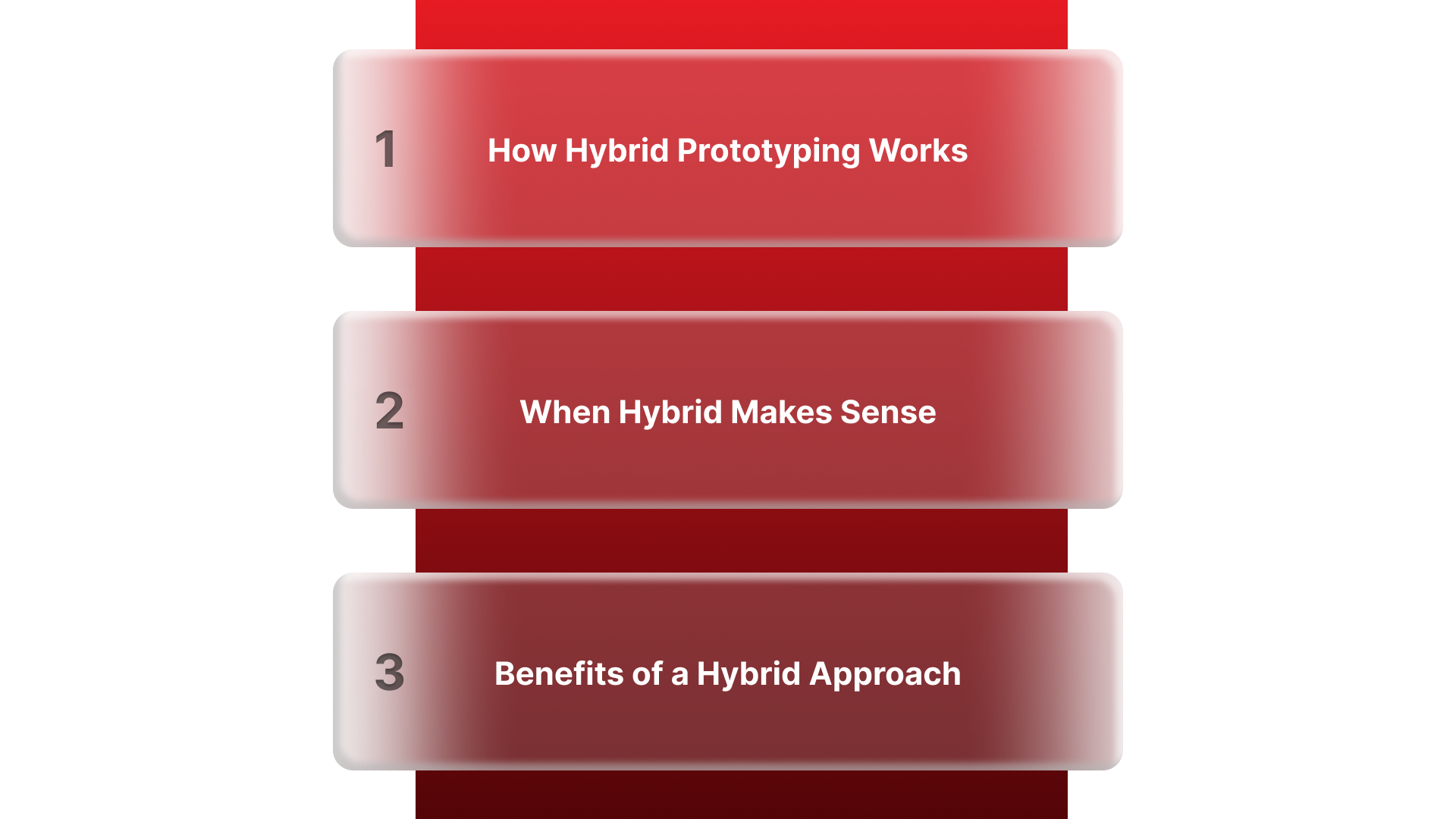
Hybrid workflows combine the speed of additive manufacturing with the control of CNC machining. This approach helps bridge the gap between early validation and production realism.
How Hybrid Prototyping Works
Parts are printed near-net shape using metal additive processes
Critical interfaces are machined to defined references
Surface finish and geometry are controlled where it matters most
This allows teams to validate complex designs while maintaining confidence in fit and function.
When Hybrid Makes Sense
Prototypes include complex internal geometry with tight external requirements
Functional testing depends on accurate interfaces or mating surfaces
Early results will guide production tolerances or assembly methods
Benefits of a Hybrid Approach
Reduces the risk of misleading test results
Aligns prototype behavior with production expectations
Limits rework when transitioning to machined parts
Criterion Precision Machining supports hybrid workflows by applying multi-axis machining and inspection to additively produced metal parts. This allows functional prototypes to reflect real production conditions more closely, helping your team make informed decisions before scaling.
When Additive Metal Prototypes Break Down at Scale
Additive manufacturing often performs well when quantities are low and expectations are limited to early validation. As requirements expand, the same approach can expose gaps.
Common Breakdown Scenarios
Inconsistent geometry between builds: A prototype performs well, but the next build shows variation that affects fit or alignment.
Surface condition affecting assembly: As-printed or lightly finished surfaces introduce friction, wear, or mismatch during integration.
Hidden dependence on post-processing: Functional success relies on secondary operations that were not fully defined or controlled.
Inspection limits are becoming visible: Internal features are difficult to verify using production inspection methods.
Why These Issues Appear Late
Early testing volumes are too small to expose variability
Manual correction hides process instability
Functional tests focus on outcomes, not repeatability
Production Impact
When additive prototypes are pushed too far without additional controls, teams face:
Rework and redesign late in development
Delays during the transition to machining or tooling
Uncertainty during supplier qualification
Recognizing these signals early helps you decide when additive insight needs reinforcement from more controlled processes.
Regulated Industries: Special Considerations for Metal Additive Prototypes
In regulated environments, functional performance alone is not enough. Prototypes must also support traceability, inspection, and documentation expectations.
Why Additive Requires Extra Caution
Process variation is harder to document consistently
Internal features complicate inspection planning
Build-to-build differences challenge validation efforts
Industry-Specific Pressure Points
Medical devices: functional testing must align with future validation and documentation requirements.
Aerospace: geometric consistency affects performance and qualification.
Defense: traceability and controlled workflows are mandatory.
Reducing Exposure
Additive manufacturing can still play a role, but only when supported by defined inspection plans and controlled post-processing.
This is where partners like Criterion Precision Machining add value by applying certified quality systems, inspection discipline, and machining control to ensure functional prototypes remain aligned with regulatory and production expectations.
Decision Framework: Is Additive Right for Your Functional Metal Prototype?
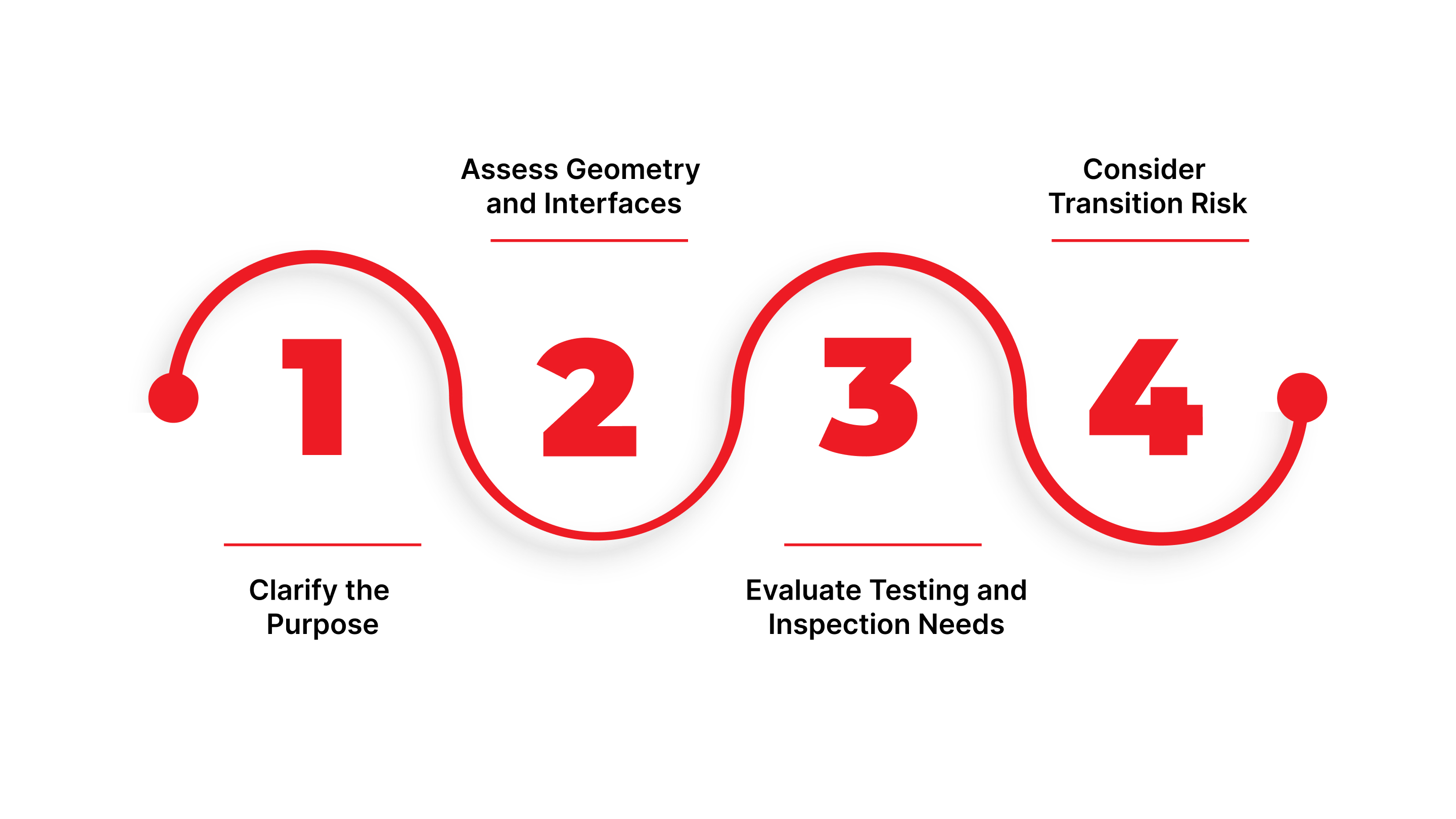
Use this framework to decide whether metal additive manufacturing supports your current goals or whether machining should be introduced.
Clarify the Purpose
Are you validating form and fit, or performance and repeatability?
Will test results influence tolerances, tooling, or supplier selection?
Assess Geometry and Interfaces
Complex internal features with limited external constraints → additive fits early
Critical mating surfaces or datum relationships → machining required
Evaluate Testing and Inspection Needs
Concept-level tests with limited inspection → additive acceptable
Data-driven decisions requiring consistent measurement → machining or hybrid
Consider Transition Risk
Will this prototype guide production decisions?
Can results be reproduced without manual correction?
Decision Guide
Condition | Recommended Path |
Early design learning | Additive |
Functional testing tied to fit | Hybrid |
Production-representative behavior | CNC machining |
Regulatory validation ahead | Machining or hybrid |
If uncertainty remains, introduce machining earlier to avoid false confidence.
How Criterion Precision Machining Supports Functional Metal Prototypes
Functional metal prototyping works best when early validation aligns with downstream manufacturing reality. Criterion Precision Machining supports this alignment through controlled, production-ready processes.
Relevant Services
CNC milling, including multi-axis and 5-axis machining
CNC turning and Swiss turning for precision features
Machining and finishing of additively produced metal parts
Prototype-to-production support under the same quality framework
In-house inspection and complete documentation
Why This Matters
Functional prototypes reflect production geometry and finish
Inspection methods remain consistent across stages
Transition risk is reduced without changing suppliers
This approach helps your team use additive manufacturing to add value while ensuring critical decisions are grounded in controlled, repeatable manufacturing.
Conclusion
Additive manufacturing plays a valuable role in developing functional metal prototypes, especially when speed, complexity, and early design learning are priorities. It helps you explore form, fit, and basic performance without committing to tooling or long lead times.
Challenges appear when prototype results begin to influence production decisions. Dimensional consistency, surface condition, inspection readiness, and repeatability matter more as programs move forward. This is where machining or hybrid approaches add clarity and reduce risk.
The most effective teams use additive deliberately, with a clear understanding of what it validates and where its limits lie. Aligning prototyping methods with downstream manufacturing expectations helps protect schedules, budgets, and quality outcomes.
Working with partners who support both additive finishing and production machining, such as Criterion Precision Machining, helps ensure functional prototypes lead to confident, scalable decisions rather than late-stage corrections.
FAQs
1. Are metal additively manufactured parts truly functional?
Yes, they can support fit, clearance, and early performance testing. However, variability in geometry and surface condition limits how closely they represent production behavior.
2. Can additive manufacturing replace CNC machining for metal prototypes?
It can replace machining during early exploration. Once decisions depend on repeatability, inspection, or interface accuracy, machining becomes necessary.
3. What does “functional” really mean in metal prototyping?
Functional means the part provides reliable feedback for design or testing. It does not automatically mean it reflects final manufacturing conditions.
4. Why do additive prototypes fail when moving toward production?
Because early success often depends on manual correction or post-processing that is not defined or repeatable at scale.
5. When should machining be introduced into the prototyping process?
Machining should be introduced when prototype results influence tolerances, assembly behavior, or production planning.
6. Is hybrid additive and machining a common approach?
Yes. Many teams print complex geometry and machine critical features to align functional testing with production expectations.
7. Is a metal additive suitable for regulated industries?
It can be used early, but documentation, inspection, and repeatability requirements often require machining or hybrid workflows.
8. How can teams avoid false confidence from additive prototypes?
By defining what the prototype must validate and introducing controlled processes before scaling assumptions forward.