A recent quality-control audit at a mid-tier aerospace machining supplier revealed their defect rate had dropped from 0.8% to just 0.03%, a 26× reduction, after implementing rigorous statistical process control.
In aerospace, even 0.03% can mean dozens of mismanufactured brackets or turbine vanes per million parts; each one a potential supply-chain headache or safety risk.
That’s why aerospace CNC machining isn’t just about shaping metal; it’s about delivering micron-level precision consistently under pressure. Parts today often demand tolerances as tight as ±0.0005 in (±0.0127 mm) or better.
In this article, you'll understand how advanced CNC processes turn complex CAD models into flight-ready hardware, from 5-axis milling to turbine-grade alloy work.
Key Takeaways:
Precision First: Aerospace parts routinely demand ±0.0005 in tolerances or better — machining must protect performance over years of vibration, heat, and fatigue.
Where It Matters: Turbine blades, gearbox housings, and structural load-path parts are the real risk zones; even tiny deviations can raise fuel burn or accelerate crack growth.
5-Axis for Control: Complex geometries and multi-surface tolerance relationships require 5-axis machining to prevent misalignment, reduce setups, and ensure dimensional stability.
Material-Aligned Strategy: Aluminum enables lightweight strength in airframes, while titanium and nickel superalloys survive engine heat; machining must adapt to each environment’s challenge.
Precision You Can Prove: In aerospace, certification and traceability decide whether a part flies. Criterion Precision Machining builds those controls into every job, so precision isn’t just delivered, it’s documented.
What Is Aerospace CNC Machining?
Aerospace CNC machining is the use of computer-controlled cutting equipment to produce flight-critical parts for aircraft, spacecraft, and defense systems. The goal is not just to “hit the print” on a CAD file. It is to create parts that survive vibration, temperature swings, pressure changes, and decades of service without hidden surprises.
Compared with general machining, aerospace work usually involves:
Complex 3D geometries that must fit and function inside tight assemblies.
Materials like aluminum 6061 / 7075, titanium, and nickel superalloys are strong but difficult to cut.
Quality systems that meet AS9100 requirements and similar aerospace standards.
Done well, aerospace CNC machining becomes an extension of your engineering intent. It turns a digital model into a physical part that behaves exactly as your analysis predicts.
How CNC Machining Powers Modern Flight
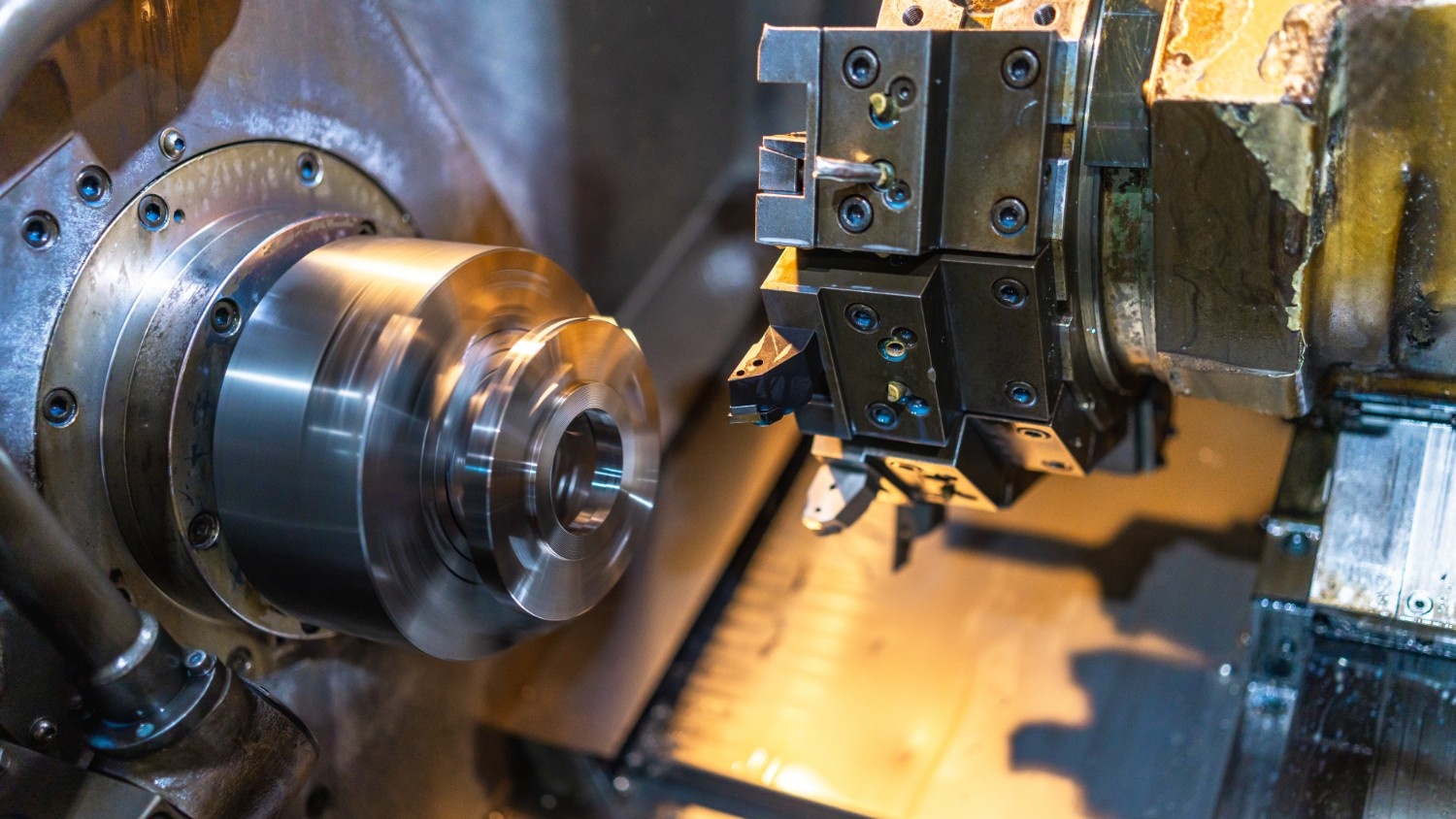
CNC machining supports modern aircraft not just by shaping metal, but by allowing engineering decisions that improve performance, safety, and manufacturability across the entire platform. Its strengths show up in the areas that matter to program timelines and long-term reliability.
Here’s where CNC adds the most value in aerospace programs:
Weight Reduction Through Precision Pocketing: CNC enables controlled material removal, helping engineers achieve stiffness-to-weight ratios that castings or additive manufacturing alone can’t match.
Repeatability Across Assemblies: Tight tolerance control keeps assemblies consistent from prototype to production, reducing build-time variability and downstream alignment issues.
Material Capability: CNC handles challenging aerospace alloys like 7075 aluminum, titanium, and nickel superalloys; materials chosen for performance, not machinability.
Dimensional Stability in Complex Geometry: Multi-axis strategies protect tolerance stacks in parts that interact across multiple faces, angles, or load paths.
Predictable Manufacturing for Certification: CNC’s process discipline supports reliable documentation, first-article consistency, and compliance during audits.
Shorter Iteration Cycles: When engineering teams refine designs, CNC machining absorbs changes quickly, compressing development time for prototypes and early production runs.
And to meet those expectations consistently, aerospace CNC machining follows a very different set of rules than standard machining.
Key Differences Between General And Aerospace CNC
Every aerospace program eventually hits the same friction points: thin-wall distortion on pocketed aluminum parts, tool wear skyrocketing on titanium, a critical bore drifting out of true after the 50th part, or a cert packet holding up delivery even when the part is perfect.
Those aren’t “machining issues", they’re consequences of applying general CNC assumptions to aerospace hardware. The differences below are the ones that actually decide whether your parts fly or get quarantined in MRB.
1. Tolerance Expectations
Typical commercial CNC work often runs at about ±0.005 in (±0.127 mm).
Tight tolerance CNC for demanding industries operates between ±0.001 in and ±0.0001 in, depending on the feature.
Aerospace precision machining frequently targets ±0.0005 in or better on critical dimensions.
For your teams, this changes everything. Fixture design, process planning, tool selection, and inspection strategy must all support those numbers.
2. Materials and Machining Behavior
General machining can focus on mild steels and simple alloys. Aerospace CNC must deal with:
Aluminum alloys such as 2024, 6061, and 7075 dominate many airframe structures.
Titanium alloys for high strength and heat resistance around engines and landing gear
Nickel superalloys like Inconel for turbine and exhaust components
These materials work well in service but place higher loads on tools, spindles, and cooling systems. Cycle times, tool wear, and workholding strategies all differ from standard jobs.
3. Quality Systems and Documentation
AS9100 is now the default expectation for aerospace manufacturers and their suppliers. It extends ISO 9001 with aerospace-specific requirements for product safety, risk, supplier control, and traceability.
In practice, this means:
Clear, controlled process plans for every job
Documented inspection results for critical features
Full traceability from raw material to shipped part
The CNC program is only one piece of the system. The quality framework around it is just as important.
Suggested Read: Aerospace and Defense Industries: How Precision Machining Plays a Crucial Role
Those higher standards become clearest in the components that actually go on the aircraft.
Precision Aerospace CNC Machined Parts
For most aerospace teams, the question isn’t “can we machine this?” It’s “will this part behave exactly as predicted after thousands of flight hours?” Research on compressors and turbines shows that blade surface roughness from erosion or fouling can measurably cut pressure ratio and efficiency, driving up specific fuel consumption over time.
Fatigue research shows that even small geometry or finish shifts can trigger cracks and early part removals.
That’s the reality, your machined parts are flying into it. The CNC features that matter most tend to cluster around a few families of components:
Rotating And Turbine Hardware
Airfoils, discs, and rotors where profile accuracy and surface condition drive efficiency, temperature margins, and fatigue life.Structural Load-Path Parts
Brackets, ribs, mounts, and frames that carry major loads; local geometry and transitions influence stiffness, crack initiation, and inspection intervals.Precision Housings And Gearbox Components
Gearbox and actuator housings, covers, and bores where alignment errors feed directly into vibration, noise, and early gear or bearing failure.Sealing And Pressure-Boundary Surfaces
Faces, grooves, and interfaces that control clamp load and leakage under repeated pressurization cycles in fuel, hydraulic, or environmental systems.
Those requirements often push machining beyond 3-axis limits.
Aircraft 5 Axis CNC Machining For Complex Geometry
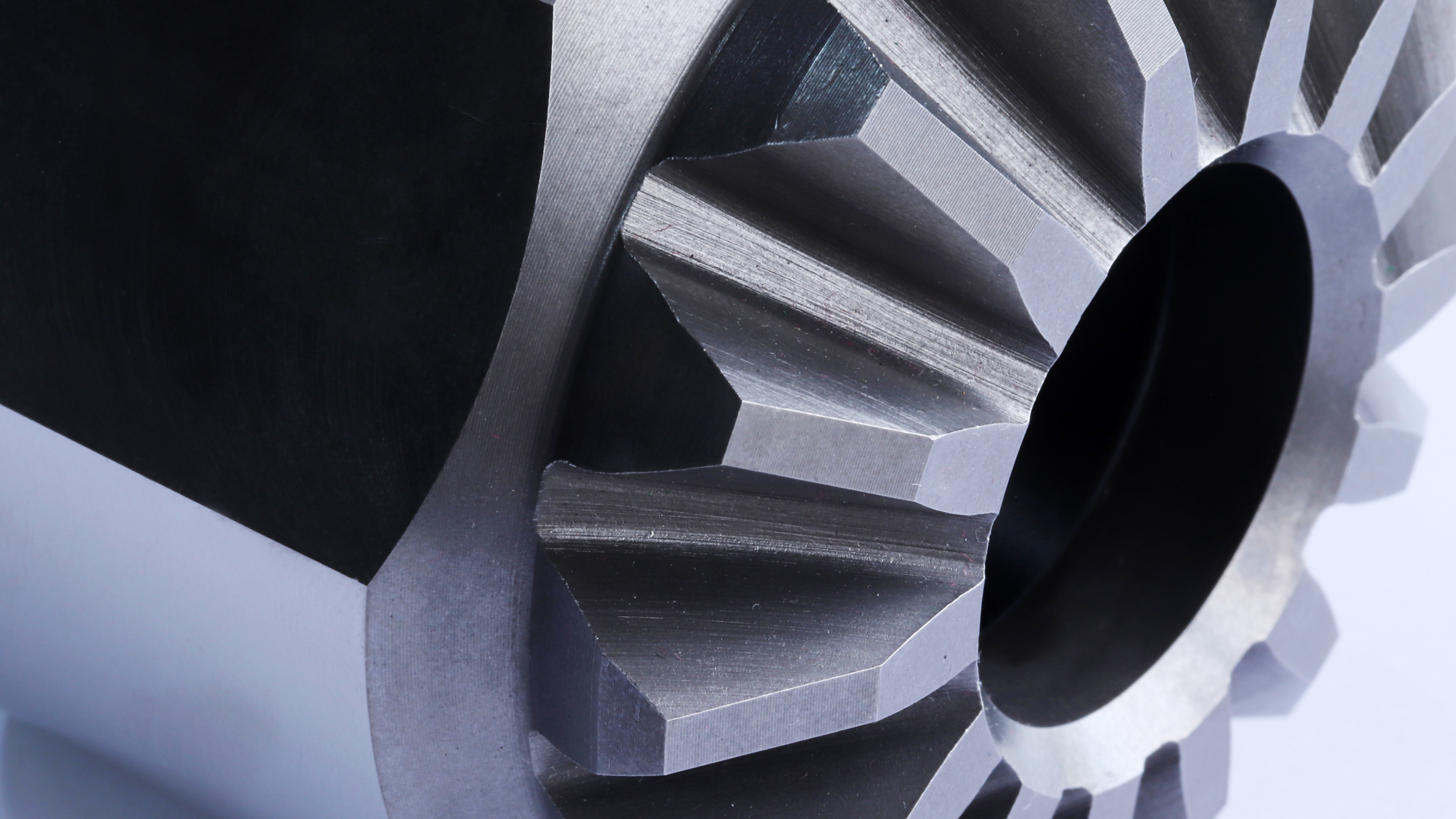
When aerospace designs call for complex shapes, tight tolerances, and materials like titanium or high-strength aluminum, simple 3-axis machining often falls short. That’s where 5-axis CNC machining becomes essential; it ensures the part you plan on CAD behaves exactly as intended when installed.
Here’s how 5-axis delivers reliability and precision for challenging aerospace parts:
Complex Geometry Made Feasible
5-axis allows cutting contoured surfaces, undercuts, angled faces and compound curves in one setup, which 3-axis machines can’t reliably achieve.Fewer Setups, Lower Risk
By machining multiple faces in a single clamping, 5-axis machining reduces fixture changes and avoids alignment errors between operations.Better Surface Finish & Consistent Tool Engagement
The ability to orient the tool tangentially to complex surfaces yields smoother finishes and more uniform material removal. This is critical for fatigue resistance and aerodynamic performance.Efficient Material Removal & Shorter Lead Times
Optimized toolpaths mean faster cycle times, even on difficult alloys, helping reduce lead times without compromising quality.
Those strengths become even more critical when the mission is lightweight aluminum hardware for flight.
CNC Milling Aluminum Components For Aerospace
For aircraft components that must stay strong under load while keeping overall mass down, aluminum milling delivers the right balance of mechanics and manufacturability.
Aluminum milling is especially suitable when you need parts that meet strict aerospace standards:
Strong But Light: High-strength alloys such as 7075-T6 and 2024 strike a good strength-to-weight balance, letting structural parts withstand flight loads without adding unnecessary mass.
Clean Machinability & Tight Tolerances: Aluminum’s machinability enables crisp cuts and smooth finishes with low tool wear; essential for parts where geometry, alignment, and repeatability matter.
Corrosion Resistance & Durability: Many aerospace aluminum alloys — especially when properly finished (e.g., anodized or Alclad) — resist environmental degradation, preserving part life over many flight cycles.
Versatility Across Component Types: From structural frames and brackets to housing covers and interior mounts; aluminum milling supports a wide range of aerospace part requirements without sacrificing quality or consistency.
Must Read: 5 Reasons to Partner with a Precision Machining Expert Like Criterion
Once parts enter the engine, the priority shifts from lightness to surviving extreme heat and rotation.
Aircraft Turbine Machining And Rotor Components
Turbine blades, rotors, and discs run at thousands of RPM, at gas-path temperatures that can exceed 1,100°C, while maintaining aerodynamic accuracy down to the micron level. Even tiny deviations in profile or finish can reduce engine efficiency or accelerate fatigue-related failures.
That’s why CNC machining for turbine and rotor hardware operates under some of the toughest standards in aerospace manufacturing.
What Makes Turbine And Rotor Machining So Demanding:
Micron-Level Geometry And Surface Requirements
Aerofoils and root forms must hold extremely tight tolerances, often under ±0.0005 in, to protect airflow and prevent stress concentrations under rotation.Thin-Wall Airfoils + Internal Cooling Features
Complex 3D shapes with hollow channels require advanced multi-axis toolpaths and rigid fixturing to avoid deformation during machining.Difficult-To-Machine Superalloys
Nickel-based alloys used in hot-section components resist heat and cutting tools. Slow feeds, tool condition monitoring, and controlled cutting strategies are essential.Balance And Aerodynamic Integrity
An imbalance or slight variation in blade profile can increase vibration and fuel burn across the fleet, not just a single engine.Inspection And Traceability Pressure
Every feature is validated with rigorous metrology, and every part is traceable back to its raw material, heat, and machining steps, especially under AS9100.
Also Read: Small Bone, Big Challenge: Precision Machining for Micro Implants
And when operating conditions are that unforgiving, the quality system behind every part becomes just as critical as the machining itself.
Quality, Certification, And Traceability In Aerospace CNC
In aerospace, a perfect precision part on paper isn’t enough; customers and regulators demand full traceability, documented quality, and certification. Without that, even a well-machined part may be grounded or rejected.
Here are the core requirements that determine whether a machined aerospace part is actually approvable.
Requirement / Standard | What It Ensures |
|---|---|
AS9100 QMS | Aerospace-specific controls for safety, risk, and process discipline |
Full Traceability | Every batch, tool, and inspection is tied to a serialized part |
Special Process Documentation | Heat treat, coatings, and complex ops validated, not assumed |
Consistent Quality | First article and production parts must perform identically |
Supplier Integrity | Only approved and compliant suppliers enter the chain |
At that level, capability alone isn’t enough; you need a supplier who lives these requirements every day.
Why Criterion Precision Delivers For Aerospace
Aerospace teams don’t just need parts that meet print, they need parts that keep programs on schedule, clear audits without drama, and behave the same from the first article to the final production lot. The gaps that derail critical builds usually come from tolerance drift, missing documentation, or suppliers who can’t scale without losing control.
Criterion Precision Machining is structured to remove those points of failure by combining high-precision capability with compliance and traceability from day one.
Here’s how that translates on the manufacturing floor:
High-precision CNC capabilities
CNC turning, Swiss turning, and multi-axis milling with machining tolerances published as tight as ±0.0002 in. This level of precision reduces the risk of misalignment, vibration issues, and premature fatigue in flight-critical assemblies.Process range suitable for complex aerospace parts
Ability to support small-diameter Swiss-turned components, tight-tolerance rotational parts, and prismatic geometries via 3-, 4-, and 5-axis milling. This breadth of capability prevents variation between vendors and reduces the risk of dimensional drift on complex geometries.Inspection and metrology are built into production
Utilizes CMM (Global Advantage with PC-DMIS) and measurement systems to verify critical dimensions and ensure conformity at every stage. Integrated metrology catches deviations early, reducing scrap, rework, and MRB delays.Quality and compliance infrastructure
Holds ISO 13485, ISO 9001:2015, FDA Registration, ITAR Registration, and DFARS compliance, allowing participation in regulated aerospace supply chains. Strong compliance systems reduce audit failures and ensure every part meets aerospace certification requirements.Documentation and traceability readiness
Delivers inspection documentation, conformance records, and traceability required for audited environments as part of standard output. This lowers the risk of part rejection due to missing documentation and ensures audit-ready transparency.Volume flexibility
Supports quantities from single-piece prototypes to high-volume production runs within the same quality framework. Consistent processes across volumes reduce the risk of tolerance drift and schedule delays during ramp-up.Experience with mission-critical sectors
Long-term focus on industries where reliability and compliance are essential, including aerospace, medical, defense, and photonics. Cross-discipline precision experience reduces the risk of failure in high-reliability applications.
Conclusion
Every aerospace program eventually reaches moments where the margin for error disappears. Parts that once looked straightforward start to influence fatigue margins, certification timelines, and operational reliability. When that happens, the right machining decisions early on can prevent the costly problems that only show up in the field.
If you’re handling parts where geometry, compliance, and documentation all carry equal weight, partnering with a team that treats manufacturing as a reliability function and removes uncertainty. Criterion Precision Machining brings the discipline and process structure that keeps those mission-critical decisions from becoming production risks.
Ready to review an upcoming aerospace component, validate a design for manufacturability, or add a trusted supplier to your AVL? Contact us to start the conversation and build parts that are ready for the environments they’ll fly in.
FAQs
What tolerances are typically required for aerospace CNC parts?
For flight-critical hardware, ±0.0005 in or tighter is common on key features, with geometric tolerances controlling alignment, concentricity, and flatness where loads transfer.When should aerospace parts move from 3-axis to 5-axis machining?
Whenever the design includes curved or angled surfaces, deep pockets, or tight tolerances across multiple faces, it would risk misalignment if done in multiple setups.Why does documentation matter as much as precision?
A flawless part can be rejected if its material certs, inspection records, or serialization are incomplete — traceability is part of the engineering performance.How early should machining experts be involved in design?
Ideally, during initial CAD development, tolerance stack-ups, workholding strategy, and material choices support manufacturability before final drawings are locked.What causes most delays in aerospace machining projects?
Late design changes, unclear GD&T, unvalidated special processes (like coatings), or waiting on quality approvals, not the machining itself.