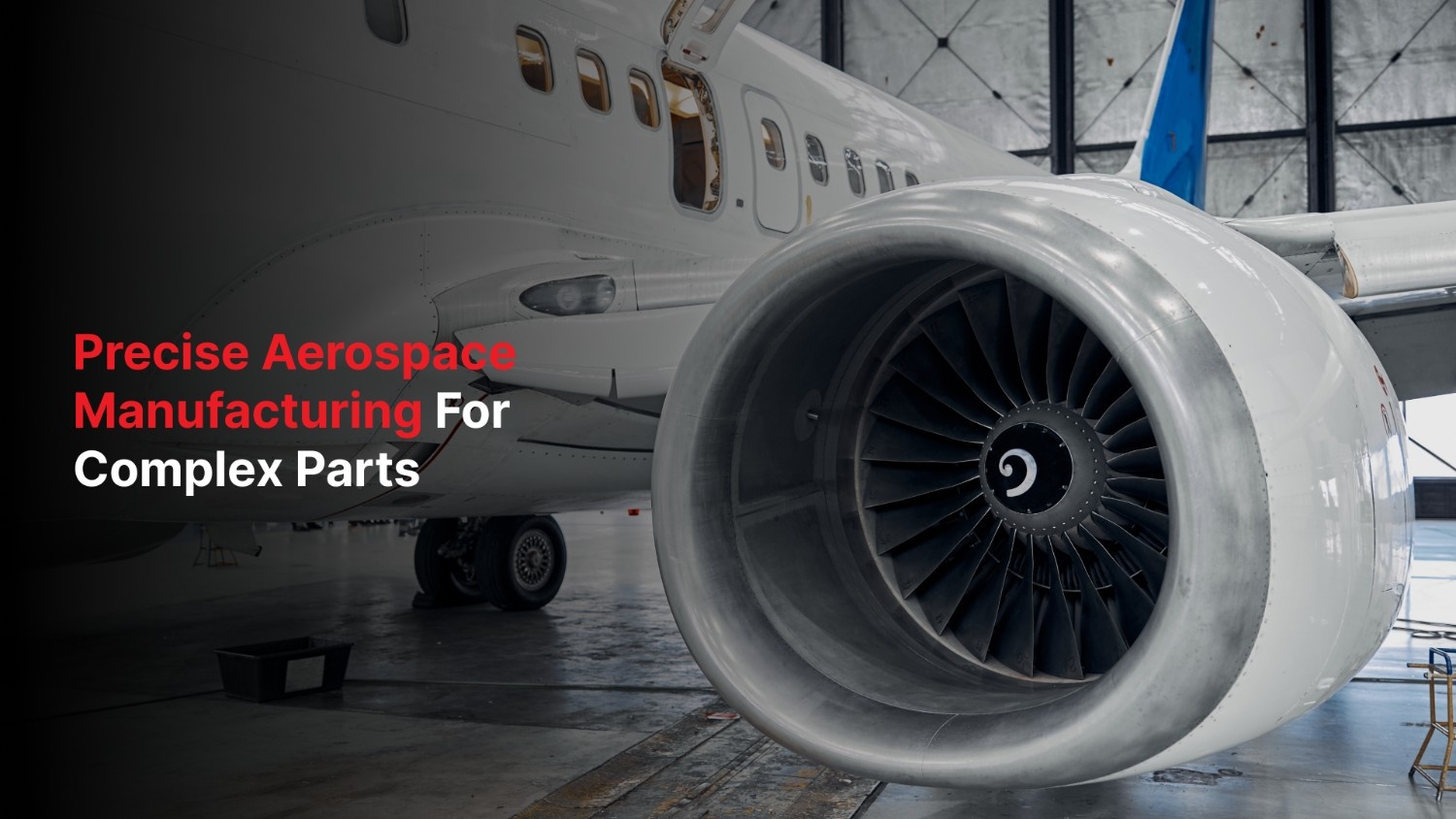
A recent recall of Airbus jets over flawed fuselage panels jolted the aerospace world. That single supplier issue triggered a 4 % cut in delivery forecasts; a sharp reminder that one small manufacturing lapse can ripple across entire fleets.
This is why precise aerospace manufacturing goes far beyond “making the part.” In environments where tolerances routinely hit ±0.0005 in, even tiny deviations can reduce efficiency or accelerate fatigue failures that no one sees until years later.
If you’re accountable for design performance, audit outcomes, or delivery schedules, you know precision must survive heat, stress, vibration, and time, not just the CMM report.
In this article, you'll learn how advanced CNC manufacturing turns complex CAD geometry into flight-ready components, and what matters most when production can’t afford even one hidden flaw.
Key Takeaways:
Zero-room-for-error reality: Aerospace tolerances routinely hit ±0.0005 in. This means even tiny variations can lead to vibration, efficiency loss, or fatigue cracks years after delivery.
Traceability is part of performance: A part is not considered flight-ready unless every material, heat, inspection step, and revision can be traced and defended during audits or field investigations.
Precision starts long before machining: Manufacturability reviews, CAM strategy, fixturing, and in-process controls decide whether digital intent survives through production.
Different parts demand different processes: Structural interfaces, rotating engine components, fluid-sealed features, and avionics mounts each tie geometry accuracy directly to safety and operational reliability.
Partner choice reduces risk early: Working with an aerospace-ready machine shop like Criterion Precision Machining protects design integrity, documentation quality, and scalability before they become schedule or compliance issues.
How Aerospace Manufacturing Differs From Standard Machining
If you already work with good machine shops, a lot of “precision” feels familiar. What changes in aerospace is not just how tight the numbers are, but how the entire system is built around safety, traceability, and regulatory proof. A part isn’t “done” when it passes inspection once; it has to be defensible for years of audits, incidents, and design changes.
At a practical level, aerospace manufacturing diverges from standard machining in a few specific ways:
Standards Stack, Not Just ISO
AS9100 builds on ISO 9001 but adds stricter requirements for product safety, risk management, configuration control, and counterfeit-part prevention.Qualification Before Production
First Article Inspection (AS9102) verifies that the process, not just a single part, can meet all design requirements before full release.Deep Traceability and Configuration Management
Serialised parts, material heats, process revisions, and drawing changes are all tracked across the lifecycle, so any field issue can be traced back to the source.Risk and Safety as Design Inputs
Quality systems explicitly incorporate risk assessment, nonconformance control, and product safety analysis, not just scrap and yield metrics.Tighter Integration Across the Supply Chain
Approved supplier lists, regular audits, and counterfeit prevention rules shape who can machine parts and how they must document their work.
Those requirements only truly reveal their impact once you look at the parts that carry the highest consequences in flight.
Where Precision Matters Most In Aerospace
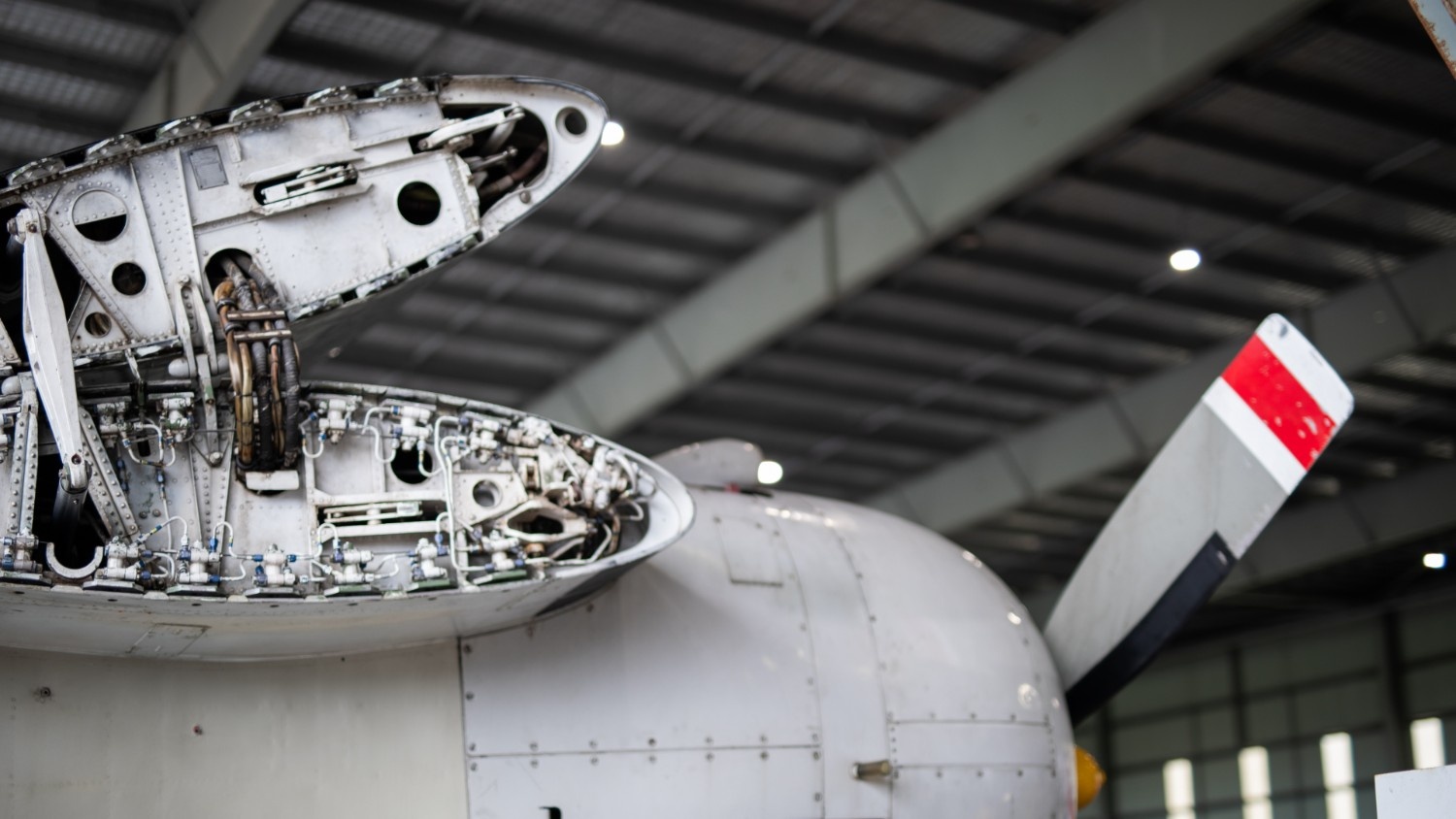
Most parts in an aircraft will “fit.” Only a few determine whether the aircraft keeps flying as intended. These are the components where precision errors don’t show up on a CMM report; they show up years later as vibration trends, leak paths, or fatigue cracks that ground the asset.
The stakes rise when dimensional integrity becomes a performance variable, not just a quality checkpoint.
Here are the areas where precision directly protects flight safety and operational reliability:
Primary Structural Interfaces
Brackets, ribs, bulkheads, and landing-gear fittings that transfer loads through the airframe. This is where positional drift can shorten fatigue life or complicate alignment during assembly.Rotating Engine Hardware
Blades, discs, and compressors run at high RPM, where a slight profile error translates into efficiency loss, heat accumulation, or imbalance across the entire fleet.Pressure-Sealing Components
Fuel and hydraulic interfaces where bore and surface finish accuracy prevent micro-leaks that become maintenance events under repeated pressurization.Avionics and Sensor Mounts
Precision surfaces that maintain optical alignment and sensor calibration; small geometry errors become big data errors in flight-critical systems.Repeatability-Driven Tooling & Fixtures
Workholding and service fixtures that guard thin walls and complex geometries. One poorly machined fixture can create an entire batch of out-of-spec parts.
That’s where the manufacturing process itself becomes the deciding factor.
From Design To Part: How Complex Aerospace Parts Are Manufactured
When an aerospace part begins life as a CAD model, it's not just a drawing; it's the start of a tightly controlled, multi-stage path that ensures geometry, material, and traceability survive all the way to service.
This process must convert digital intent into physical hardware, with every variable accounted for, from geometry to material behavior, tooling, and final inspection.
Design Preparation & Manufacturability Validation
Before any metal is cut, engineers validate whether the CAD design is machinable under aerospace constraints, checking tolerances, feature access, material choice, and risk factors.
CAD–CAM alignment: Confirm critical features, tolerance zones, and access angles match machining reality.
Material-fit decisions: Select billet/forging based on load demand and fatigue behavior; not just cost.
DFM risk filtering: Flag thin walls, internal pockets, or tool-access challenges before a single cut.
CNC Programming & Multi-Axis Machining Setup
Once the design is validated, the part enters CNC programming and toolpath generation; choices here directly influence machining accuracy, surface finish, and reproducibility.
Toolpath intent: CAM defines where accuracy lives — sequence, cutter choice, cooling, and chip load.
Axis strategy: 3-axis for prismatic; 5-axis where multi-face alignment or curvature demands single-setup machining.
Hybrid machining efficiency: Combine turning + milling (or rough + finish passes) to control precision and throughput.
Material Handling, Machining Execution & In-Process Controls
With material loaded and program ready, machining begins, but aerospace standards demand strict in-process control and material discipline to avoid defects, warping, or tool-induced error.
Material behavior management: Titanium, nickel alloys, and high-strength aluminum require heat- and wear-controlled cutting.
Rigidity and damping: Workholding and tool health monitoring prevent chatter and wall distortion in complex geometry.
Stress-stability steps: Rough–relieve–finish approaches keep geometry stable through full machining cycles.
Inspection, Quality Validation & Traceability Documentation
After machining, parts undergo stringent inspection, documentation, and traceability workflows, the final gate before a part can be considered flight-worthy.
Metrology proof: CMM and optical checks verify tolerances that aren’t visible to the naked eye.
Serialized traceability: Batch, process revision, and heat-lot data follow every part into service.
Certified completion: Finishes/coatings applied under controlled processes to maintain fatigue and corrosion requirements.
Also Read: 5 Reasons to Partner with a Precision Machining Expert Like Criterion
With the path defined, the next question is which manufacturing processes actually deliver that level of control.
Core Processes Behind Precise Aerospace Manufacturing

Turning a CAD model into a flight-ready physical part depends on how well each manufacturing step controls geometry, stress, and surface behavior. These are the core processes that ensure aircraft parts perform as intended in service.
CNC Milling and Multi-Axis Machining
For complex shapes, internal pockets, and multi-face precision, milling and multi-axis machining form the backbone of aerospace manufacturing.
What it achieves: Accurate shaping of complex geometries that must interface perfectly within assemblies.
Toolpath control: Generates precise cutting patterns for internal pockets and complex surfaces.
Axis strategy: Uses 4 or 5-axis motion to reach undercuts and multi-face features in one setup.
Setup reduction: Minimizes part repositioning to maintain tolerance alignment across faces.
Precision Turning and Swiss-Style Machining
For cylindrical, small-diameter, or high-volume parts, turning and Swiss-style lathes offer repeatable precision that general machining can't match.
What it achieves: Reliable accuracy for cylindrical and small-diameter parts in flight systems.
Turning stability: Rotating the workpiece enables tight roundness and concentricity control.
Swiss rigidity: Guide bushing supports thin parts for higher precision in fittings and valves.
Batch repeatability: Maintains consistent geometry over multiple lots in critical components.
Grinding, Finishing, and Surface Conditioning
After shaping and sizing, many aerospace parts require enhanced surface quality. This is with fine finish and controlled material properties to meet fatigue, corrosion, or aerodynamic requirements.
What it achieves: Surface integrity that withstands corrosion, fatigue, and aerodynamic loads.
Surface refinement: Removes micro-burrs and improves finish for sealing or bearing interfaces.
Protection coating: Adds fatigue and corrosion resistance through anodizing or specialized coatings.
Functional reliability: Ensures long-term performance in demanding flight environments.
Integrated and Hybrid Production Chains
Modern aerospace production often combines multiple processes, including milling, turning, finishing, and inspection. This is in tightly controlled chains to maximize precision, scalability, and traceability.
What it achieves: End-to-end control from prototype to production without quality drift.
Process mix: Combines milling, turning, and finishing to suit specific part requirements.
Scalable output: Supports both low volume and series production while preserving tolerances.
Consistent governance: Maintains traceability and validation at each step for audit readiness.
What ultimately decides whether a part is flight-ready is not how it was cut, but how well its quality is documented.
Quality, Compliance, and Traceability You Cannot Compromise
A part that measures perfectly can still be rejected if its paperwork, process control, or traceability is incomplete. That is why compliance is treated as a performance requirement of its own, not an administrative burden.
These are the core controls that decide whether a machined part is actually approved for flight.
Requirement | What It Ensures | Why It Matters |
|---|---|---|
AS9100 Quality Management | Standardized safety, risk control, supplier governance | Prevents hidden manufacturing risks from entering service |
AS9102 First Article Inspection | Process validation before production runs | Confirms capability, not just a single good part |
Full Traceability to Raw Material | Serialized tracking of material heats, revisions, and inspections | Allows rapid investigation and containment if issues arise |
Special Process Control | Verified methods for coatings, heat treatment, and similar steps | Protects fatigue life and environmental durability |
Approved Supplier Oversight | Audited and compliant supply-chain partners | Reduces risk of counterfeit or non-certified components |
Meeting these requirements takes more than capability. It takes a supplier built for tight-tolerance, audit-ready production from day one.
Criterion Precision Machining For Tight Tolerance Parts
Even when designs are flawless, many suppliers struggle to deliver tight-tolerance aerospace parts that stay consistent across batches and clear audits without delays. Slight variation or missing documentation can ground entire programs.
Criterion Precision Machining solves that risk with certified quality systems, in-house inspection, and proven CNC capabilities. This ensures complex parts remain accurate, traceable, and production-ready from prototype to scale.
Here’s how Criterion protects your tolerance targets and manufacturing confidence on every part:
High-Precision CNC Turning, Milling & Swiss Turning
Get intricate, small-diameter, or multi-axis geometries machined to tight tolerances; ideal for aerospace components where every thousandth matters.Full Machining Scope Under One Roof
Simplify your supply chain by machining both straightforward and highly complex parts with one qualified partner instead of juggling multiple vendors.Quality Management & Compliance Infrastructure
Stay audit-ready with certified systems and regulatory alignment built into production, supporting programs in aerospace, medical, and defense.Metrology & Inspection Capability
Receive parts that are not only machined correctly but thoroughly verified against specification before they ever reach your line.Scalable: From Prototype to Production
Move from design validation to serial production without switching suppliers, preserving consistency and accelerating program schedules.Precision You Can Depend On
Count on stable machining processes that protect performance in environments where stress, safety, and compliance all share equal priority.
Also Read: Aerospace and Defense Industries: How Precision Machining Plays a Crucial Role
Looking ahead, the technologies shaping precision today are already redefining what will be possible tomorrow.
Future Trends In Precise Aerospace Manufacturing
Aerospace parts are getting thinner, stronger, and more integrated, which makes maintaining precision far more difficult. Lead times are shrinking, documentation expectations are growing, and development cycles leave little room for error.
Traditional subtractive workflows alone can’t keep pace. The industry is shifting to new technologies that improve accuracy, consistency, and supply-chain control. These are the trends shaping that future:
Hybrid Machining and Additive Integration
CNC finishing on printed near-net shapes to enable internal cooling channels, reduce waste, and improve structural performance.Lights-Out / Automated Machining Cells
Automated loading, tool monitoring, and robotic inspection to run reliable 24/7 production with lower variability.Digital Twin & Simulation-Driven CNC
Virtual models predict machining behavior, tool wear, and distortion before cutting to improve first-pass yield.In-Process Inspection & Closed-Loop Control
Machine-integrated probing and laser metrology that adjust toolpaths in real time for micron-level accuracy.Material-Efficient and Sustainable Operations
Use of recyclable alloys, optimized toolpaths, and near-net forging/casting to reduce scrap without sacrificing precision.Resilient, Domestic Supply Strategies
More OEMs are shifting critical parts to certified US-based partners to avoid geopolitical and logistics risk.
Conclusion
Precision is not an added cost in aerospace; it is a safeguard against delays, fatigue risks, and operational surprises that appear long after installation. The earlier precision thinking enters a program, the fewer problems appear downstream in testing, certification, or fleet operations.
When parts must survive stress, time, and scrutiny, partnering with a manufacturer built around tight tolerances and traceability reduces uncertainty before it ever reaches production. Criterion Precision Machining brings the systems, inspection infrastructure, and process stability that protect your intent from prototype through scale.
If you have a component moving toward qualification or a design that needs a manufacturability review, contact us. Our team can help validate feasibility, refine the tolerance strategy, and deliver parts ready for the environments they will fly in.
FAQs
What tolerance levels are typically required for aerospace-grade machined parts?
Critical features often need ±0.0005 in or tighter, with geometric tolerances controlling alignment and load paths where safety is involved.When should a design shift from standard machining to multi-axis or Swiss-style machining?
As soon as multiple faces must align precisely, or when small-diameter or curved features cannot be held accurately in multiple setups.Why is documentation treated as a performance requirement in aerospace manufacturing?
A part can be perfect physically but still rejected if material certs, revision history, or inspection records are incomplete or unverifiable.How early should machining experts be involved during design?
Ideally, during CAD development, so material selection, tolerance stack-ups, and workholding strategy are aligned before drawings are frozen.What causes most delays during aerospace machining projects?
Late GD&T updates, unclear specifications, and unvalidated special processes (like coatings or heat treatment), not cutting time, are the usual bottlenecks.