The global rapid prototyping market is projected to reach USD 4.7 billion by 2035, highlighting the growing demand for reliable prototyping services.
For Department of Defense (DoD) contractors, producing mission‑critical prototypes while meeting strict standards is challenging because misaligned components, untested materials, and slow design cycles can lead to delays and higher costs. By validating designs early, reducing risk, and ensuring compliance, defense prototyping enables faster development, minimizes costly rework, and delivers prototypes that are both production‑ready and mission‑capable.
This guide covers everything you need to know about defense prototyping: its importance, key benefits, common challenges, best practices, and how to transition prototypes smoothly from concept to production.
At a Glance
Early collaboration ensures alignment between program offices, contractors, and end users, reducing miscommunication and costly revisions.
Clearly defined success criteria and measurable objectives provide teams with actionable metrics and accountability.
Iterative prototyping accelerates learning, encourages rapid improvement, and mitigates the risk of costly late-stage design changes.
Digital tools, open design practices, and TRL-based program management streamline workflows and enhance traceability.
Planning production pathways and aligning with international standards ensures prototypes can transition efficiently to operational use.
Why Defense Prototyping is Important for DoD Contractors?
In defense projects, prototyping is far more than a step in the design process, it’s a mission-critical activity that ensures reliability, performance, and compliance before full-scale production begins.
For DoD (Department of Defense) contractors and suppliers, the stakes are high: one misaligned component or untested material can lead to costly delays, failed audits, or operational failures in the field.
Defense prototyping delivers multiple strategic benefits:
Validates designs early: Confirms that concepts function as intended, reducing the risk of surprises during production.
Reduces risk: Detects potential failures, misalignments, or regulatory noncompliance early, saving time and resources.
Improves decision-making: Provides objective data to guide funding allocations, design adjustments, and schedule planning.
Supports regulatory compliance: Ensures all documentation, traceability, and testing meet MIL-STD, ITAR, and other defense standards.
Optimizes cost and schedule: Minimizes waste and prevents costly late-stage redesigns, keeping projects on track.
Example: During the prototyping of a new UAV payload module, early evaluation of materials, tolerances, and assembly methods allowed the contractor to finalize a design that successfully passed all MIL-STD environmental tests.
This approach avoided months of potential redesign work and ensured production readiness from the start.
Also Read: How Precision Machining Drives Innovation in Manufacturing
With a clear understanding of why defense prototyping matters, let’s explore the key best practices that ensure prototypes are reliable, compliant, and production-ready.
10 Key Best Practices for Successful Defense Prototyping
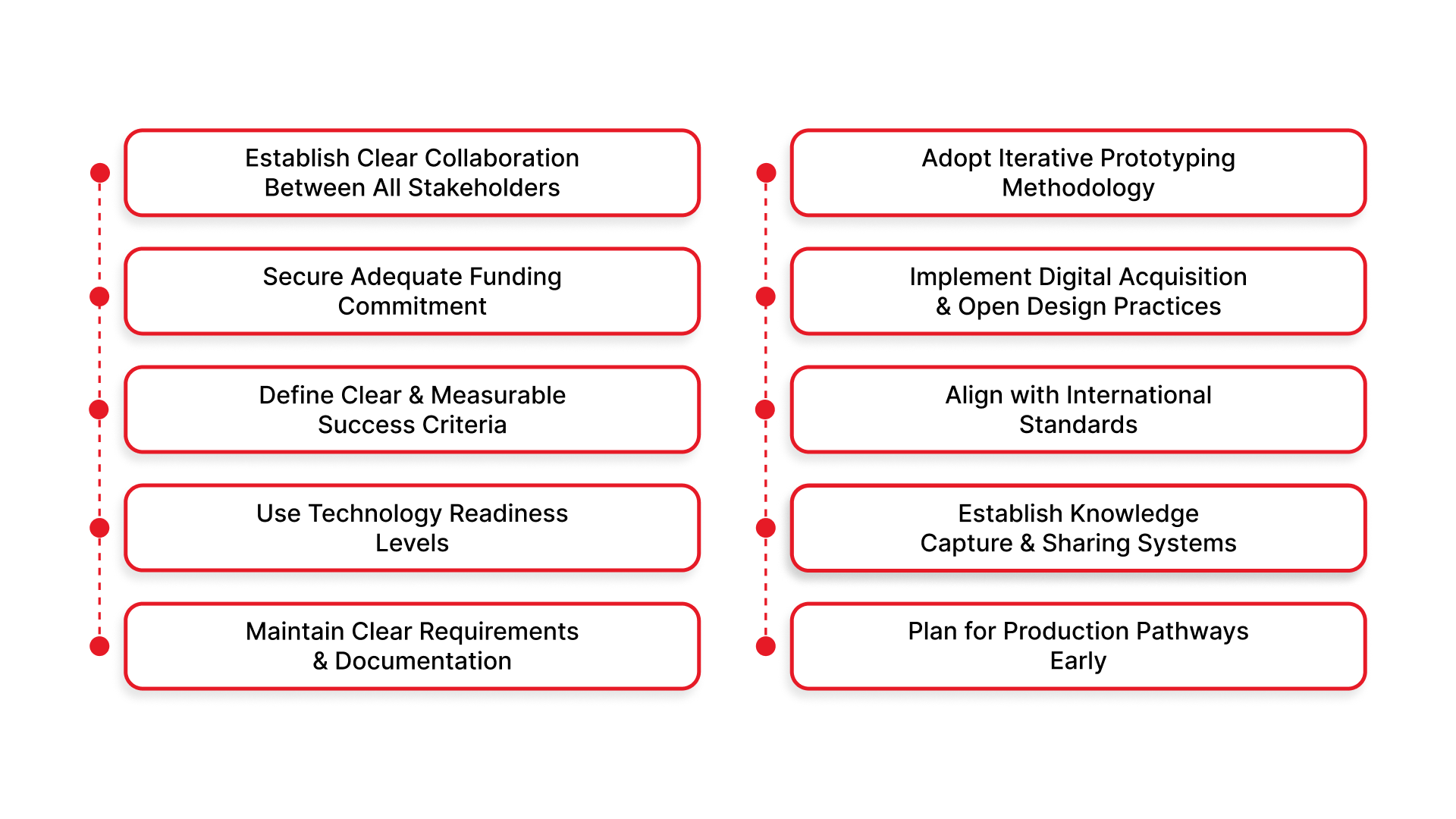
To ensure mission-critical prototypes meet specifications, remain audit-ready, and transition smoothly to production, teams should follow these key practices. Each step addresses a common challenge in defense prototyping and provides actionable guidance.
1. Establish Clear Collaboration Between All Stakeholders
Successful defense prototyping begins with strong collaboration. When program objectives, timelines, and responsibilities are unclear, miscommunication can cause delays, repeated work, and higher costs.
Why it matters: Effective collaboration ensures engineering, operations, and supply-chain teams work toward the same goals, aligning expectations and reducing errors.
Best Practices:
Align objectives across program offices, contractors, and sub-tier suppliers to ensure everyone shares the same vision.
Use structured communication channels, such as weekly design reviews, centralized documentation platforms, and project dashboards, to keep teams informed.
Track action items and document all decisions to maintain accountability and prevent misunderstandings.
Example: In a radar housing prototype project involving three contractors, implementing a shared dashboard and weekly reviews helped teams stay aligned. This approach reduced repeated work and ensured that part specifications were consistent across all teams.
2. Secure Adequate Funding Commitment
Stable financial support is essential for successful defense prototyping. Without proper funding, teams may be forced to compromise on materials, testing, or overall quality, which can jeopardize project outcomes.
Why it matters: Adequate funding ensures that prototypes meet design specifications, adhere to deadlines, and comply with regulatory requirements without unnecessary compromises.
Best Practices:
Allocate budgets that cover all aspects of the project, including design, materials, testing, and contingencies.
Factor in long-lead materials and specialized tooling during the early planning stages to avoid delays.
Maintain open communication with program offices to clearly convey funding needs and priorities throughout the project.
Example: A UAV sensor assembly required high-performance titanium parts. By securing a budget upfront for both the specialty titanium and the necessary CNC tooling, the team was able to deliver the prototype on time while maintaining full performance and quality standards.
3. Define Clear and Measurable Success Criteria
Prototypes deliver value only when their performance can be objectively measured and validated. Ambiguous goals often result in wasted time, repeated iterations, and unnecessary resource expenditure.
Why it matters: Establishing measurable success criteria allows teams to evaluate prototype performance objectively, streamline design iterations, and maintain compliance with regulatory and defense standards.
Best Practices:
Collaborate with Department of Defense partners to define clear metrics for performance, safety, and durability.
Break high-level objectives into actionable benchmarks for each design iteration to maintain focus and trackable progress.
Monitor progress regularly to ensure that the prototype meets the established goals and performs as intended.
Example: For an armored vehicle sighting system, clearly defined alignment tolerances and vibration resistance thresholds allowed engineers to assess each prototype iteration quickly and confidently, reducing the need for extensive rework and accelerating development timelines.
4. Use Technology Readiness Levels (TRLs)
Technology Readiness Levels (TRLs) offer a structured framework to evaluate the maturity of a technology and guide development priorities during defense prototyping.
Why it matters: Applying TRLs ensures resources are allocated efficiently, risks are identified early, and prototypes progress methodically toward production readiness.
Best Practices:
Map each prototype objective to the appropriate TRL stage, tracking progress from initial concept through operational readiness.
Use TRL assessments to prioritize resources, identify potential risks, and address gaps before they impact schedules.
Align program milestones and decision points with TRL progression to support informed go/no-go determinations.
Example: A communication module prototype advanced from TRL 3 to TRL 6 using clearly defined readiness criteria. This allowed program leadership to approve production readiness without delays, ensuring timely deployment of the technology.
5. Maintain Clear Requirements and Documentation
Incomplete or ambiguous requirements are a leading cause of prototype setbacks. Thorough documentation ensures all teams are aligned and can execute designs accurately.
Why it matters: Clear and comprehensive documentation minimizes miscommunication, reduces rework, and supports compliance with regulatory standards.
Best Practices:
Record detailed specifications for performance, safety, and durability to guide prototype development.
Include interface requirements, environmental constraints, and material properties for complete context.
Use version-controlled systems to ensure all teams have access to the latest updates and revisions.
Example: For a missile guidance unit, documenting thermal tolerance and vibration limits allowed the machining team to consistently achieve ±0.0002” tolerances on all critical components, ensuring reliable prototype performance.
6. Adopt Iterative Prototyping Methodology
Iterative prototyping focuses on learning and improving designs through progressive cycles. This approach helps teams identify potential problems early, avoiding costly failures later in the development process.
Why it matters: Catching design, material, or functional issues early reduces expensive rework, improves manufacturability, and shortens development timelines.
Best Practices:
Focus on rapid, incremental design iterations rather than waiting for a perfect first prototype.
Incorporate structured feedback loops to evaluate geometry, materials, and functional performance after each cycle.
Apply lessons learned from previous iterations to refine design, optimize performance, and improve production feasibility.
Example: During the development of a Swiss-turned sensor housing, iterative testing revealed alignment issues. Correcting these problems before full production ensured the prototype performed reliably and met all design requirements.
Also Read: Material Selection for Medical Device Components: Insights from Criterion Tool
7. Implement Digital Acquisition and Open Design Practices
Digital tools and open design approaches modernize prototyping workflows, helping teams work more efficiently and accurately.
Why it matters: Virtual testing and simulation allow teams to identify potential issues before physical prototyping, reducing material waste and speeding up development.
Best Practices:
Use CAD/CAM software, simulation platforms, and digital twins to model designs and predict performance.
Enable knowledge sharing through open design practices, allowing cross-team collaboration and faster decision-making.
Validate designs virtually before creating physical prototypes to ensure functionality and reduce costly iterations.
Example: Engineers created a digital twin for a laser targeting mount, which helped identify stress points before any material was cut. This approach saved time, reduced scrap, and ensured the prototype met all performance requirements.
8. Align with International Standards
Defense prototypes often need to comply with both domestic and allied regulations to ensure safety, compatibility, and operational readiness.
Why it matters: Aligning with international and domestic standards ensures prototypes are reliable, audit-ready, and can operate seamlessly in joint programs with allied forces.
Best Practices:
Reference relevant MIL-STD, ISO, and Department of Defense specifications during design and development.
Consider interoperability requirements for allied systems and joint programs to avoid integration issues later.
Incorporate compliance and regulatory requirements into the design from the early stages to prevent costly redesigns.
Example: A defense communication module prototype was designed following MIL-STD-810 vibration and temperature guidelines. This approach ensured the prototype met both U.S. operational standards and allied interoperability requirements, reducing delays during testing and approvals.
9. Establish Knowledge Capture and Sharing Systems
Capturing and sharing knowledge is essential for preventing repeated mistakes and fostering innovation across defense projects.
Why it matters: Lessons learned from one prototype can save time, reduce costs, and improve quality for future projects by helping teams avoid pitfalls and make informed decisions.
Best Practices:
Maintain centralized repositories for design iterations, test results, and lessons learned so that all project information is easily accessible.
Share insights and findings across engineering, quality, and program management teams to encourage collaboration and continuous improvement.
Use documented processes to onboard and train new team members efficiently, ensuring that knowledge is retained within the organization.
Example: By documenting every iteration of a UAV payload module prototype, the project team was able to reduce repeated redesigns on future prototypes. This allowed engineers to build on previous successes and avoid previously encountered issues.
10. Plan for Production Pathways Early
Prototypes must be designed with a focus on smooth transition into full production. Considering production requirements early helps avoid delays, redesigns, and costly adjustments later in the process.
Why it matters: Early attention to manufacturability and supply chain constraints ensures prototypes can scale efficiently from initial testing to production while maintaining quality and performance standards.
Best Practices:
Design prototypes with manufacturability in mind, leveraging processes like CNC turning, Swiss turning, or multi-axis milling.
Involve production engineers early to assess scalability, tooling requirements, and potential bottlenecks.
Align prototype success criteria with intended production pathways to ensure the final design is feasible and cost-effective.
Example: During the development of a titanium sensor housing, early planning for multi-axis CNC milling allowed the prototype to transition seamlessly into low-volume production without requiring additional tooling, saving time and maintaining tight tolerances.
Once best practices are in place, it’s important to recognize the hurdles that can impact timelines, budgets, and prototype reliability.
5 Key Challenges in Defense Prototyping for DoD Contractors
While defense prototyping is essential, DoD contractors often face complex challenges that can impact timelines, budgets, and prototype reliability. Understanding these common challenges upfront helps contractors anticipate risks and adopt practices that keep projects on track.
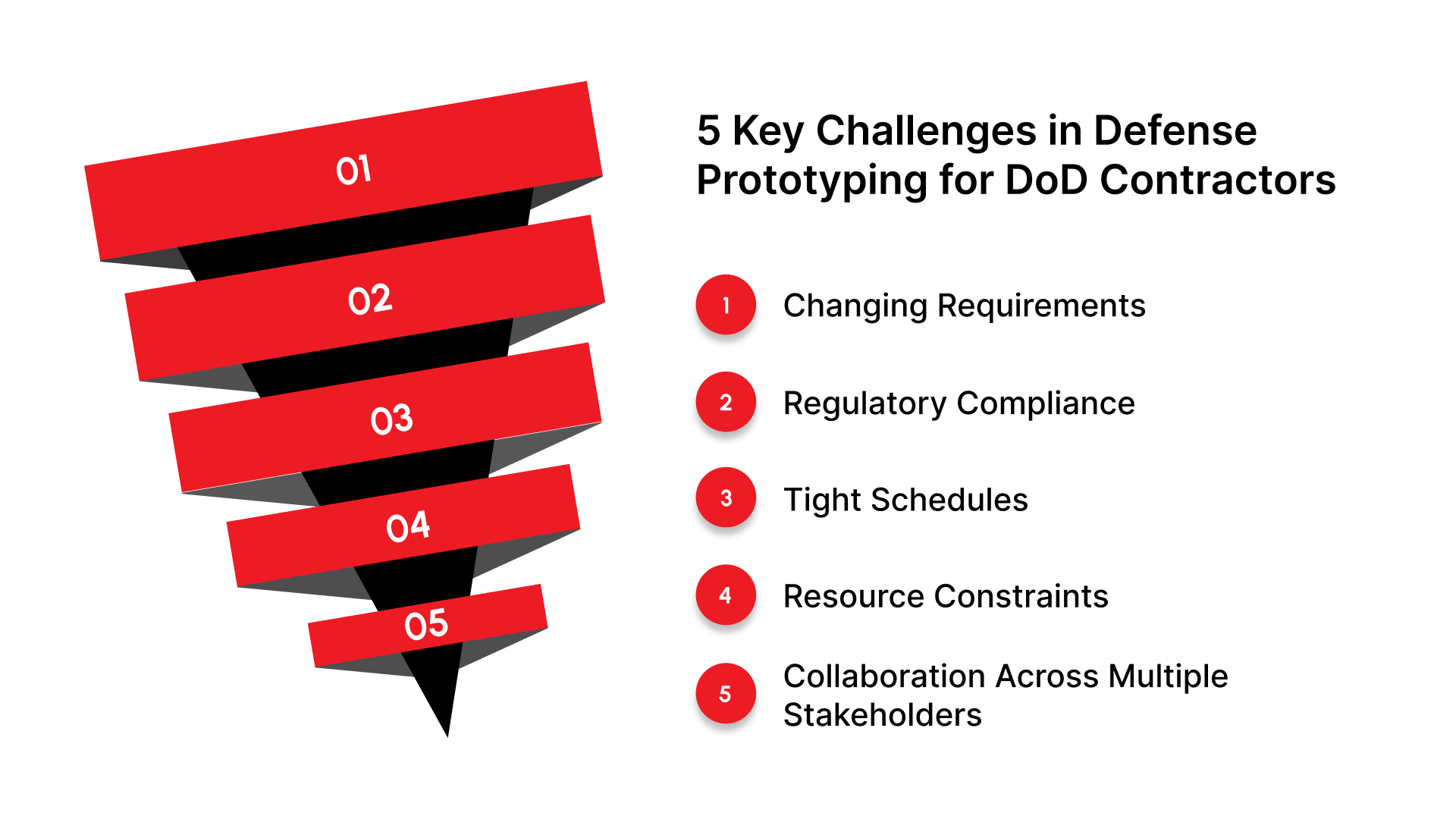
Changing Requirements: Defense programs often have changing mission needs, leading to design revisions and repeated prototyping cycles.
Regulatory Compliance: Meeting MIL-STD, ITAR, DFARS, and other standards adds complexity to design, materials selection, and documentation.
Tight Schedules: Accelerated timelines demand rapid iteration without compromising precision or safety.
Resource Constraints: Limited budgets, specialty materials, or high-precision tooling can restrict prototyping options.
Collaboration Across Multiple Stakeholders: Coordinating between contractors, subcontractors, engineers, and program offices can cause misalignment and delays.
After addressing challenges, now, focus on steps that ensure prototypes are ready for operational use.
How To Ensure Defense Prototype Readiness for Operational Success?
A well-prepared prototype allows teams to validate performance, reduce risks, and make informed decisions before committing to full-scale production. Without this focus, even minor design flaws or misalignments can lead to costly delays, failed audits, or operational failures in the field.
Key steps to ensure prototype readiness include:
Integrate Operational Requirements Early: Design prototypes based on real-world mission conditions to anticipate performance challenges and environmental stresses.
Validate Through Testing and Iteration: Conduct rigorous functional, environmental, and safety tests to confirm that prototypes meet all design objectives.
Ensure Documentation and Traceability: Maintain comprehensive records of design iterations, test results, and compliance checks to support audits and certification.
Plan Production Scalability: Design with manufacturability in mind, involving production engineers early to ensure seamless transition from prototype to low- or full-volume production.
By focusing on operational readiness, DoD contractors can transform prototypes from concept models into reliable components that advance defense capabilities efficiently and safely.
How Criterion Precision Machining Supports Defense Prototyping?
Defense programs require components that match drawings, support strict testing schedules, meet regulatory and documentation requirements, and perform consistently from prototype to fielded systems. Delays and failures often result from tolerance drift, incomplete documentation, or suppliers who cannot maintain control across complex builds.
At Criterion Precision Machining, we address these challenges by combining high-precision capability with compliance and traceability from the prototype onward.
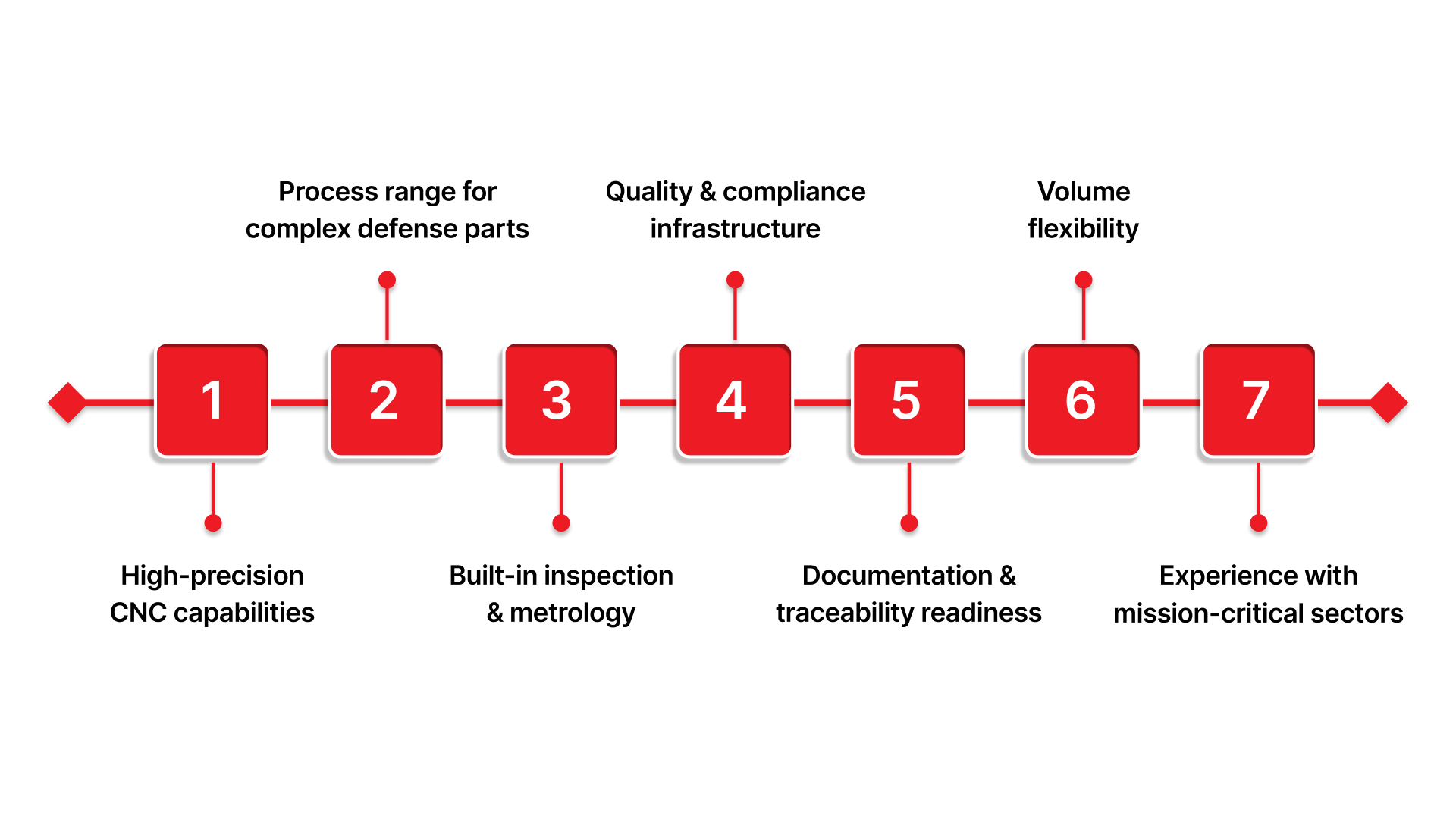
Here is how that translates on the shop floor:
High-precision CNC capabilities: CNC turning, Swiss turning, and Multi-axis milling with tolerances as tight as ±0.0002 in., suitable for intricate defense components.
Process range for complex defense parts: Supports small-diameter Swiss-turned elements, precision rotational parts, and prismatic geometries using 3-, 4-, and 5-axis milling.
Inspection and metrology built into production: Uses CMM (Global Advantage with PC-DMIS) and advanced measurement systems to verify critical dimensions and ensure conformity throughout prototyping.
Quality and compliance infrastructure: Maintains ISO 9001:2015, ITAR registration, DFARS compliance, and other certifications required for defense supply chains.
Documentation and traceability readiness: Provides inspection reports, conformance records, and full traceability needed for audited and regulated defense programs.
Volume flexibility: Supports single-piece prototypes as well as low- to mid-volume production while maintaining the same quality standards.
Experience with mission-critical sectors: Long-term focus on industries where reliability and compliance are essential, including defense, aerospace, medical, and photonics.
Conclusion
Defense prototypes eventually progress to stages where tolerances narrow, testing requirements intensify, and documentation standards become critical. At that point, machining decisions made early in the process directly impact system performance, qualification schedules, and overall program stability.
At Criterion Precision Machining, where accuracy, material integrity, and traceable processes are essential, a disciplined manufacturing approach helps reduce uncertainty and supports reliable prototype outcomes suitable for defense applications.
For further coordination or technical discussion regarding upcoming prototype work, contact us to review requirements and ensure all specifications are addressed accurately.
FAQs
1. Why is early collaboration important in defense prototyping?
Early collaboration aligns objectives between program offices, contractors, and end users, reducing miscommunication, preventing costly redesigns, and ensuring smooth development cycles.
2. How do TRLs support prototyping decisions?
Technology Readiness Levels assess maturity and guide program priorities, helping teams allocate resources effectively and reduce technical and schedule risks.
3. What makes iterative prototyping effective?
Iterative prototyping emphasizes continuous learning, rapid testing, and design improvements, reducing late-stage failures and accelerating development.
4. Why should prototypes align with international standards?
Standards ensure interoperability, safety, and operational utility in coalition environments, facilitating adoption and integration with allied systems.
5. How can digital tools improve defense prototyping?
Digital tools, CAD/CAM, simulation, and open design practices streamline workflows, reduce physical prototyping cycles, enable knowledge sharing, and support traceability.