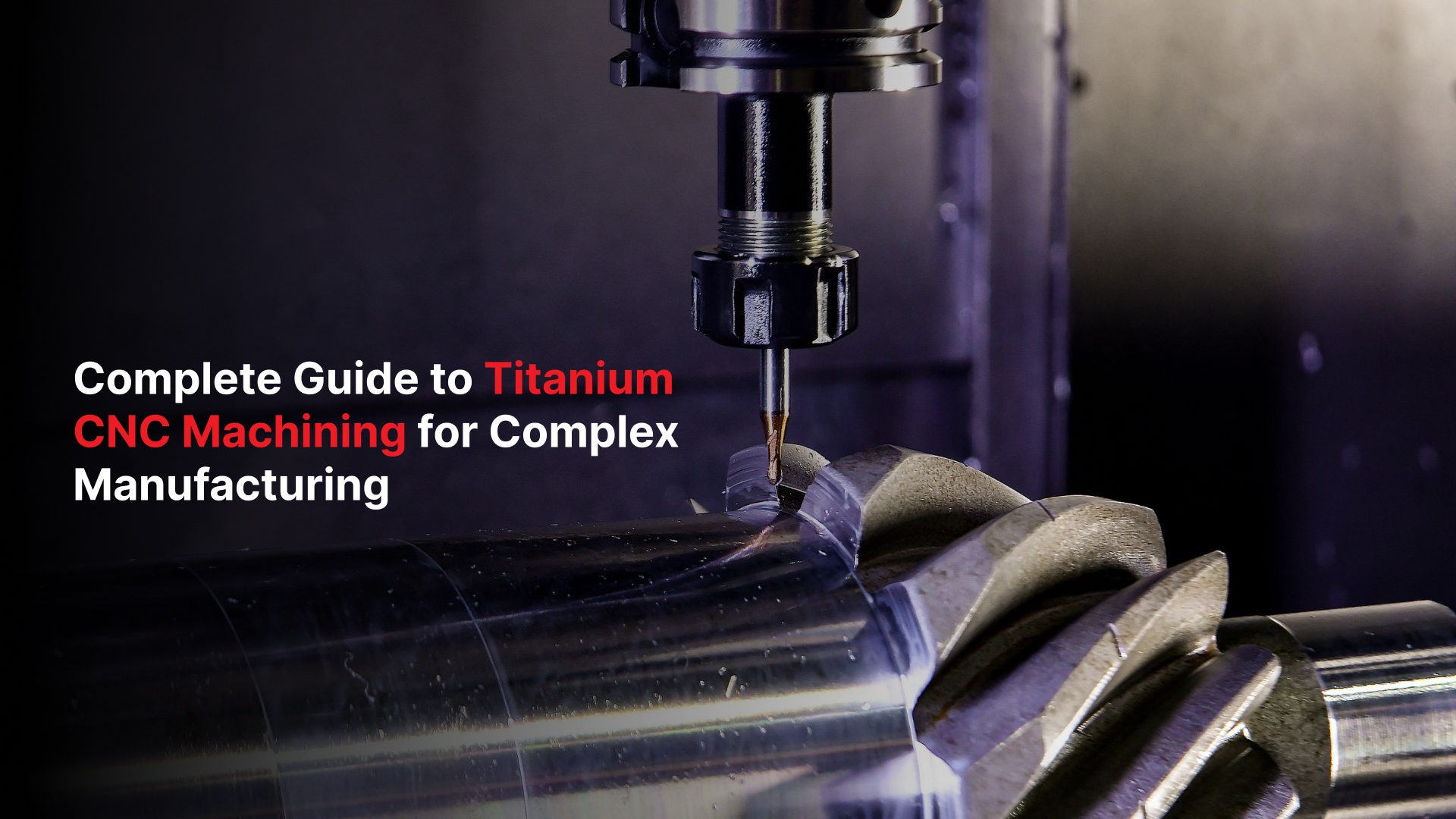
Titanium is widely used in high-performance manufacturing because of its strength, corrosion resistance, and predictable behavior under stress. These properties make it valuable in aerospace, medical, and defense applications.
Recent reports show that aerospace accounts for about 40% of global titanium alloy consumption, which highlights the material’s importance in critical systems. Machining titanium is not simple. It generates heat, wears tools quickly, and reacts poorly to incorrect feeds and speeds. Success requires careful planning and precise CNC control.
This guide explains the titanium CNC machining process, material behavior, tooling, process planning, and quality controls that support consistent results.
Quick look:
Titanium supports high-tolerance manufacturing. Its strength, corrosion resistance, and stability make it suitable for components that must perform reliably under mechanical and environmental stress.
Machining titanium requires strict process control. Heat management, controlled tool engagement, and stable setups are essential to prevent distortion and tool failure.
Specialized CNC methods enable complex geometries. Multi-axis machining and adaptive toolpaths help maintain accuracy on intricate surfaces and thin-wall features.
Titanium work demands expertise in precision machining. Experienced teams understand material behavior, anticipate machining challenges, and apply the disciplined methods needed to achieve consistent, high-accuracy results.
Quality inspection verifies dimensional accuracy. CMM checks, surface measurements, and documentation ensure each part meets its specified tolerances and performance requirements.
Why Titanium Outperforms Alternatives in High-Tolerance Manufacturing
Titanium offers a combination of mechanical strength, stability, and corrosion resistance that many metals cannot match. These characteristics make it a preferred choice for parts that must perform reliably under high stress or in harsh environments.
Its consistency and predictable behavior during load, temperature change, and fatigue make it ideal for tight-tolerance requirements. These are other advantages of using titanium:
Load Stability: Titanium supports thin walls and fine features without deflection, reducing tolerance stack-ups during machining, assembly, and inspection.
Inspection Repeatability: Stable surfaces and predictable thermal behavior improve CMM consistency and reduce measurement variation across inspection cycles.
Controlled Thermal Response: Predictable expansion minimizes dimensional change between machining, inspection, and operating conditions.
Fatigue Life Stability: Resistance to crack initiation and propagation limits dimensional drift under cyclic loading, supporting long-term part performance.
Reduced Compliance Risk: Corrosion resistance and material stability reduce the likelihood of dimensional shift, rework, or requalification failures during audits.
These properties make titanium suitable for industries where precision and reliability are essential. In the next section, we examine how different industries depend on titanium for high-performance results.
Suggested Read: How Precision Machining Drives Innovation in Manufacturing
Applications Requiring Complex Titanium Machining
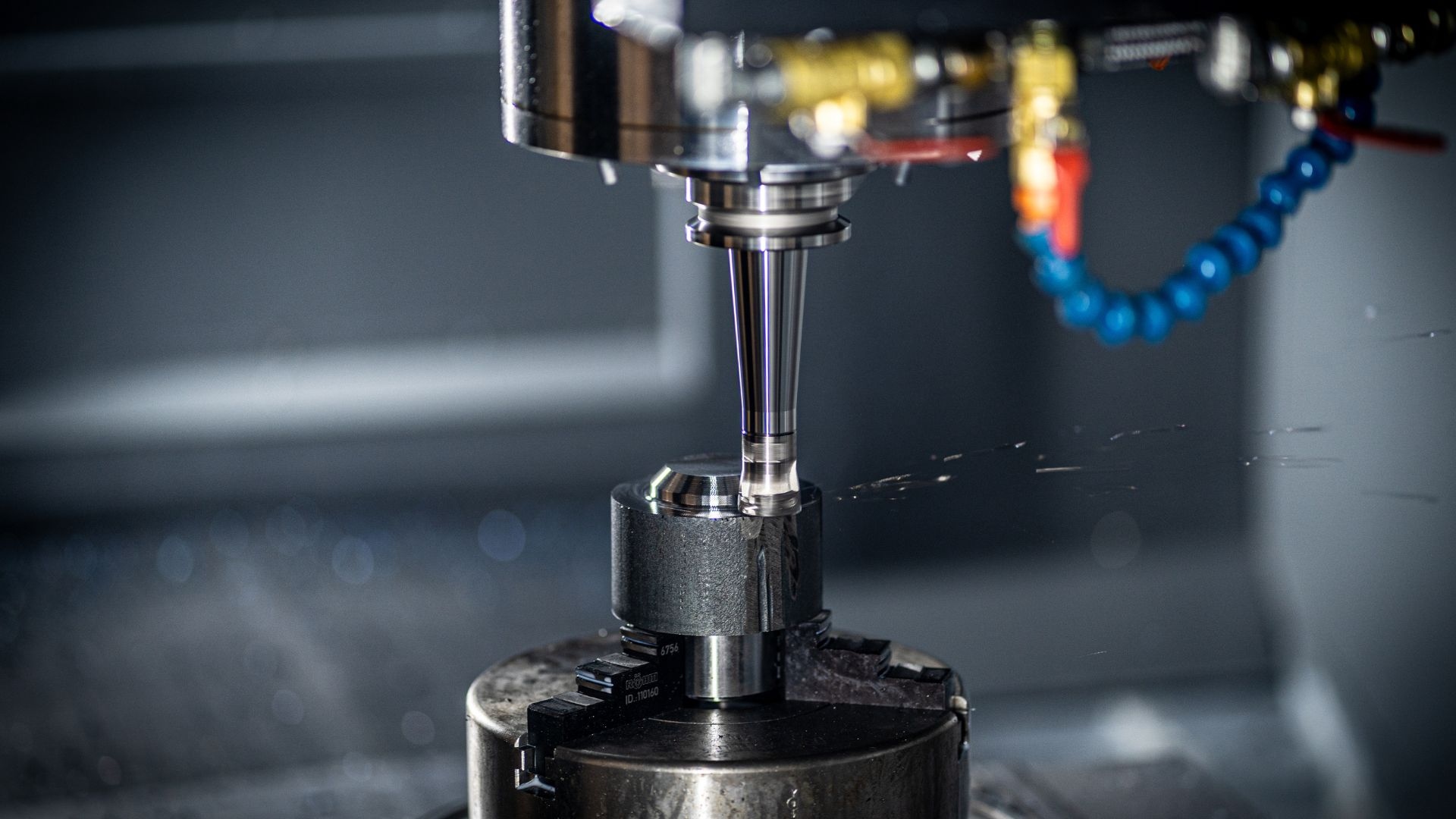
Several industries rely on components that must maintain accuracy, resist fatigue, and endure demanding operating environments. Complex titanium machining supports these requirements by producing parts with fine features, thin walls, tight tolerances, and geometry that standard materials or processes cannot achieve.
Key industry applications include:
Aerospace Structures and Engine Hardware: Components such as brackets, housings, compressor blades, seat tracks, and load-bearing airframe parts benefit from titanium’s strength and thermal stability.
Medical Implants and Surgical Instruments: Items including micro implants, spinal cages, trauma plates, dental abutments, and high-precision surgical tools depend on biocompatibility and long-term durability.
Defense and Military Systems: Titanium is used for weapon housings, missile components, guidance-system hardware, and lightweight armor inserts, where reliability and material performance are essential.
Energy and Industrial Equipment: Heat-exchanger plates, high-pressure valve bodies, pump impellers, and offshore components rely on corrosion resistance and fatigue strength.
Semiconductor, Photonics, and Optics Components: Precision mounts, sensor housings, alignment fixtures, and vacuum-compatible hardware require exceptional dimensional stability.
Criterion Precision Machining works extensively with titanium components across these industries and understands the demands of mission-critical manufacturing. The team manages tight tolerances, complex geometries, and strict documentation requirements for regulated sectors. Contact us to learn more.
Titanium Grades Most Commonly Used in CNC Machining
Titanium grades offer different combinations of strength, ductility, corrosion resistance, and machinability. Material properties directly influence toolpath planning, cutting speeds, surface finish, and long-term part performance.
The table below outlines titanium grades commonly used in CNC machining and their typical applications:
Titanium Grade | Composition / Properties | Typical Applications |
|---|---|---|
Grade 1 | Commercially pure. Softest. Highest ductility and corrosion resistance. | Chemical processing equipment, low-stress components, and forming applications. |
Grade 2 | Commercially pure with balanced strength and ductility. Good corrosion resistance. | Medical housings, aerospace brackets, and industrial components. |
Grade 3 | Stronger than Grades 1 and 2. Less ductile. Good corrosion resistance. | Pressure vessels, structural components, high-strength industrial parts. |
Grade 4 | Strongest commercially pure grade. Excellent corrosion resistance. | Aerospace structures, surgical hardware, and marine components. |
Grade 5 (Ti-6Al-4V) | It is the most widely used titanium alloy. High strength, good fatigue resistance. | Aircraft brackets, turbine components, orthopedic implants. |
Grade 6 (Ti-5Al-2.5Sn) | Strong, weldable alloy with good creep resistance. | Aerospace engine casings, high-temperature components. |
Grade 7 (Ti-0.2Pd) | Similar to Grade 2 with added palladium for corrosion resistance. | Chemical processing systems, seawater applications. |
Grade 9 (Ti-3Al-2.5V) | High strength. Good formability. Moderate machinability. | Aerospace tubing, bicycle frames, and marine hardware. |
Grade 11 | Commercially pure with superior corrosion resistance due to palladium. | Chemical processing, marine environments. |
Grade 12 (Ti-0.3Mo-0.8Ni) | Excellent high-temperature and chemical resistance. | Heat exchangers, high-temperature systems, and chemical plant components. |
Grade 23 (Ti-6Al-4V ELI) | “Extra Low Interstitial.” High purity. Superior fracture toughness and biocompatibility. | Medical implants, dental hardware, trauma fixation devices. |
These grades support different performance requirements. Grades 5 and 23 dominate in aerospace and medical applications due to their strength and fatigue performance, while commercially pure grades offer better formability and corrosion resistance for lower-stress parts.
Questions to ask when selecting a titanium grade:
What level of mechanical strength does the part require?
Will it face corrosion from chemicals, seawater, or bodily fluids?
How complex will the machining be, and is machinability a constraint?
Do aerospace or medical regulations mandate a specific grade?
How will the part behave under heat, load cycles, or long-term fatigue?
Each grade reacts differently under heat and cutting pressure, so the machining workflow must be tailored accordingly. Next, we look at how shops plan toolpaths, setups, and thermal control to achieve consistent, tight-tolerance results.
Suggested Read: Material Selection for Medical Device Components: Insights from Criterion Tool
The CNC Machining Process for Titanium Components
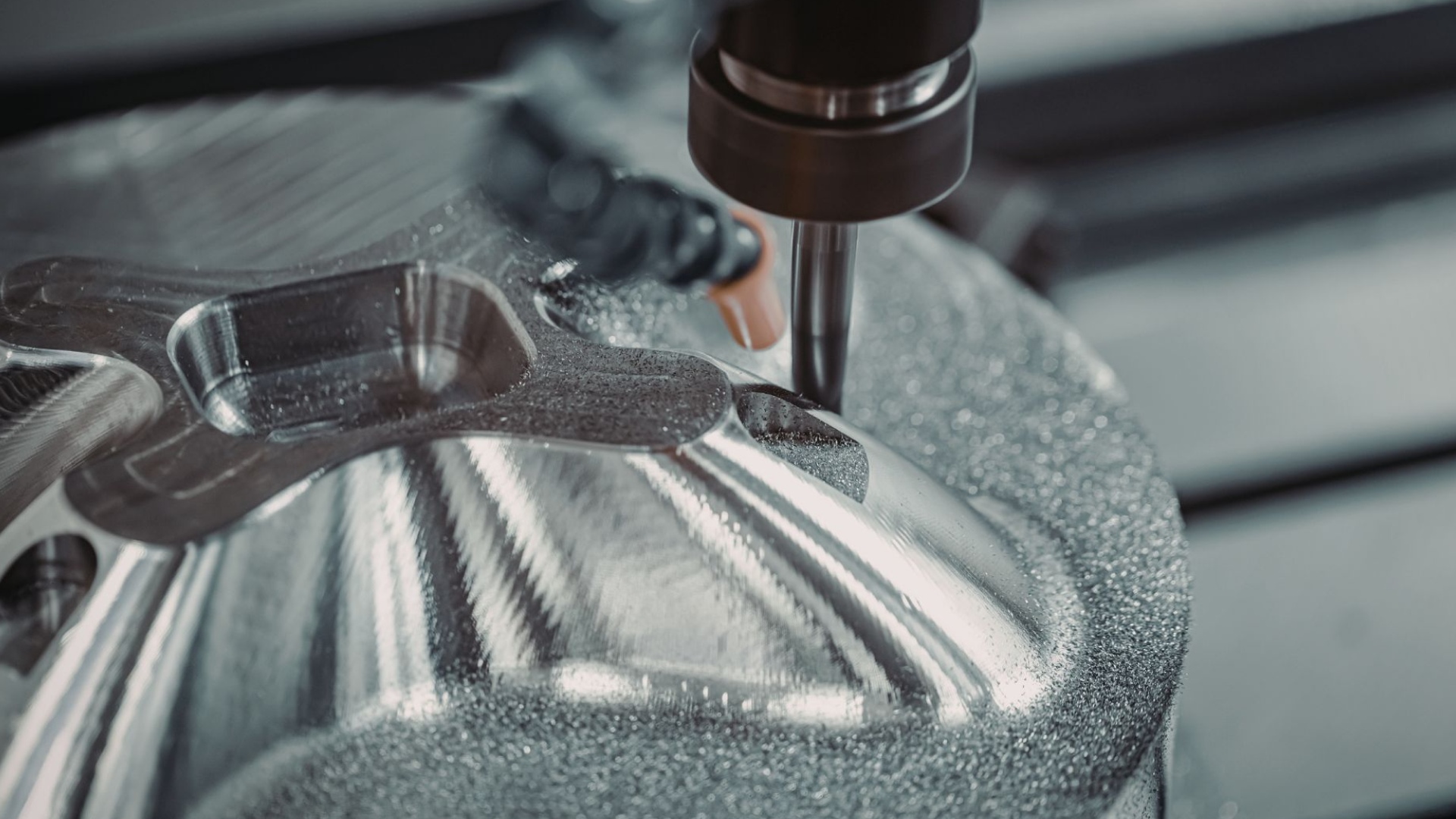
Machining titanium requires careful control of heat, cutting forces, and tool engagement. Each stage of the workflow affects dimensional accuracy and long-term part performance.
These are the six main stages in titanium CNC machining:
Material Verification and Design Review
The process starts with confirming the titanium grade, certifications, and heat numbers to meet application requirements. Engineers then review the CAD model to assess thin walls, tolerances, and tool access. Early identification of risk areas prevents downstream machining issues.
Programming and Toolpath Strategy
CAM programmers select toolpaths designed to manage heat and maintain constant tool engagement. Adaptive milling and controlled stepovers reduce stress on both the tool and the material. This stage determines much of the part’s surface quality and machining efficiency.
Tooling and Cutting Parameters
High-performance carbide tools and specialized coatings help resist heat and reduce wear. Cutting speeds and feed rates are chosen carefully because titanium work-hardens quickly under improper conditions. Consistent chip formation and evacuation are critical to protecting both tool life and part integrity.
Fixturing and Setup Stability
Titanium’s rigidity demands equally stable workholding. Fixturing is designed to minimize vibration, maintain alignment, and support thin or contoured features. A stable setup allows the machine to hold tight tolerances throughout long machining cycles.
Thermal and Coolant Control
Heat management is one of the defining challenges of titanium machining. High-pressure coolant helps dissipate heat, prevent tool failure, and maintain a consistent cutting environment. Precise control of spindle speed and feed rate prevents thermal distortion of the part.
Finishing and Inspection
Finishing cuts use lighter passes that refine the surface and bring dimensions into tolerance. In-process monitoring ensures that tool wear does not impact critical features. CMM verification and traceable documentation complete the workflow for regulated industries.
A controlled workflow supports the accuracy and repeatability required for titanium components. In the next section, we look at the tools that outline the machining platforms and capabilities that enable precision results.
CNC Technologies Used for Complex Titanium Parts
Producing high-precision titanium components requires machinery capable of controlling heat, cutting forces, and material stress while maintaining rigidity throughout long machining cycles. These technologies support multi-angle access, stable tool engagement, and predictable chip flow.
Five-Axis CNC Milling
Five-axis milling allows the tool to approach titanium surfaces from multiple angles, which reduces setups and improves accuracy. It is essential for parts with deep pockets, curved surfaces, and features that cannot be reached in traditional 3-axis machining.
The key capabilities supported by five-axis systems include:
Reduced Fixturing: Fewer setups help maintain alignment and dimensional consistency.
Enhanced Surface Access: Ideal for complex geometries and tight internal features.
Improved Accuracy: Continuous machining minimizes repositioning errors.
Multi-Axis CNC Turning
Multi-axis turning machines combine turning, milling, and drilling in a single platform. This setup reduces part handling and is effective for titanium components that require both round and prismatic features.
These systems offer the following benefits:
Single-Machine Workflow: Turning and milling occur in one setup for greater stability.
Better Concentricity: Critical for rotary or cylindrical titanium parts.
Time Efficiency: Shorter cycle times support consistent repeatability.
Swiss-Type CNC Machining
Swiss-type machines support small, precise titanium components by guiding the material through a sliding headstock for maximum rigidity. This reduces deflection and helps maintain tolerance on long, slender, or micro-scale features.
Swiss machining excels in the following areas:
Ultra-Tight Tolerances: Ideal for small, detailed titanium parts.
Superior Rigidity: The guide bushing minimizes vibration during cutting.
Continuous Throughput: High repeatability for small-to-medium production volumes.
High-Pressure Coolant Systems
Titanium generates significant heat, and high-pressure coolant systems help maintain stable temperatures during cutting. These systems extend tool life and improve chip evacuation, which directly affects surface finish.
Key advantages provided by high-pressure coolant include:
Heat Reduction: Prevents tool failure and thermal distortion.
Chip Control: Keeps chips from welding to the tool or surface.
Surface Consistency: Helps maintain finish quality across long runs.
Advanced CAM Software
Modern CAM platforms create toolpaths that protect both the tool and the part. They ensure consistent material engagement, reduce tool wear, and improve accuracy across complex shapes.
Advanced CAM software supports:
Adaptive Milling Strategies: Lower heat generation and better chip control.
Precise Simulation: Identifies collision risks and optimizes cutting parameters.
Process Repeatability: Ensures consistent results across multiple runs.
Criterion Precision Machining applies advanced CNC technologies to produce accurate, repeatable titanium components. Learn how our capabilities can support your next project. Request a quote.
Next, we move into the challenges, which explain why technology alone is not enough without disciplined strategies tailored to titanium’s behavior.
Why Titanium Machining Relies on Specialized CNC Processes
Titanium does not tolerate trial-and-error machining. When standard CNC approaches are applied, problems surface quickly and often compound across the production cycle. They show up as immediate process instability, failed inspections, and parts that cannot be trusted in service.
This is what improper titanium machining can lead to:
Accelerated Tool Failure and Thermal Distortion
Uncontrolled heat at the cutting zone causes rapid tool degradation and surface damage. Parts may shift dimensionally during machining, leading to inconsistent finishes and tolerance loss before the operation is complete.
Unstable Cutting and Increased Scrap
Incorrect feeds and speeds cause titanium to harden during cutting. Each subsequent pass becomes more aggressive, driving unpredictable tool behavior, shortened tool life, and rising scrap rates.
Loss of Dimensional Control
Poor rigidity or fixturing allows vibration to transfer directly into the workpiece. This results in waviness, poor surface finish, and features that cannot hold tight tolerances across multiple operations.
Inspection Failures and Rework
Inadequate chip evacuation leads to recutting and surface damage that often goes undetected until inspection. These defects appear as dimensional inconsistencies, surface nonconformances, or failed acceptance criteria.
Deformed or Unstable Features
Thin walls, deep pockets, and contoured surfaces magnify machining instability. Without multi-axis strategies and controlled cutting pressure, features deform during machining or shift after stress relief, causing parts to fall out of specification.
This is why titanium demands a machining company equipped with disciplined processes, stable platforms, and proven controls to manage the material correctly from the first cut onward.
Suggested Read: Why Precision Machining is Critical in Aerospace Manufacturing
Criterion Precision Delivers High-Quality Titanium Components
Criterion Precision Machining produces titanium components that demand tight tolerances, stable machining processes, and complete documentation. Our workflow is built to prevent dimensional drift, missed deadlines, and compliance issues that disrupt downstream production.
Each project benefits from the following:
Tight Tolerances: Criterion consistently achieves tolerances down to approximately ±0.0002 inches. This level of control supports precise fits, stable assemblies, and consistent performance across repeated production runs.
Integrated CNC Capabilities: Advanced CNC turning, Swiss turning, and multi-axis milling are available in one facility. This reduces vendor handoffs, shortens lead times, and ensures that complex parts remain aligned with their original design requirements.
Production-Ready Prototypes: Prototypes are machined using the same processes and controls as production parts. This helps customers validate form, fit, and function early, preventing late-stage engineering changes.
Compliance and Reliability: Criterion’s documented workflows reduce the risk of line stoppages, audit failures, or gaps in traceability. Customers receive parts supported by clear records, stable processes, and consistent inspection results.
Engineering Support: The team assists with material selection, tolerance analysis, and manufacturability considerations. This early input prevents machining challenges and improves the stability of the final production strategy.
Our quality inspection process strengthens these advantages through CMM validation, surface analysis, and detailed reporting. Each titanium component is delivered with the assurance that it meets the required specifications and documentation standards.
Conclusion
CNC machining provides the control needed to manage titanium’s unique behavior, from heat management to tool engagement to final surface quality. When executed correctly, it ensures that every part performs as intended throughout its service life.
Criterion Precision Machining brings the capabilities, process discipline, and inspection rigor required to produce titanium components with confidence. We apply the same principles across stainless steels, high-temperature alloys, and other advanced materials to support broader manufacturing needs.
Avoid rework, failed audits, and late-stage design changes with a machining team that controls titanium risk across production and inspection. Speak with our experts to review your titanium requirements and process expectations.
Frequently Asked Questions
1. Is it expensive to machine titanium?
Yes. Titanium machining costs more due to slower machining speeds, higher tool wear, and the need for specialized processes. Precision requirements and material behavior also increase overall production effort.
2. How does inspection differ for titanium vs aluminum?
Inspection for titanium requires tighter thermal control, surface integrity checks, and fatigue-critical measurements. Titanium’s stability demands more detailed dimensional verification and traceable documentation than aluminum, which is more forgiving during machining and inspection.
3. Is titanium difficult to machine?
Yes. Titanium has low thermal conductivity, which traps heat at the cutting zone. It also work-hardens quickly, demanding controlled tool engagement, stable setups, and carefully planned toolpaths.
4. What is the best CNC method for titanium parts?
Five-axis milling and multi-axis turning are often preferred because they improve tool access, reduce setups, and maintain dimensional accuracy on complex titanium geometries requiring stable engagement and thermal control.
5. Why is coolant management important when machining titanium?
Titanium retains heat, increasing the risk of tool failure and distortion. Effective coolant delivery improves chip evacuation, stabilizes temperatures, and supports consistent accuracy across long machining cycles.
6. What materials cannot be CNC machined?
Materials that melt, deform, or burn easily during cutting cannot be CNC machined effectively. Examples include rubber, very soft plastics, low-melting alloys, and highly abrasive composites unsuitable for standard tooling.